

Creating Content That Engages and Activates Your Next Customer
Even amid disruption, your customers are still on a journey to find you. During Investis Digital’s Connected Content Week, I shared an in-depth look at how to align your content with every stage of the customer journey.
During Connected Content Week, businesses and our thought leaders shared insights into the many elements of Connected Content – our company’s approach to building deeper audience connections and improving business performance by telling a brand’s story through strategic and engaging content, building and running intelligent websites, and reaching audiences with performance marketing.
During my presentation, I focused on creating and amplifying content. Here are some highlights I would like to share with you:
The Customer Journey and Its Impact on Content
Today, relationships are created with information, not just people. Consider these realities:
- People are usually 57 percent of the way through their journey before they talk with a salesperson,
- 67 percent of that journey is completed through digital channels.
Things have changed since the days when marketing played in a narrowly defined lane of building awareness while sales handled consideration and conversion.
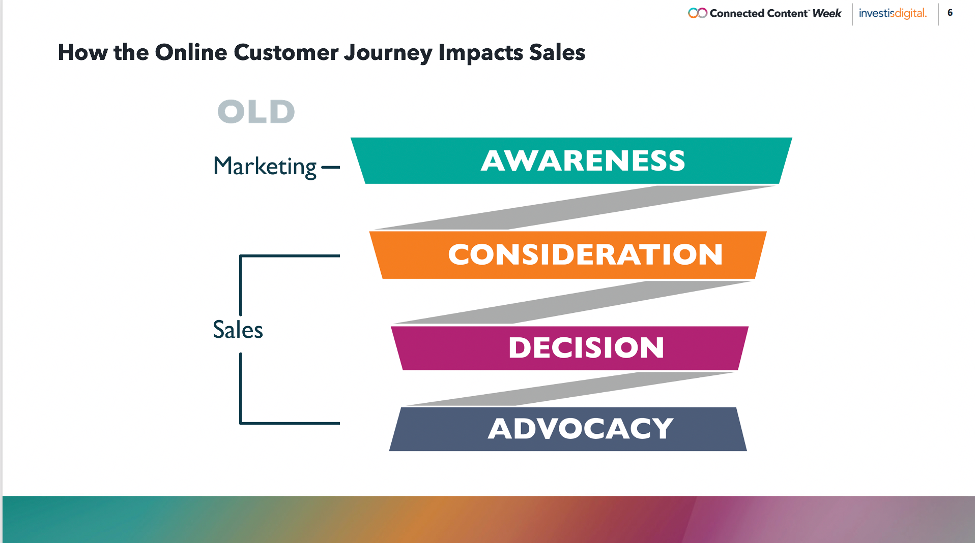
Those days are over – for every industry. Just look at the automotive industry. It used to be that to buy a car, you talked to a sales rep on the lot, who controlled almost the entire purchase decision. Then Carvana came along with a sales model based on providing information online to the customer, cutting out the sales rep. That’s what disruption looks like.
Today, marketing has gone well beyond awareness. Marketing informs and educations at consideration. Marketing even informs the decision. And marketing helps build advocacy and retention.
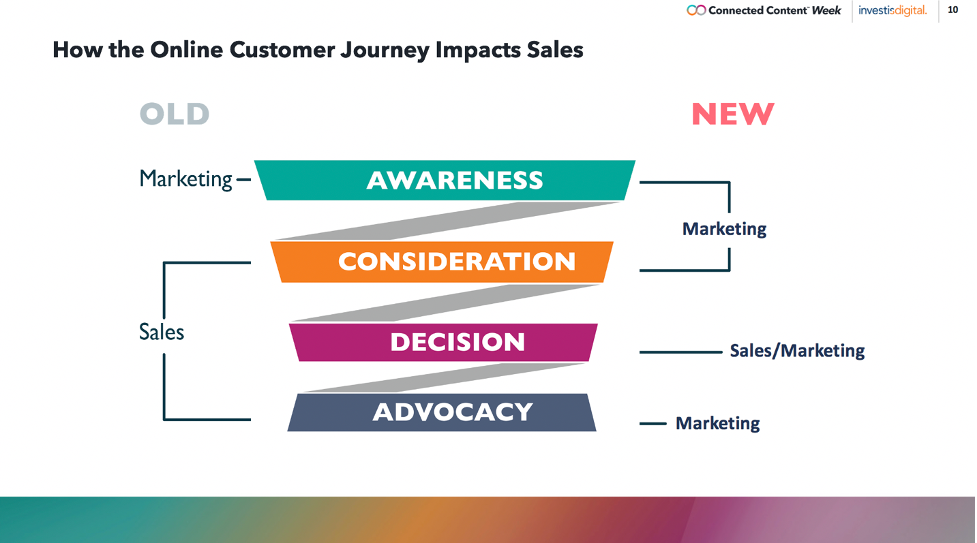
How? By creating the right content, in the right format, in the right channel, at the right time – the essence of Connected Content.
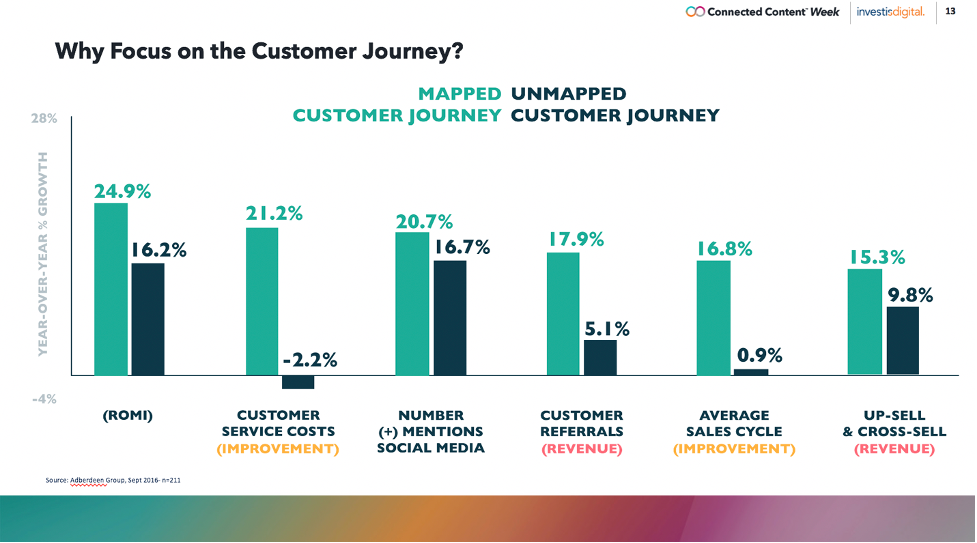
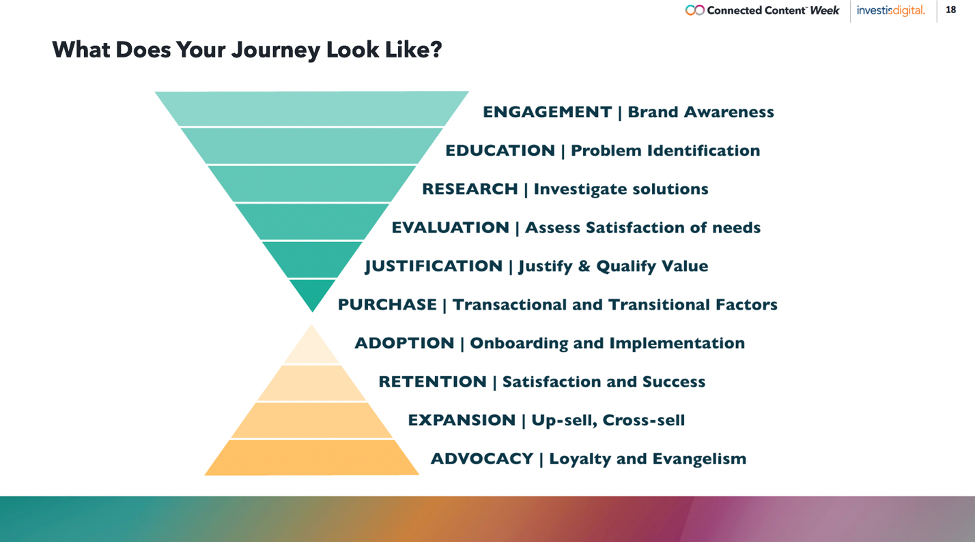
This whole process starts with understanding the entire customer journey. Companies that map the customer journey understand their audience more completely, and they deliver stronger results such as improved ROI.
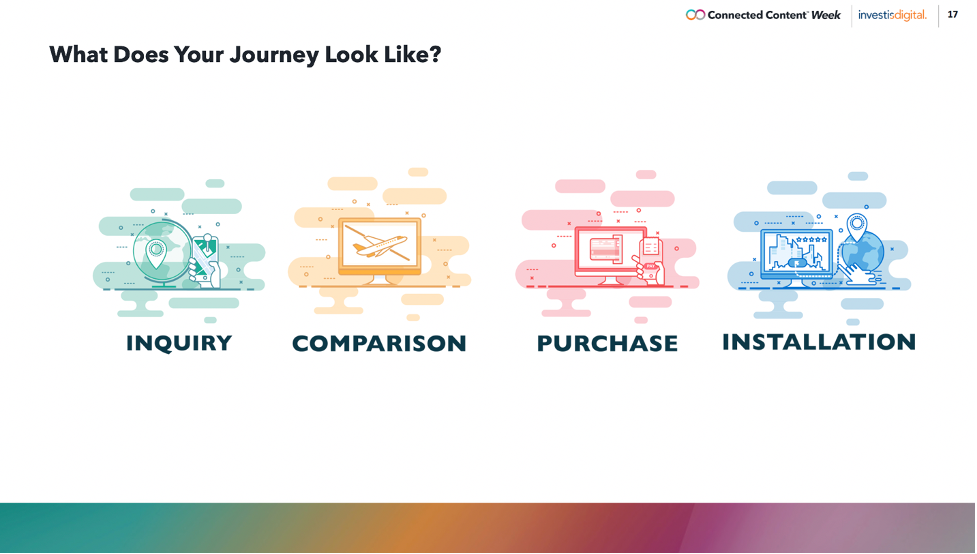
We define the customer journey as all the steps a customer takes to solve their problem – with or without you. We prefer they do it with you. We also think of it as a series of questions that need to be answered. And that journey could be fairly straightforward or very complex.
A Closer Look
Let’s take a look at a closer look at what a real journey might look. That journey starts with a person. For the purposes of discussion, we’ve created one: Sophia. She’s an inspired, educated mid-level Millennial marketer who is always wanting to advance her career. She actively avoids salespeople.
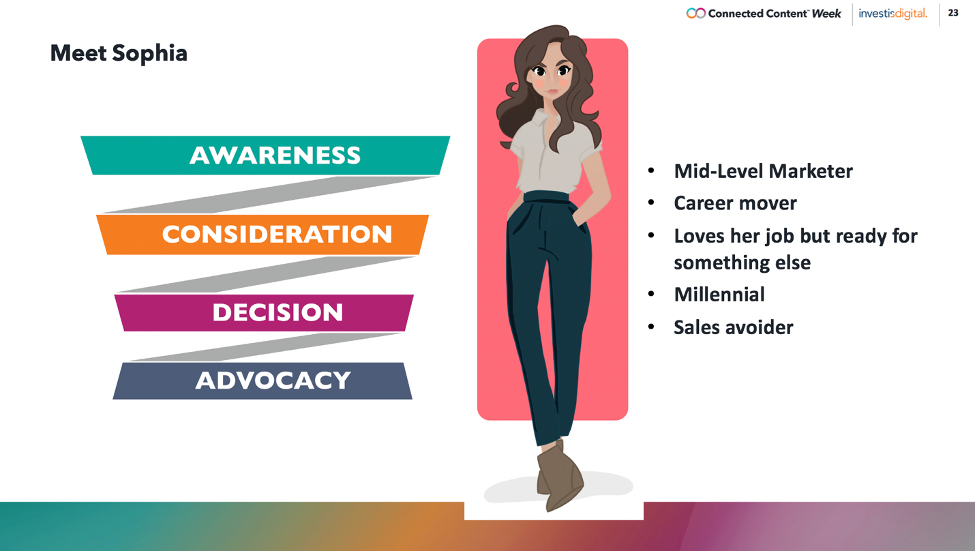
One day, Sophia is hanging out at home watching one of her favorite shows on Hulu. An over-the-top-TV ad appears from Magellan University, clearly targeting Sophia based on her interests and passion for advancing her career:

Sophia is intrigued! She picks up her tablet and Googles “benefits of an MBA.” Lo and behold, an ad from Magellan appears – but it takes her ends up on an enrollment page on the university’s website.
This is a misfire by Magellan. Why? Because Sophia is still in awareness phase. She’s generally interested in learning about the benefits of an MBA. But Magellan, by taking her to an enrollment page, makes the mistake of treating her like someone who is moving quickly through consideration and decision – a content gap.
Well, Sophia decides to keep searching. She learns more about the value of an MBA from competitors of Magellan, including Coronado University, which shares thoughtful content about the value of getting an MBA, including an article, “What Can I do After Getting an MBA in Marketing.”

Now this is the kind of content that clicks for Sophia! Intrigued, Sophia keeps exploring Coronado’s page. She finds an interactive quiz asking “Do you know what a CMO actually does?”
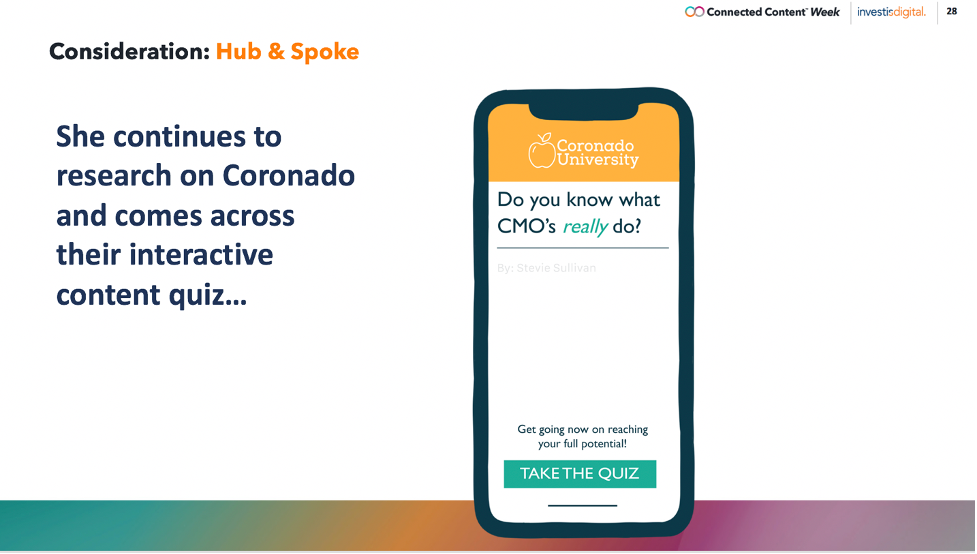
This is a relevant question because Sophia is an aspirational person. She takes the quiz. After she takes the quiz, naturally she wants to know the result. She learns that to get her score, she’ll need to share her name and email. This is a fair trade.
Hub and Spoke
The interactive quiz that Sophia took is a great example of the hub-and-spoke method for connecting with your audience. The “hub” is a robust resource for an audience – the interactive quiz that Sophia wants to get results. The spoke consists of the ways Coronado drives traffic to the hub – which can consist of anything from a blog to an infographic to a landing page.
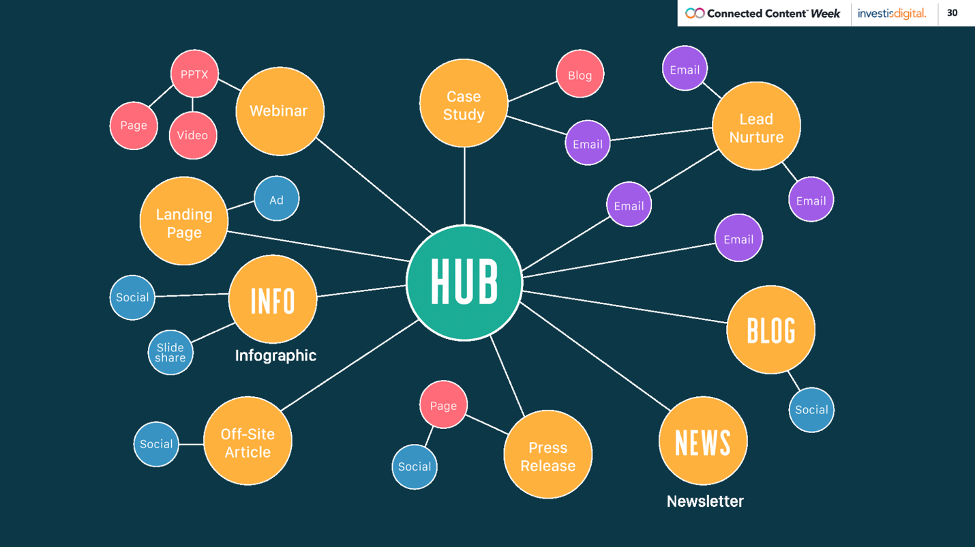
The key is that the spokes consist of content that connects directly to the hub. And the spokes contain calls to action to inspire people to go to the hub. The hub produces more leads. And it builds relationships.
In our example, because Sophia is willing to share personal information with Coronado, Coronado can follow up with her via email. By asking her questions (e.g., “How soon are you thinking of going back to school?”), Coronado can learn more about her and customize their follow-up.
Coronado also knows that the right content at the right time can tip a person from consideration to decision. In Sophia’s case, Coronado retargets her with a video ad on a social media channel, which convinces her to contact the admissions office.
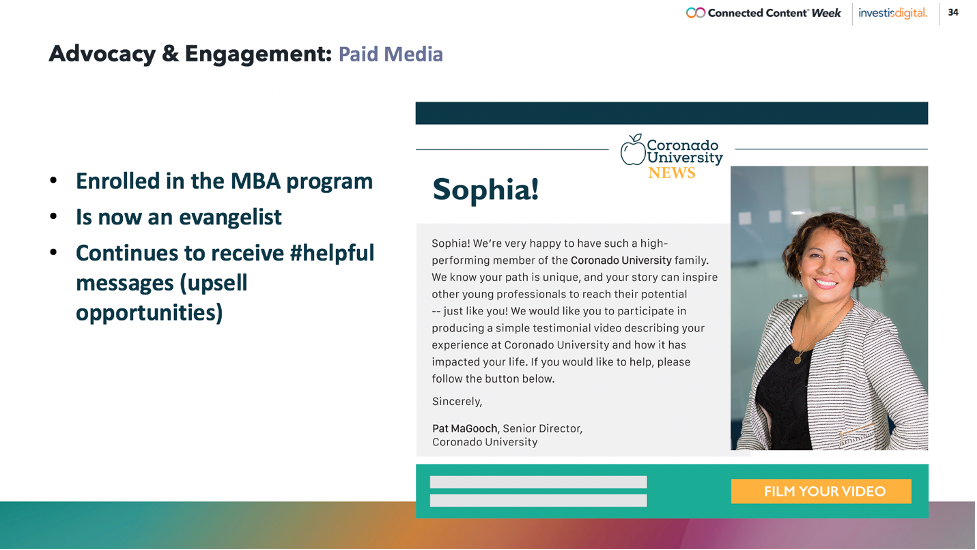
Later, when Sophia becomes a student, Coronado might follow up with her to learn a about her personal story and her career path – turning Sophia into an advocate.
The Importance of Strategy
Now that we understand the customer journey, let’s look at the foundational elements of getting it right. Strategy must be documented so that your teams have a common source of truth. The Content Marketing Institute says that 69 percent of companies that are most successful with digital marketing have a documented strategy. That strategy must contain a number of elements, such as:
Foundational Elements
- Hard business goals, such as sales numbers you want to hit.
- Your audience. An audience is a lot more than a job title. You need to go deeper to understand their true pain points and motivators. You need to ask where they consumer content and how – and why they’d want to choose you.
- An analysis of your competitors. Tools such as Moz.com and SEM Rush can be quite useful here, with SEM Rush being exceptional for keyword-based research.
Tactical Considerations
- The content you will create.
- Where your content will live and be shared.
- Governance: such as who approves content and how.
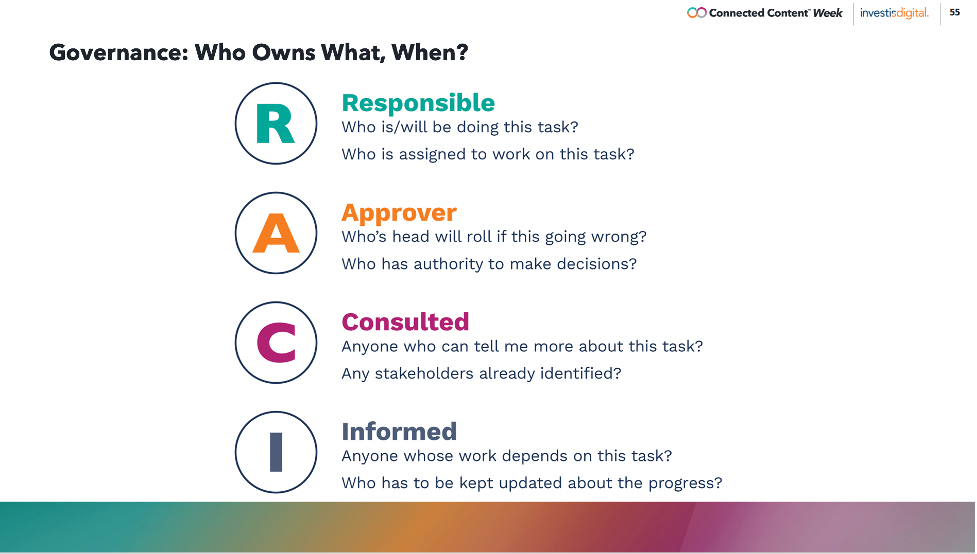
Don’t underestimate the challenge of defining good governance. Governance addresses issues such as bottlenecks that trip up the flow of content. Good governance tackles that kind of problem by identifying who is responsible for approving and managing content:

These together form the foundation for content marketing: the art of providing relevant, useful information to your customers without selling or interrupting them. Instead of pitching your products and services, you deliver information that makes your customer more informed before they buy.
Digging Deeper with Your Audience
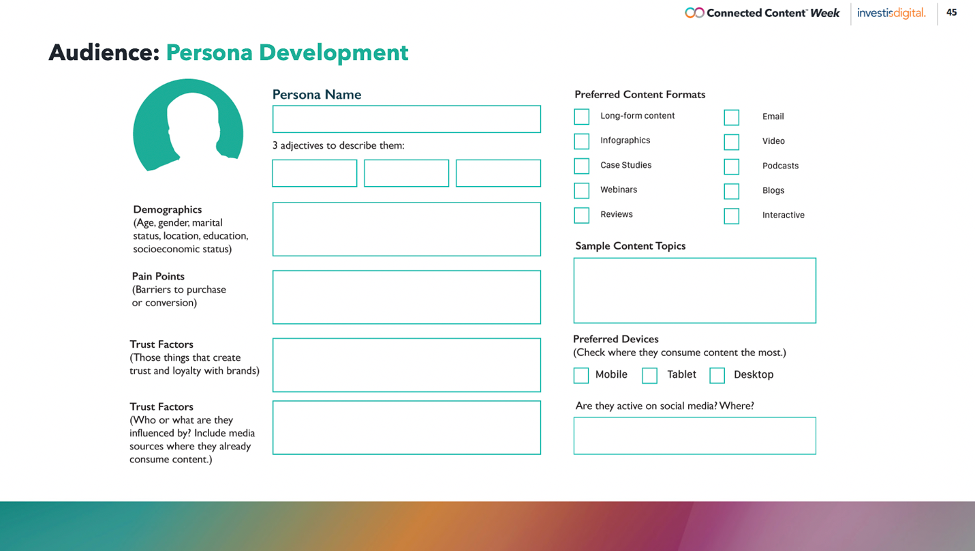
To really understand your audience and your pain points, we recommend you start by talking with your sales teams and customer service reps. They interact with your audience every day! In addition, you may want to use third-party tools such as Google Analytics and social analytics. The key is to go beyond the obvious demographic information about your audience:
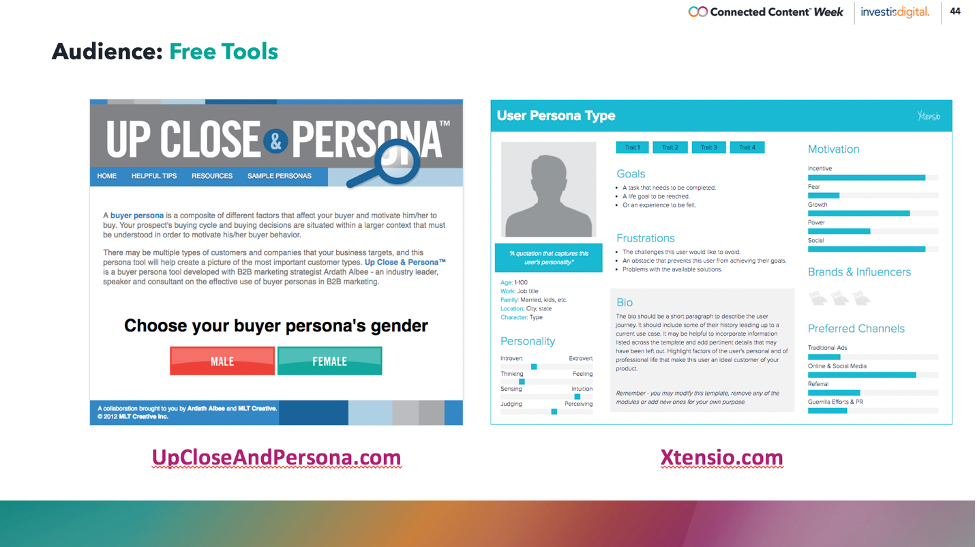
A number of free tools can help you organize your audience information into a profile. They include, among others, UpCloseandPersona.com and Xtension.com:
The Importance of a Content Gap Analysis
One of the most important steps you can take with strategy is to understand gaps in your content. This is about aligning content with your customer journey. A gap analysis comes down to reviewing your content and asking questions such as:
- Does it align with your journey?
- Are you missing content in any stage of your journey?
- Is any of your content old/outdated?
A great tool for performing a gap analysis is Screaming Frog. It’s an SEO tool that crawls your entire website. From there, you can organize all your content URLs and map them to your business goals, customer journey, personas, and then you can create new content that aligns most effectively with those priorities.
The All-Important Content
Content is the fuel that moves your customer along the journey. For that reason, content needs to connect with a customer’s pain points. No matter what the industry, customer always care about recurring topics such as cost, price, and the reviews of other people:
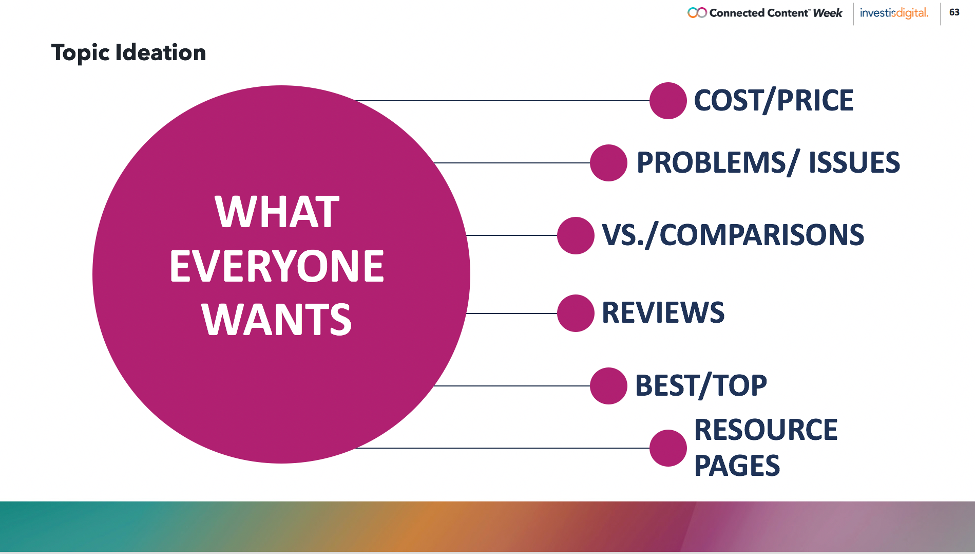
The more your content address those topics, the more you build your authority with search engines. But how do you create content that aligns with the specific topics your customers are about? Here, you have a number of options, such as:
- Asking your own people close to your customers ranging from sales to customer service, as noted.
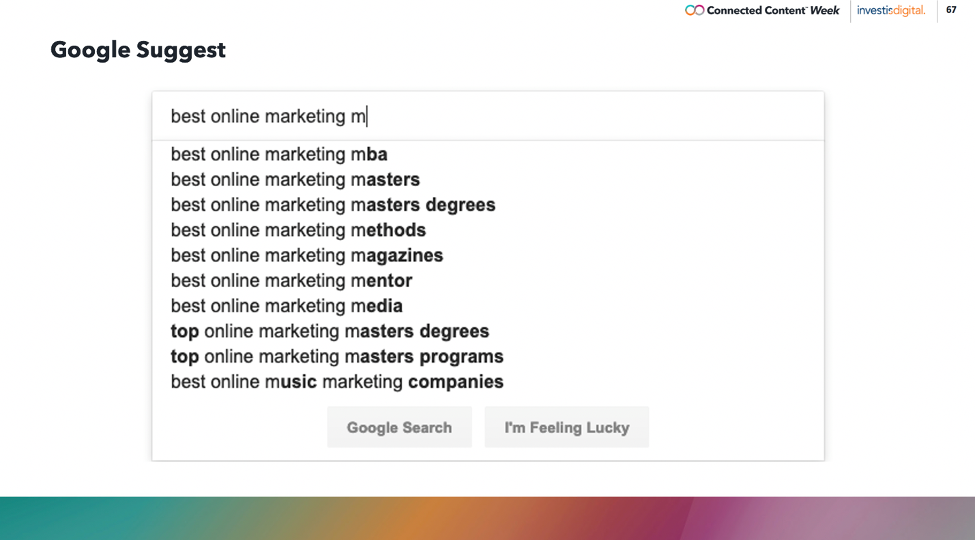
- Google Suggest: typing keyword phrases and letting Google autocomplete the phrase, which gives you a strong indication of what people are looking for.
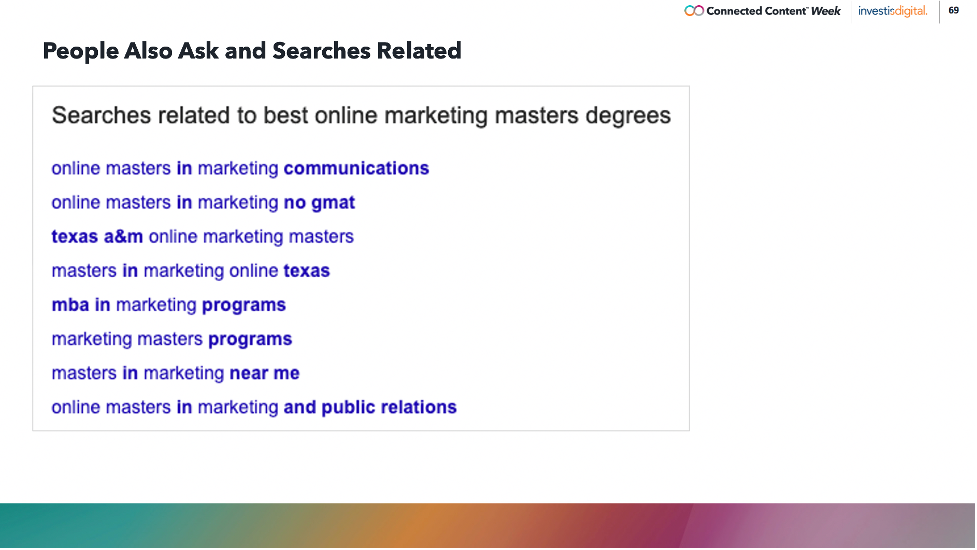
- The People Also Ask and Searches Related page on Google.
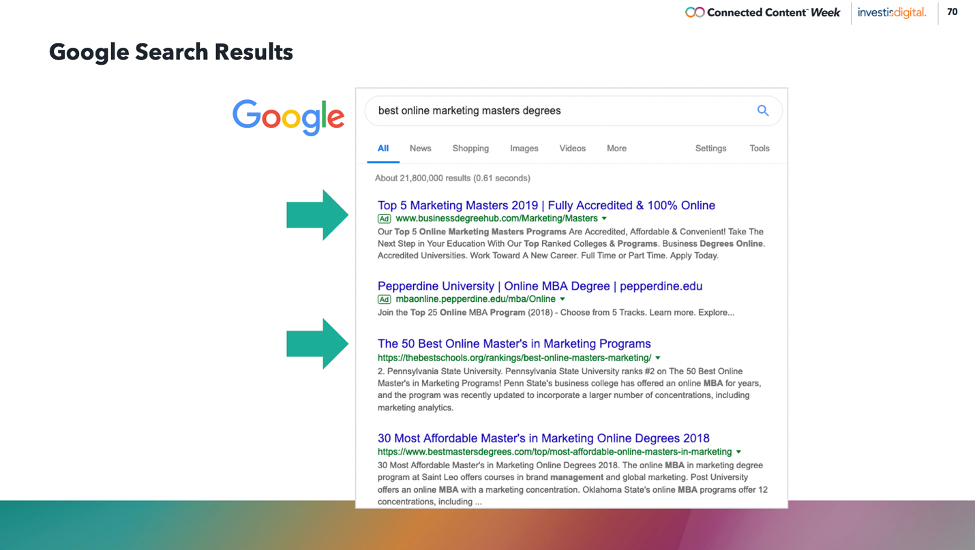
- Ads on search engine results pages (SERPs), which tell you that a keyword is important enough for someone to pay to place their ad at the top for that keyword. Look at the organic content that appears on the SERP. Ask if that content relates back to the topic that was asked. If it’s not answering the topic, you have an opportunity to do a better job and show up where those ads appear.
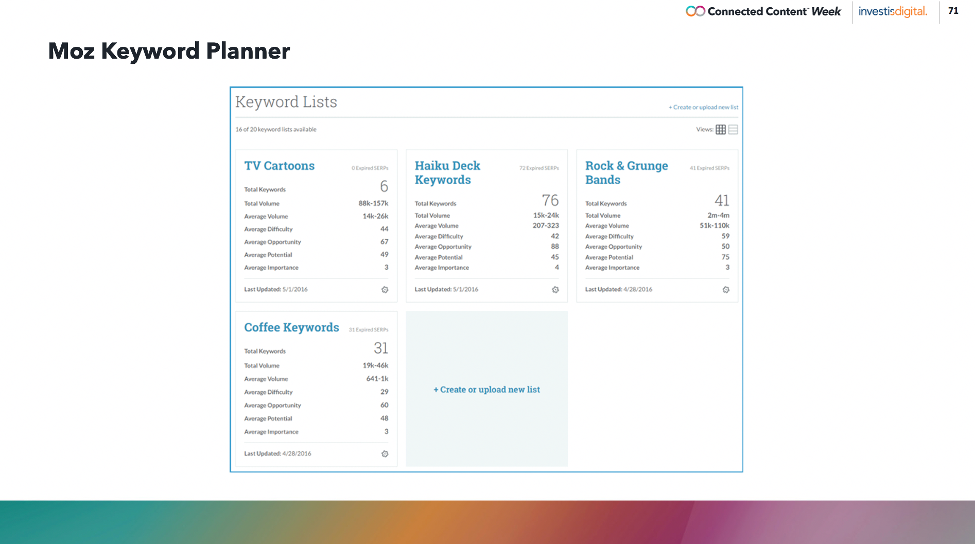
- Moz Keyword Planner.
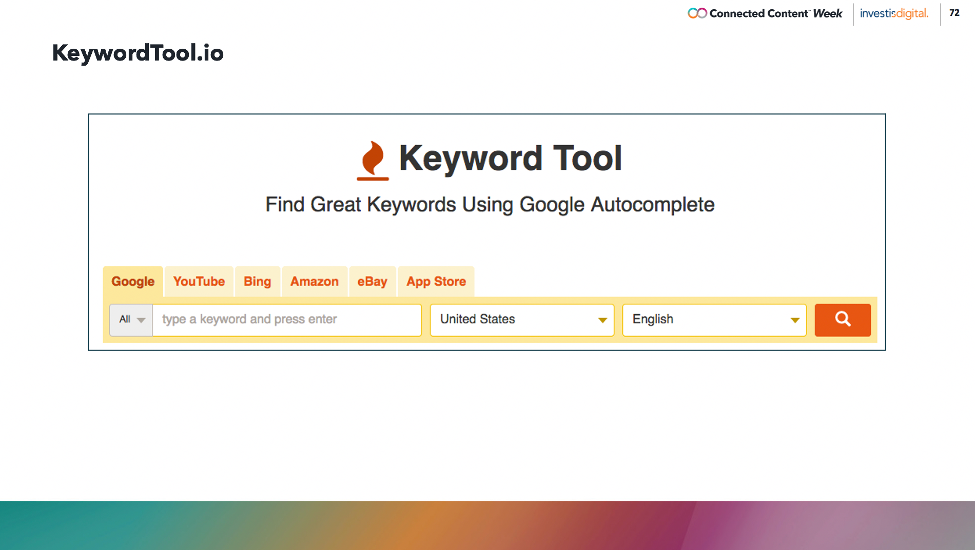
KeywordTool.io.
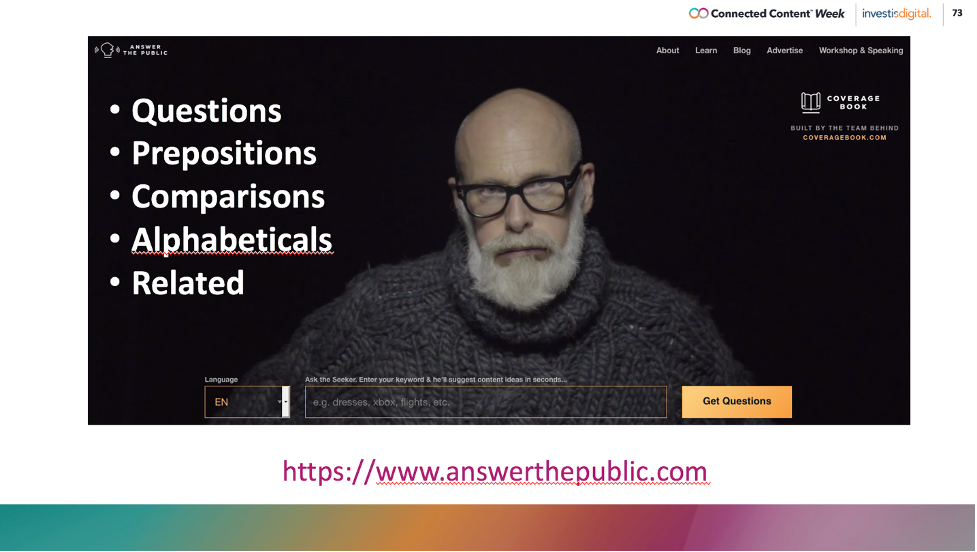
- AnswerThePublic.com.
Writing Content
When you create content, avoid journalistic headlines, like these:

Why? Because journalists are speaking to an audience that’s following them already. You don’t have that yet. Instead, write headlines that ask questions your audience might be asking, as this example shows:
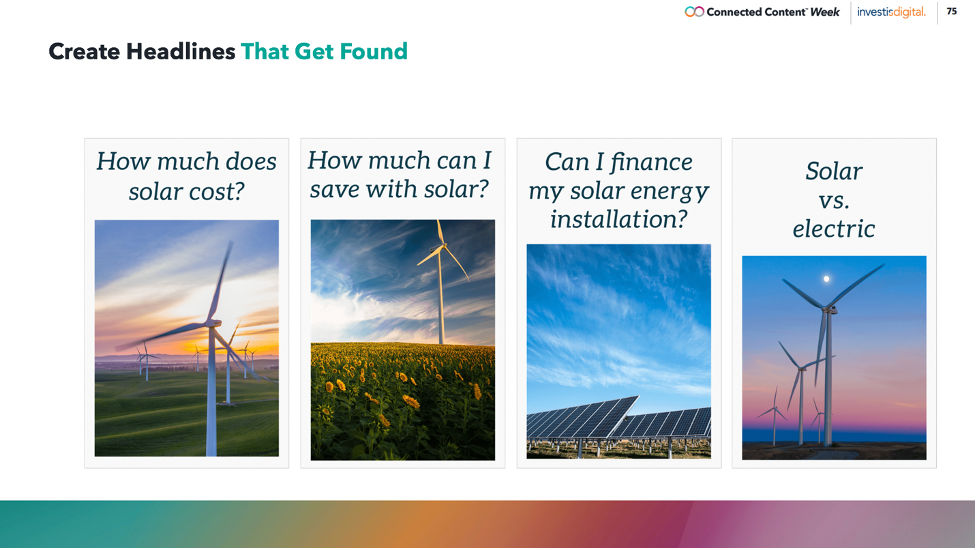
Those are questions real customers are probably asking. Organizations that anticipate and answer questions will win.
The Funnel Effect
In a perfect world, your content would follow the funnel effect. Most of your content would fall under awareness and consideration. From there, you would provide useful resources that answer more in-depth questions – not information about your product, but content that stays focused on the audience and their questions. By the decision-making step, you might want to provide more content about yourselves, such as customer case studies.
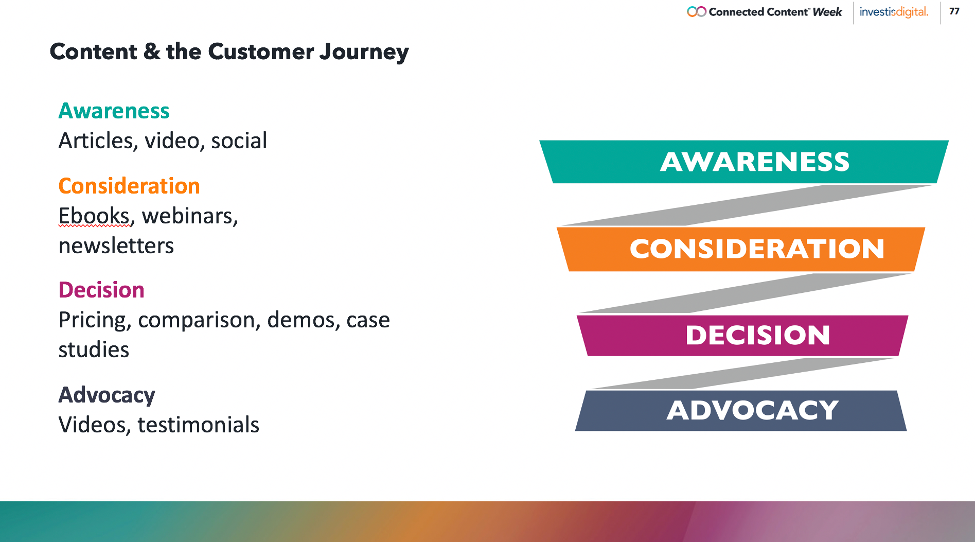
Here are examples of content appropriate for awareness:

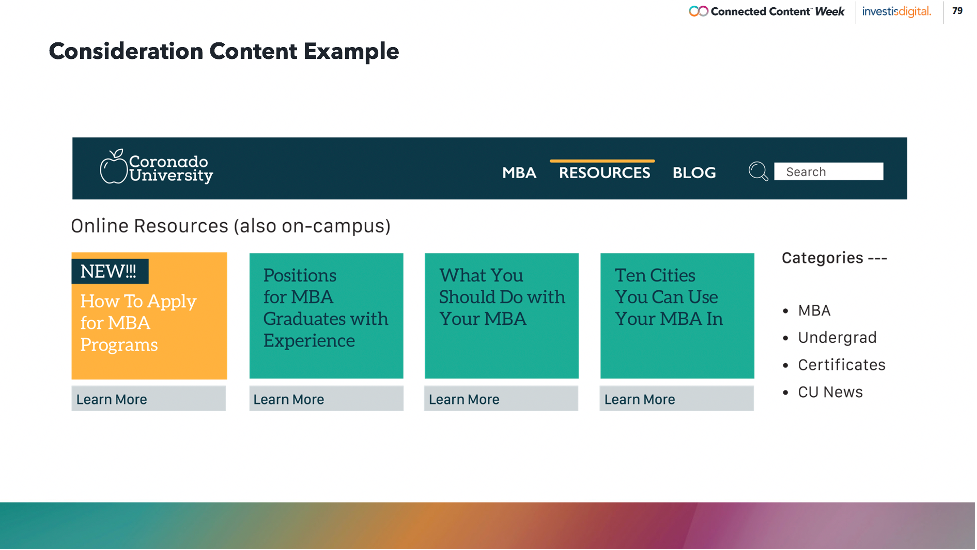
Here’s what good content looks like at the consideration stage:
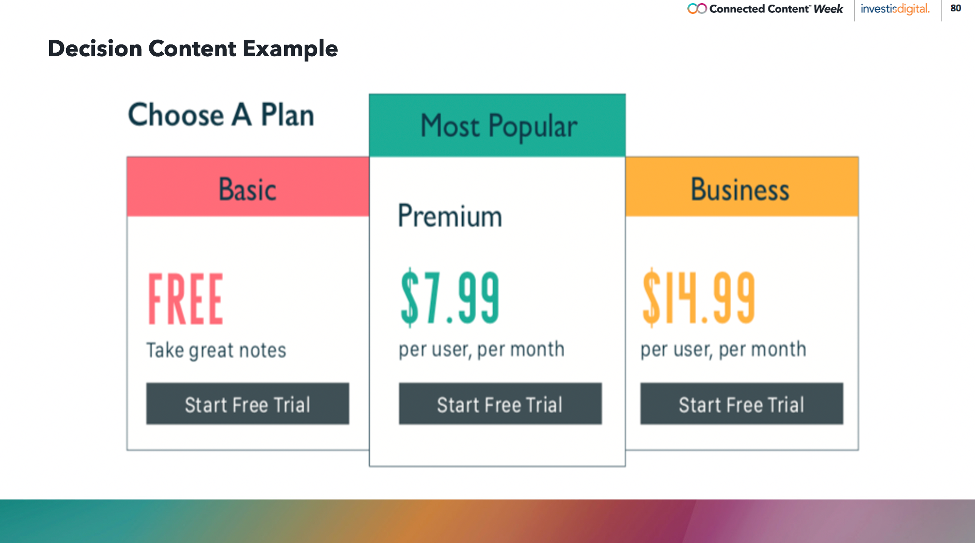
And at decision stage, notice how these examples get into tactical considerations such as pricing:
At advocacy, consider tactics such as video to humanize your brand:

SEO
If you are going to invest in content, make sure you invest in SEO. If people cannot find you, they won’t read all this great content you are creating! SEO is a topic that’s too complex for the scope of this post, but these SEO components give you a sense of what you need to consider:
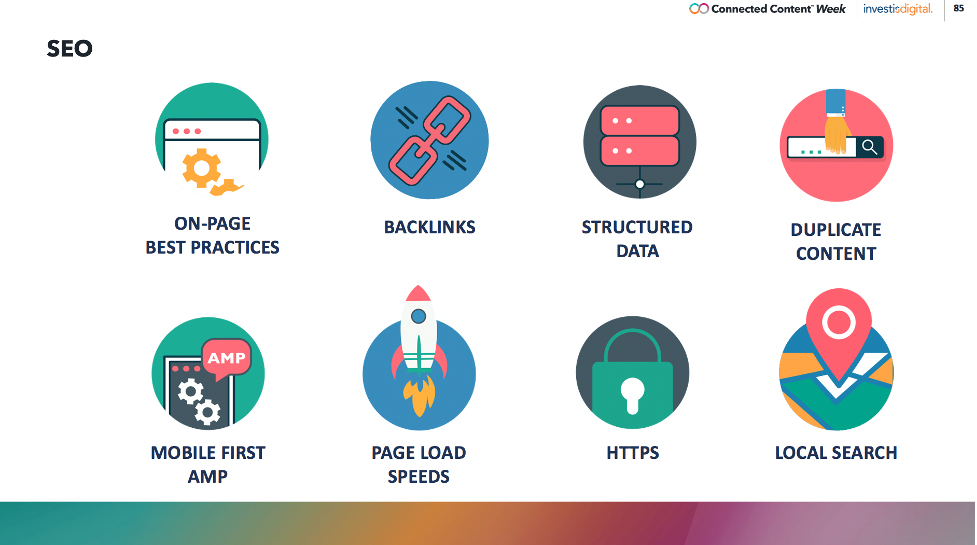
For instance, earning positive, quality backlinks to your site via quality content and linkable assets will motivate webmasters to link to you, boosting your authority. But you need a team to focus on link develop tactics to earn quality backlinks.
Paid Media
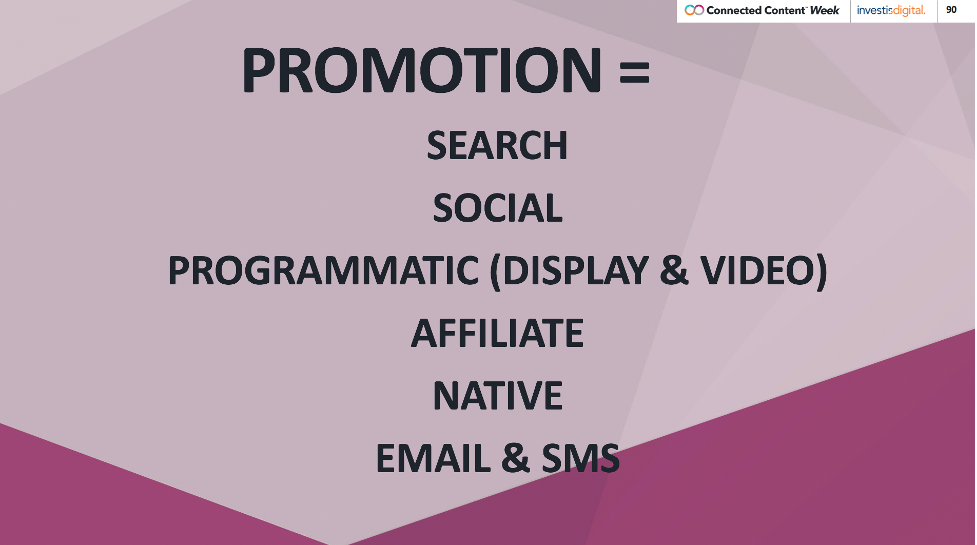
Nearly two thirds of people are more likely to engage with your brands that remember them across all channels – a powerful endorsement of paid media. But you have to do it correctly to ensure that your paid content is relevant. If you want audiences to find you across the entire journey, you have to promote it correctly:
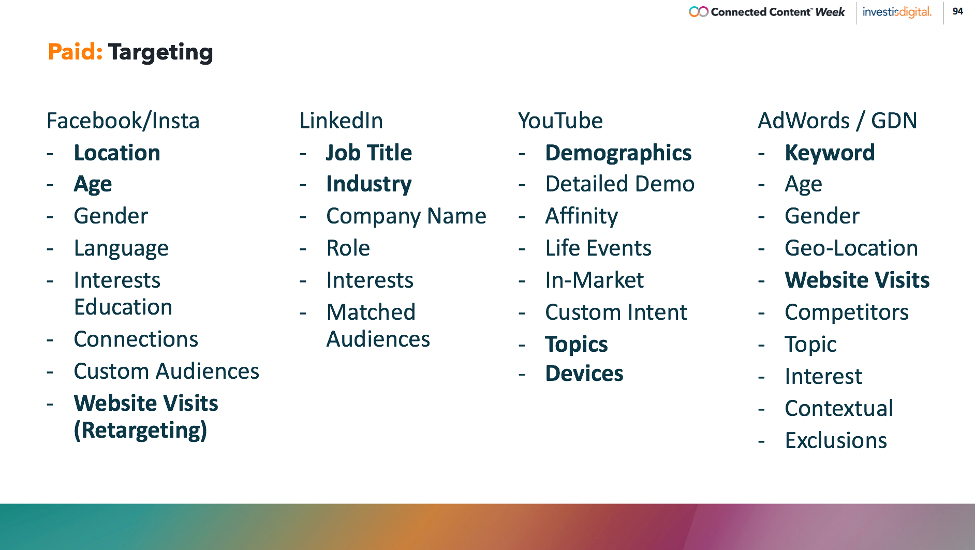
This process starts with targeting. Targeting can be an overwhelming topic because every channel has its own tools and approaches for targeting. Targeting begins with understanding your first-party data to create lookalike audiences in channels ranging from Facebook to LinkedIn. Lookalike audiences matter because they hold similar characteristics to people who engage with you already. So they are more likely to become engaged with your content and possibly become customers.
You can also retarget people who have visited your site:
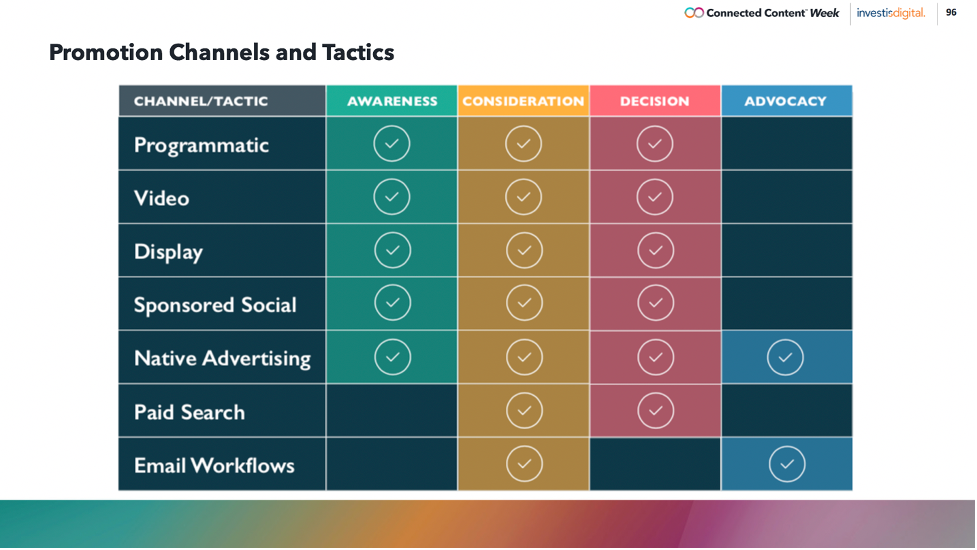
But none of those tools matter unless you deliver the right content in the right format at the right time at the right channel:
Measurement
Last but not least, you need to measure the effectiveness of your content. If you cannot measure, you cannot manage. We insist that analytics consist of three steps:
- Setup a foundation for reliable insights.
- Track user-specific behavior.
- Measure performance.
We measure performance on a weekly, monthly, and quarterly basis to ensure that all our content aligns with hard business goals.
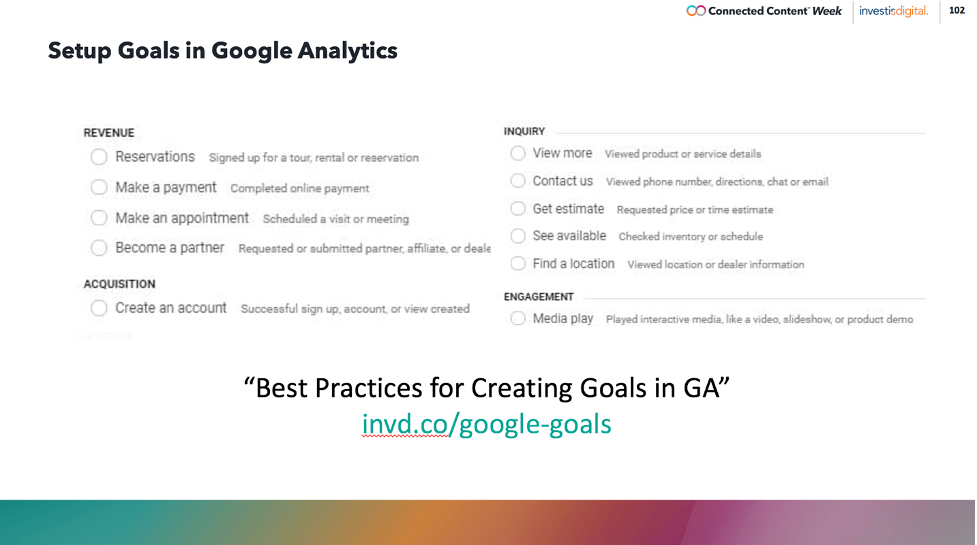
Measurement is a lot more than general steps, though. You need to use tools such as Google Analytics:
Measurement also means understanding very tactical content KPIs, such as user flow (clickthrough of what happens from one page to the next):

From a paid media perspective, we need to look at KPIs ranging from impressions to conversion rates. And this is just scratching the surface. Measurement also encompasses KPIs in areas such as email marketing and paid media.
Contact Investis Digital
To learn more about how to create great content that connects every step of the way along your customer’s journey, contact Investis Digital. And check out our work here.