

5 Ways to Optimize Costs for Your eCommerce Business
Cost optimization in eCommerce is becoming increasingly important. In fact, it’s the highest priority among eCommerce leaders according to a survey conducted by Namogoo and Microsoft amid rising acquisition costs and the ongoing supply chain crisis. Let’s take a closer look at this important topic and how businesses can optimize their costs.
Cost Optimization Defined
Cost optimization is the business practice of reducing spending and costs while simultaneously maximizing value—and it is top-of-mind for eCommerce professionals.
Instead of haphazardly cutting costs across the board, cost optimization works to lower costs and drive business growth at the same time. In a post-pandemic world where companies are reintroducing costs while also facing economic uncertainties, choosing where to optimize is a make-or-break exercise.
Effective cost optimization takes clear planning, in-depth market research, cross-functional communication, and a comprehensive digital footprint.
Tip 1: Clearly define what cost optimization looks like for your business
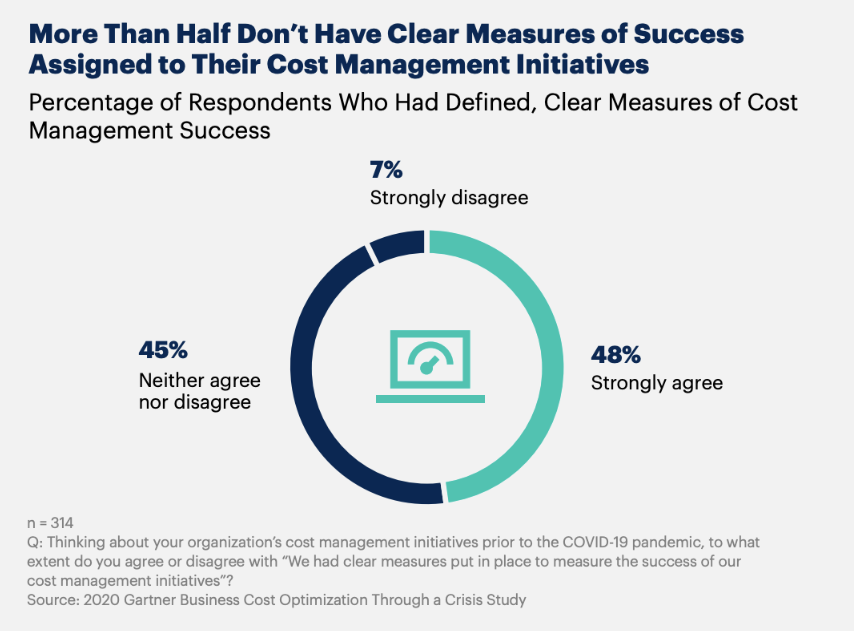
This one might sound like a no-brainer, but many professionals fail to effectively plan before they dive into their cost optimization efforts. According to Gartner, only 43 percent of leaders met their goals in the first year of cost reduction efforts. Less than half of those leaders clearly outlined measurements for what cost optimization looks like.
Which expenses are eating at your profits without adding value? Take a comprehensive look at:
- Your website building and hosting platform(s) - Are you enlisting the help of third-party platforms to sell your products or build out your site? Many of these sites require a monthly subscription payment or percentage of sales, so take a closer look to see if they are delivering the security, support, and content options your business needs to thrive.
- Marketing and advertising - Are your marketing efforts targeted and personalized enough to reach (and influence) the audiences that are most valuable to your business? Do you have specific KPIs set to define and reach your goals?
- Subscription services - Do you have a million subscription services that could be replaced with fewer/more powerful tools? Are there tools that are not being leveraged by different departments in your company due to a lack of communication?
- Platform payments - Which payment platforms are you using at checkout? Would it be beneficial to add or change them to make completing an order more efficient for your customers?
- Cybersecurity - Cyber attacks are a huge threat across the digital landscape, costing businesses trillions of dollars each year. How secure are the platforms and services you use?
- Content - Poor planning and siloed strategies for content creation and production cause excess spending in creating the right content for the right audience. Does your company have a solid brand taxonomy, attribution, and governance plan to optimize content?
- Data - Do you have multiple teams working in siloes with each using multiple data platforms and tools (each with a limited view of the overall business)? How might you eliminate those silos to create cost efficiencies?
Using a data-driven approach, you can begin to strategically divest from the strategies that are not reaching your target audiences—and move towards the ones that are. Think of your business expenses in terms of their total yields (rather than their surface-level cost). You can implement a framework like this one to visualize your portfolio:
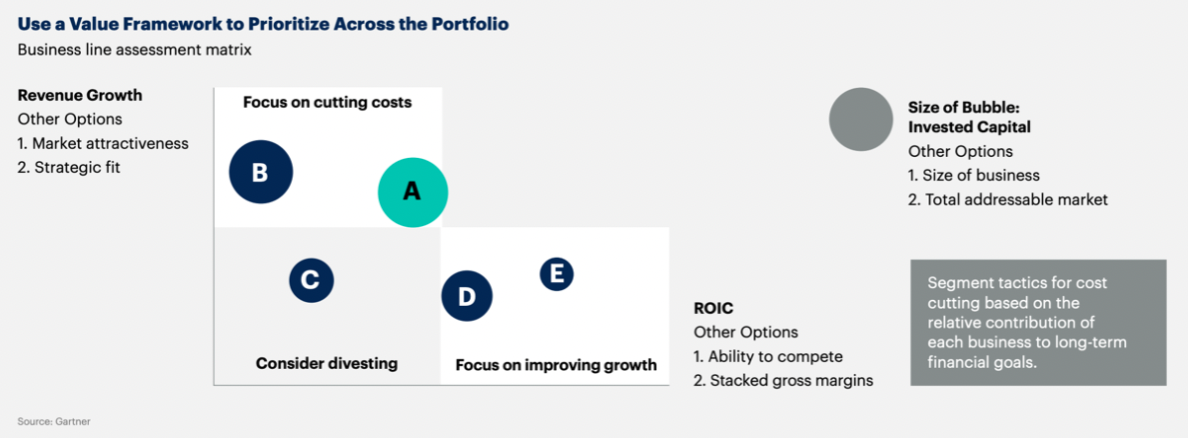
Using this model, you can separate out the expenses that you need to lean into for growth (or divest from in order to refocus elsewhere).
Tip 2: Understand your audience
Planning your inventory, site design, payment options, marketing strategies, and even talent acquisition all comes down to understanding the stakeholders of your business—and how to connect with them. For example, CMOs spend 9.8% of their online marketing budget on search advertising while 40 percent of Gen Z prefer searching for things on TikTok and Instagram over Google.
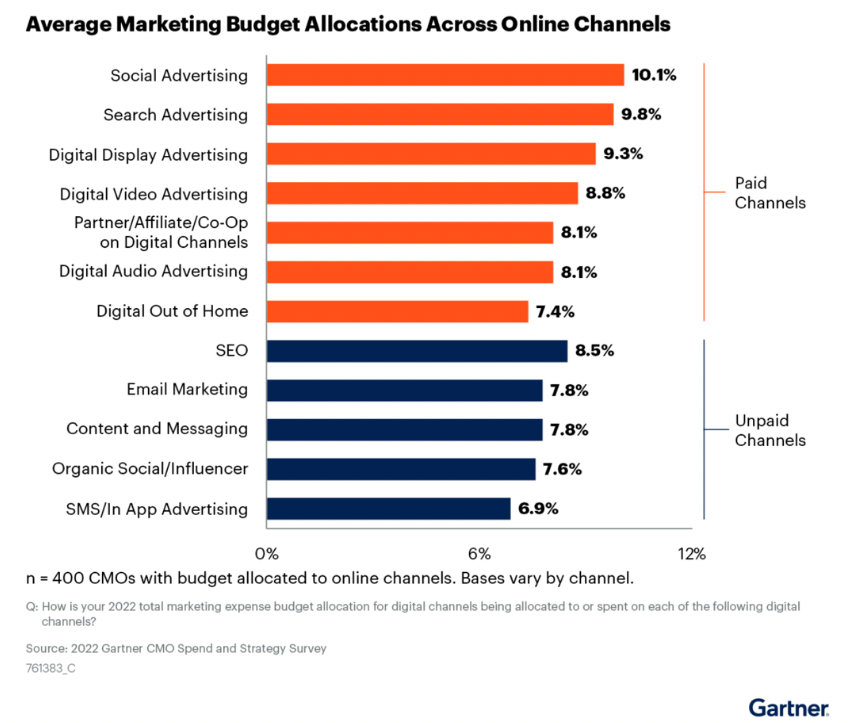
So, make sure you know WHO your target audience is and WHERE they are shopping. From there, you can optimize your marketing budget for maximum engagement.
Tip 3: Leverage cross-functional collaboration
Businesses that have better cross-functional collaboration are 1.5 times more likely to report better performance.
When companies employ better governance across departments, they can free up funds to support innovation and growth initiatives, but for many businesses, this is much easier said than done. Here’s a matrix of the highest and lowest perceived collaboration rates between departments:

Attracting the right talent for your business, establishing a strong company culture across your digital footprint(s), and consolidating your technology are all great first steps in improving cross-functional collaboration. For tips on connecting your internal stakeholders, read our blog ‘How to Keep Your CSR Initiatives aligned’.
Tip 4: Employ strategies to boost your average order value
Average order value (AOV) is the top KPI for eCommerce leaders this year, with 47 percent of executives listing it as their highest priority. An essential part of optimizing your costs is maximizing the amount customers spend once they’ve reached your site.
Here are some quick ways to spin AOV in your favor:
- Create minimum order values for free shipping - Adding a minimum order value makes sure your order size is large enough to be profitable (even after perks like free shipping, upgraded packaging, or seasonal discounts).
- Bundle! - Bundling not only increases AOV but also reduces marketing and distribution costs.
- Try a customer loyalty program - Once a prospective customer has reached your site, invite them to stick around with a customer loyalty program—this can be anything from a points-based system to a value-based loyalty program. North Face, for example, has an XPLR Pass program that rewards people using their iOS mobile app to check in at National Parks and Monuments. Keep it creative!

Source: CleverTap
Tip 5: Consolidate your digital footprint
Without aligned sites, apps, corporate messaging, marketing strategies, and the like—your digital footprint is likely to be siloed and disjointed (which doesn’t make for great cost optimization). At IDX, we employ a ConnectedContent™ approach. This uses our customer data platform (CDP), which then feeds into our connected commerce solutions. By keeping your digital footprint all under one roof, you can easily map out the best solutions for growth and effective spending.
Contact IDX
If cost optimization is a top priority for your eCommerce business, learn more about our Commerce Solutions or get in touch with one of our experts. We can help you identify opportunities and build upon the areas that are driving the most growth for your business.