

Consumer Privacy Vs. Personalization – How to Strike a Balance
Consumers want privacy when it comes to their personal data, and yet they also prefer a seamlessly personalized customer experience. These two priorities create a dilemma for brands because providing a personalized experience requires a business to collect data about a consumer. So, how can brands strike the perfect balance in satisfying these two priorities? The answer is to maximize the value of first-party data.
Concerns over data privacy are rising
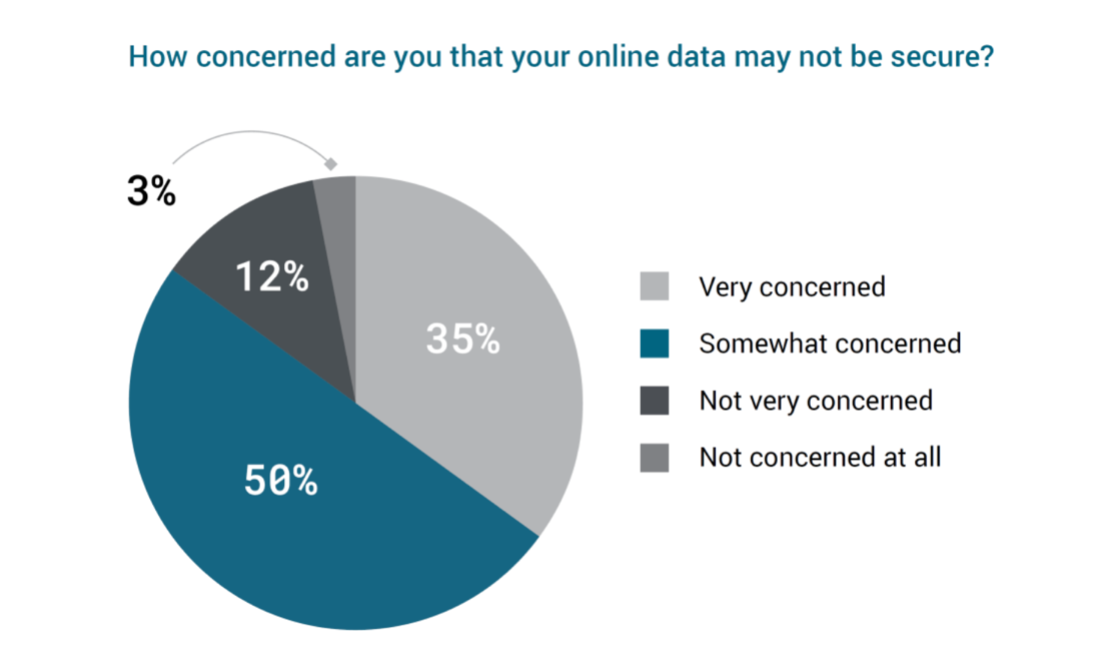
According to a recent survey from Axway, 85 percent of global respondents were “somewhat concerned” or “very concerned” about the security of their online data. Moreover, 90 percent want to know what specific data is being collected about them.
Apple and Google implement privacy measures
In response to rising concerns, Apple and Google have taken the lead on regulating marketing-related data collection. In 2020, Apple blocked cookies from Safari, and in 2021, Apple implemented App Tracking Transparency, which allows users to choose whether an app can track their activity across other companies’ apps and websites for the purposes of advertising or sharing with data brokers. Google began implementing third-party cookie controls in 2019 and intends to phase out third-party cookies completely to 2024. This will make ads that rely on tracking behavior via third-party cookies far less effective and personalized.
Government regulations follow suit
In the U.S., hundreds of sectorial data privacy laws and regulations have been passed. The most comprehensive, to date, is the California Consumer Privacy Act (CCPA) which was passed in 2018. In 2020, the California Privacy Rights Act (CPRA) was added to the CCPA to enforce:
- The right to rectification (the right to correct inaccurate personal information)
- The right to restriction (the right to limit the disclosure of personal information)
- Limits on the amount of time companies can retain consumer information
Along with many other protections and restrictions.
The writing is on the wall: businesses should continue to prepare for tighter data privacy laws.
The key personalization in the privacy-first era: first-party data
Here’s the rub: despite growing privacy concerns, most global consumers still want personalization. Close to 60 percent of respondents (globally) believe it’s worth trading their personal data for a better user experience.
At a time when third-party cookies are crumbling away, the answer to personalization is to do a better job collecting and acting on first-party data.
First-party data consists of data you collect about your customers or site visitors. By contrast, third-party data is collected by one party and sold or shared with an unrelated third-party (and because third-party data relies on third-party cookies, third-party data is less valuable in a privacy-conscious world). Second-party data is pooled by you and someone else, but first-party data is most valuable because it comes from the voice of your customer.
For example, consider the vast amount of feedback your customers willingly share with you – and that you collect from them through surveys, emails, reviews they leave on your site, and feedback they give you via chat and calls. Because you collect this data from your customers, it is more accurate, and competitors don’t have access to it.
But you have to have a plan for collecting that data and acting on first-party data. Here are essential steps to include:
- Understand how you want to use it, from building awareness for a holiday campaign to building loyalty with personalized offers and rewards programs that require customers to share with you information about their purchase behavior.
- Create a plan to collect it, from website tracking tools (make sure they respect consumer privacy requirements!) to surveys and email outreach.
- Ask permission and respect consumer privacy requirements. This is so essential that we expand on this topic below.
- Revise your plan by using tools such as A/B testing to learn what kind of content works and does not.
Build trust with transparency
The key to bridging the privacy-personalization gap ultimately starts with transparency. Only 37 percent of people globally feel like companies are transparent about the way they use consumer data.
Upgrade your cookie consent banner
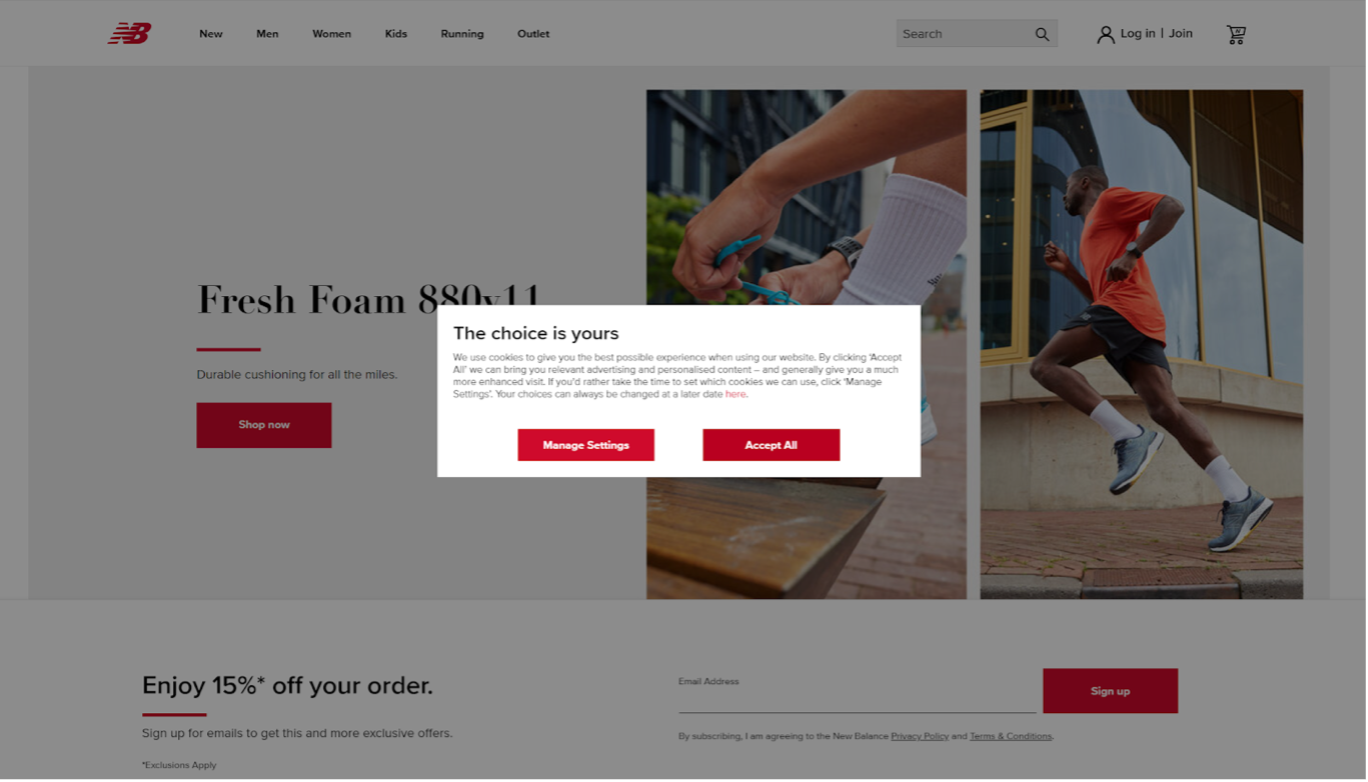
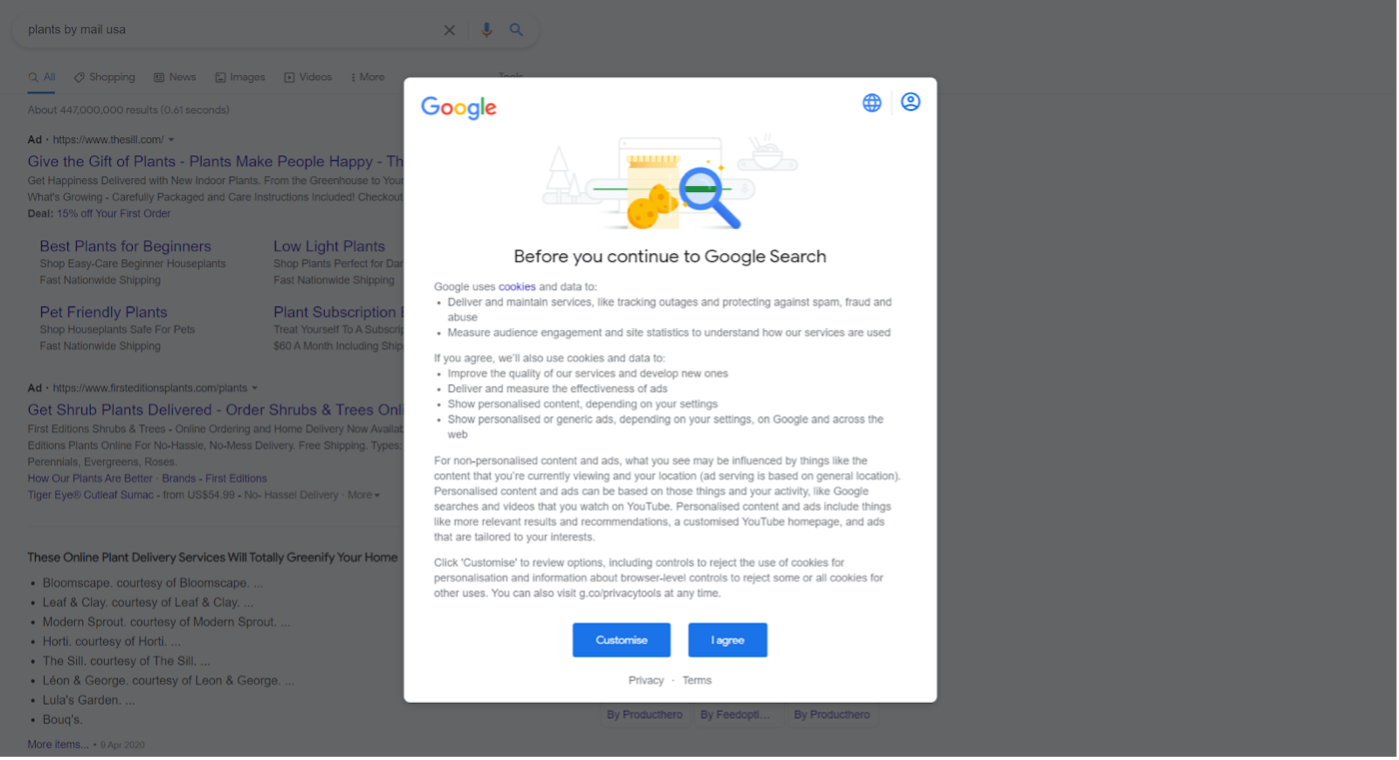
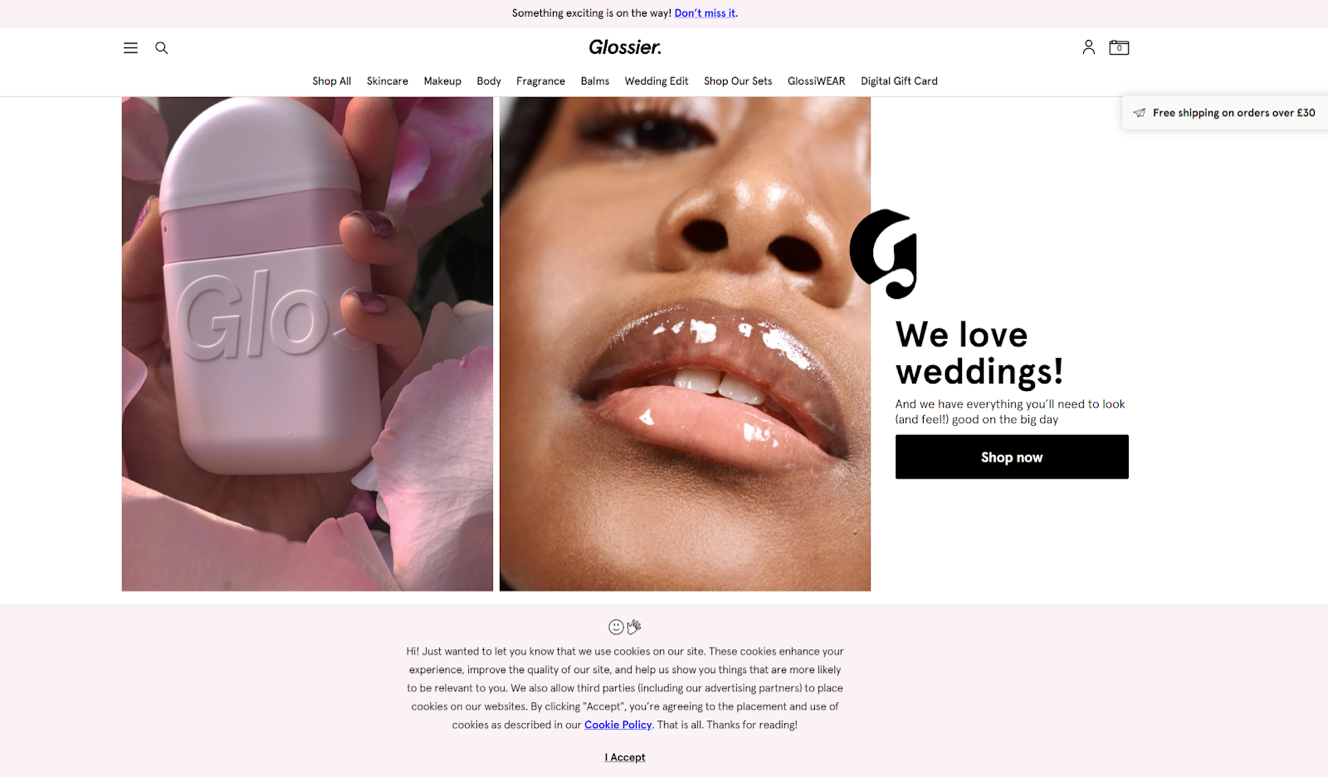
Your cookie consent banner is like a first handshake—it sets the tone for how committed your company is to respecting your customers’ privacy and power of choice. Make sure it clearly articulates how you use cookies, why they enhance your visitor’s experience, and how they can be managed by your customer at any point. Following are a few examples that demonstrate the variety of ways this can be done. As you can see, some approaches are more detailed than others:
Tighten up your privacy policy page
Anchor the same sentiments from your consent banner into a privacy policy page that is accessible and comprehensive. Disney, for example, has several privacy pages dedicated to covering Children’s Online Privacy Rights, Your California Privacy Rights, Interest-Based Ads, and more.
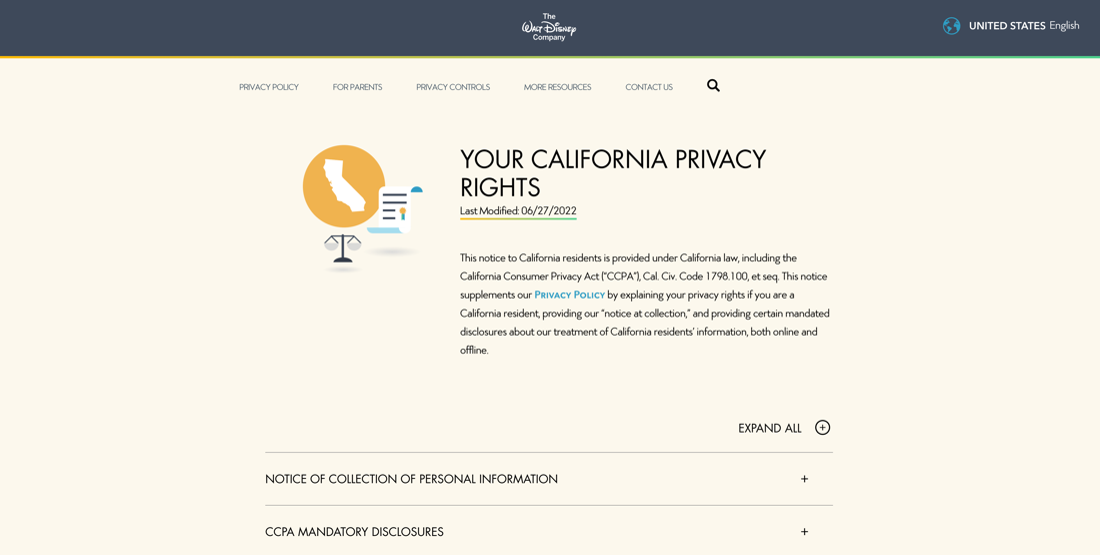
Source: Disney
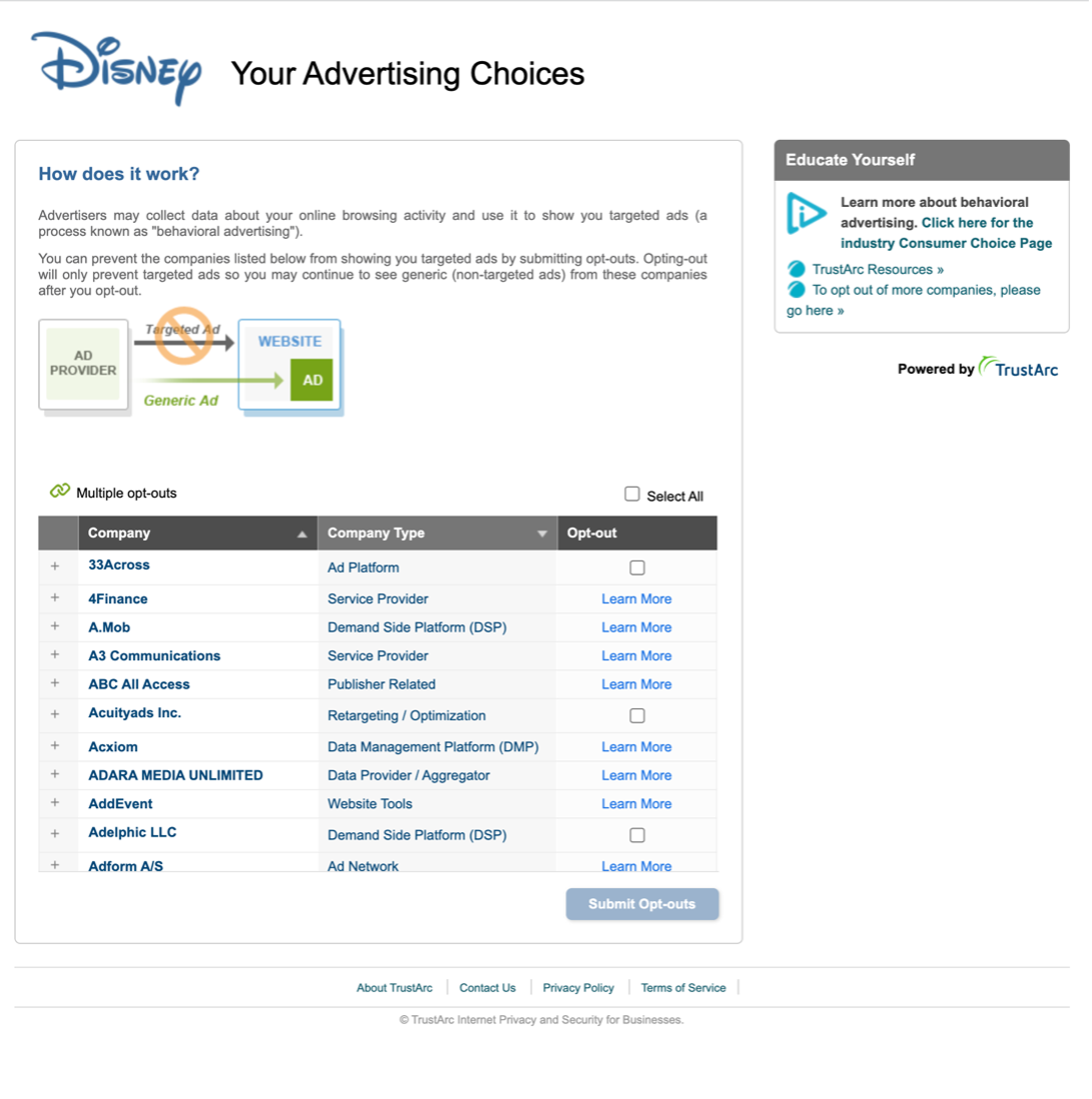
Source: Disney
While half a dozen privacy pages doesn’t make sense for every business, make sure that your company clearly communicates:
- That it understands and acknowledges the policies that are currently in-place.
- How it honors those policies and why honoring them aligns with your company values.
Invest in cybersecurity
Transparency and security go together, and you can’t build trust with your consumer without them. Over 30,000 websites are hacked daily, with the average data breach costing companies over $4 million. All it takes is one data breach to undue all the trust you’ve accrued by respecting consumer privacy through the measures cited above If you’re collecting first-party data, you need to make sure that you’re working with a secure hosting platform. Retail is one of the most targeted sectors for cyberattacks, and we’ve seen the consequences countless times. From Shopify’s data breach in 2020 to Toyota and North Face in 2022 -- data breaches will continue to be a major threat to commerce businesses and their chosen hosting platforms.
Contact Investis Digital
If data privacy is a top priority for your eCommerce business, learn more about our Commerce Solutions or get in touch with one of our experts. We can help you identify opportunities and build upon the areas of personalization that are driving the most growth for your business.