

How to Create a Seamless Customer Journey That Drives Conversion Growth
Is there really a customer acquisition “funnel” anymore? Arguably, no. Although the idea of an acquisition funnel is still a useful way for marketers to get their arms around the customer’s journey, no one takes a direct path from awareness to conversion anymore.
Anyone can learn about your business at any time, whether they’re having a lean-back experience on social media, browsing review sites, or searching with intent on Google or Amazon.
All this makes it more difficult to capture and keep a customer’s attention. But it can be done. The key is to drive conversion by meeting consumers where they are and creating an experience across an increasingly nonlinear journey.
Merge all channels into one holistic strategy
Any business that offers ecommerce is challenged to maximize the use of all customer journeys within DTC (direct to consumer), B2B, B2C, and social commerce channels. What is even more challenging is aligning the brand and product experience for increasing conversion since customers can weave in and out of any of these channels. Strengthen your presence on all platforms by outlining the goals for each channel and how they can work together all under one roof.
By guiding customers from start to finish with relevant information, you give them the choice to convert at every stage so they can check out when they’re ready. This method minimizes the likelihood of the customer abandoning their cart and increasing your bounce rate. Whereas when only asking once upfront, you could lose the sale and the chance of them coming back to your site again. Customers will feel more comfortable knowing they have the buying power and time to fully understand the product they are about to purchase. Creating a holistic strategy to keep their interest in your product 5 percent longer than usual can increase your profits anywhere between 25 percent and 95 percent.
Align your brand and product experiences
The first step to creating a seamless customer journey is aligning your brand with your product experience. Always plan and test out how customers shop for your products. Put yourself in the user’s shoes and determine how you can move prospects along. Whether they’ve shopped with you before or if it’s the first time being introduced to your brand, every customer should have an online experience. Doing this helps you identify what’s missing and how to create a frictionless conversion at all stages of the funnel.
Since customers can weave in and out of customer journey, commerce companies need to prioritize the following to secure a seamless user-experience:
- Easy check-outs. Sometimes customers just want to buy a product and check out. Don’t stand in the way of your own conversion by making them sign up for your loyalty program or handing over an email or phone number. Providing customers with an optional guest checkout portal and including features like interest-free payment splitting, mobile/contactless pay (Apple Pay) or third-party payment systems (ex. PayPal).
- Personalized ads. Align your products with the potential buyer’s past purchases, search history or related products that go hand in hand with their intended purchase. With the end of third-party cookies, having access to customers and customer data will be much harder to capture. By having these forms of communication in place, you’ll be able to strengthen your first-party data and have access to your audience directly.
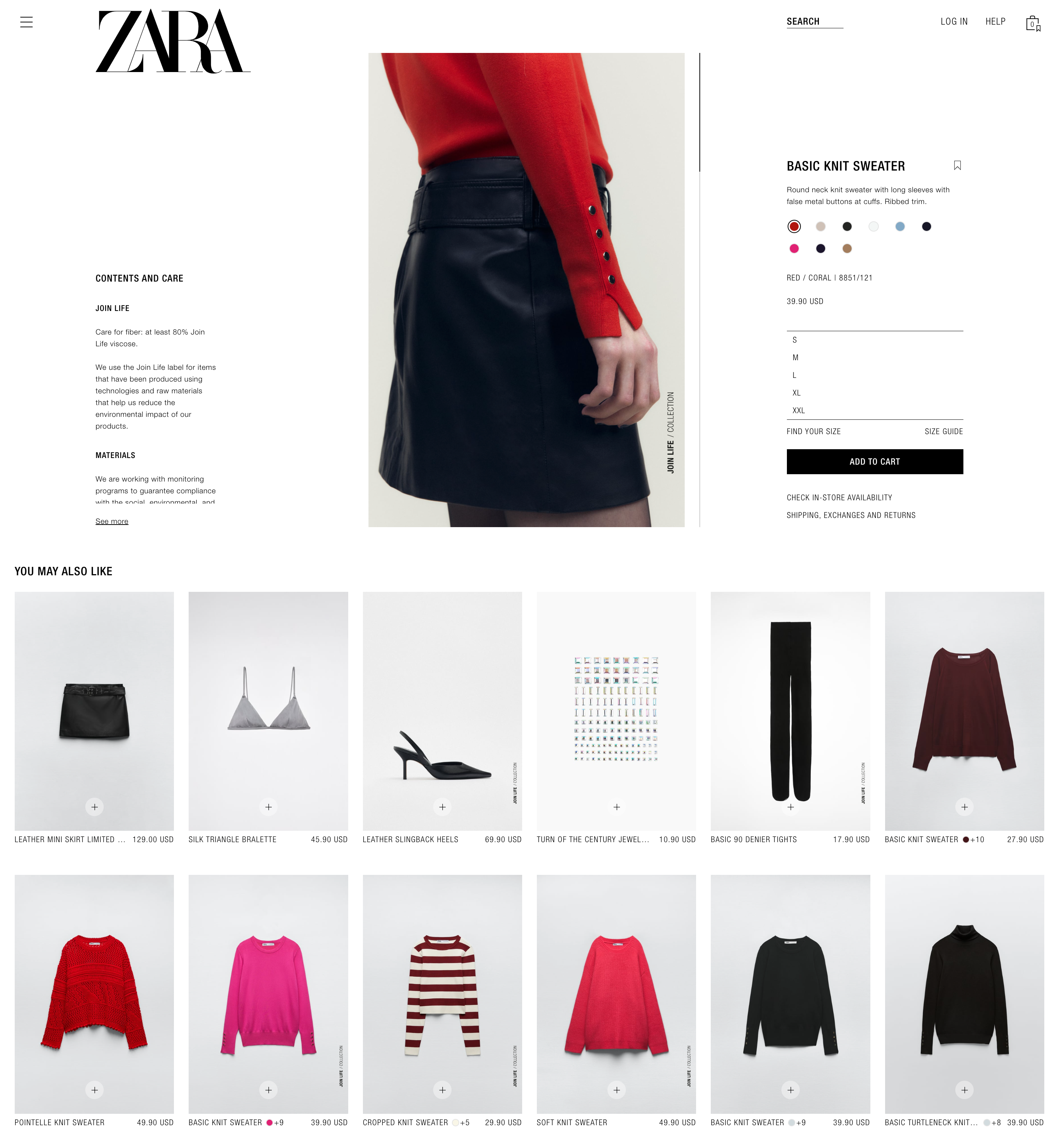
Source: Zara
-
Consistent communication. The closer you can get to the customer, the more you can increases the likelihood of a conversion. This means connecting with your customers by encouraging them to become loyalty members, signing up for email, text reminders, product alerts and/or back-in-stock notifications.
Fully utilize your digital shelf
This goes hand in hand with strategizing your user flows. Make sure your web pages serve as an advocate and information hub for your products. Aside from the seamless shopping experience mentioned above, you also want to offer a great research experience. Taking the time to develop an easy-to-access, clean layout for your product information backed by VoC data and making it easy to maneuver around the page is a worthwhile investment. Implementing a data backed optimized content strategy for your digital shelf is critical for connecting with your shoppers on your PDP. Doing this directly helps keep a potential customer on the page longer, making the chances of them picking you over a competitor much more likely.
A product’s benefits should always be expressed to prospects upfront. Presenting an impressive digital shelf is a key factor in a buyer’s decision-making process online. A solid commerce site’s digital shelf should include the following:
- Rich product media. This means taking a hard look at your digital assets and product information to ensure everything is optimized for mobile and desktop experiences, whether you’re optimizing product detail descriptions for search or providing compelling 360-degree images and videos of your products. Knowing customers are 85 percent more likely to buy a product after viewing a product video, make sure the page and the multimedia on it is fluid or can expand across mobile, tablet, desktop. Take a look at all the possible checkout experiences a customer could have on their devices. Make sure each product listing and call-to-action button is aligned. A low cumulative layout shift (CLS) score is not only bad for SEO but also bad for customers if your checkout and product pages are not aligned well.
- Optimized content that converts shoppers into buyers. Creating content is easy. However, creating content for your digital shelf that is backed from customer data, optimized for any device, platform or channel is not so easy for enterprise brands. Content that connects with your shoppers and drives them through your conversion funnel is critical. Knowing that content limitations and requirements are different within each platform and channels so knowing how to use your content strategically is key. Your content strategy should be one across all your internal teams to cover the total customer journey experience leading to conversion.
- Encourage reviews. Encourage leaving reviews (but never offer to pay for them). Offer review filters for other potential buyers researching your product. This could mean having a price range, highest to lowest demand, new arrivals, sale items, item categories etc. While it may seem like a redundant part of a product page, no matter how great your item is, creating and displaying a section for reviews could mean the difference between getting more conversions or getting a higher bounce rate. People are 84 percent more likely to trust online reviews as much as a personal recommendation. A positive review could make all the difference.
How Investis Digital can help
If your digital estate is becoming too large to manage, it might be time to adopt a holistic digital strategy. Click here to check out more of our Connected Commerce approach or chat with an expert on how to reach your commerce goals.