

How to Create Awesome Content People Actually Want
It doesn’t matter how cool you think your products are, or what you believe people should read about… if your audience isn’t actively searching for that type of content, you’re already losing the content marketing game.
Most of the time, success in content marketing has nothing to do with your writing skills, or how many longtail keyword phrases you can stuff into the copy. Great content depends on thoughtful ideation and actually answering your audience’s most common questions.
As disappointing as it may sound, search engines are not going to recognize your verboseness, nor will the content rank higher because it showcases ground breaking products that are sold on your website. Instead, they are designed to match up results based on relevancy, which makes creating content around what people are actively searching for vitally important. What we see, more often than not, is content efforts failing because people are simply not searching for what you've created.
So, the (common) question is:
How do you create content people are actually searching for?
Ask Yourself, “What Questions Do I Hear Every Day?”
We’ve discussed strategies that help ideate great topics for your blog, but one of the easiest ways to generate awesome content ideas is by utilizing the wealth of knowledge already at your fingertips -- your employees. For example:
- Ask your staff or sales representatives what questions they get asked every day. Feel free to include anyone who talks to current or prospective clients.
- Look through company studies and/or surveys that might help identify what your customers are most concerned with.
- If you actively participate in trade shows, talk with those who worked your booth to see what topics were most prominent in their conversations.
Focus on creating content that offers solutions to the queries your targets are using online, whether that be in search engines, answers sites, or other forums. If you are currently creating content for your blog, there might be a plethora of good questions in the comment section of existing content. Use these questions to form follow-up posts or fresh content.
Use Ideation to Produce Content People Really Want
Along with asking your employees what questions they get asked all the time, it's essential to do your own research. Content ideation should be paired with tools, such as:
Keyword research tools:
Search question-and-answer sites:
Once you’ve come up with a bunch of sweet content ideas, include them in an editorial calendar. This will help keep content distribution consistent and the content itself fresh and relative.
Before you commit to a topic, enter it into a search engine, and look at the results. Do you see a substantial amount of results with the exact same title or a topic that's very similar?
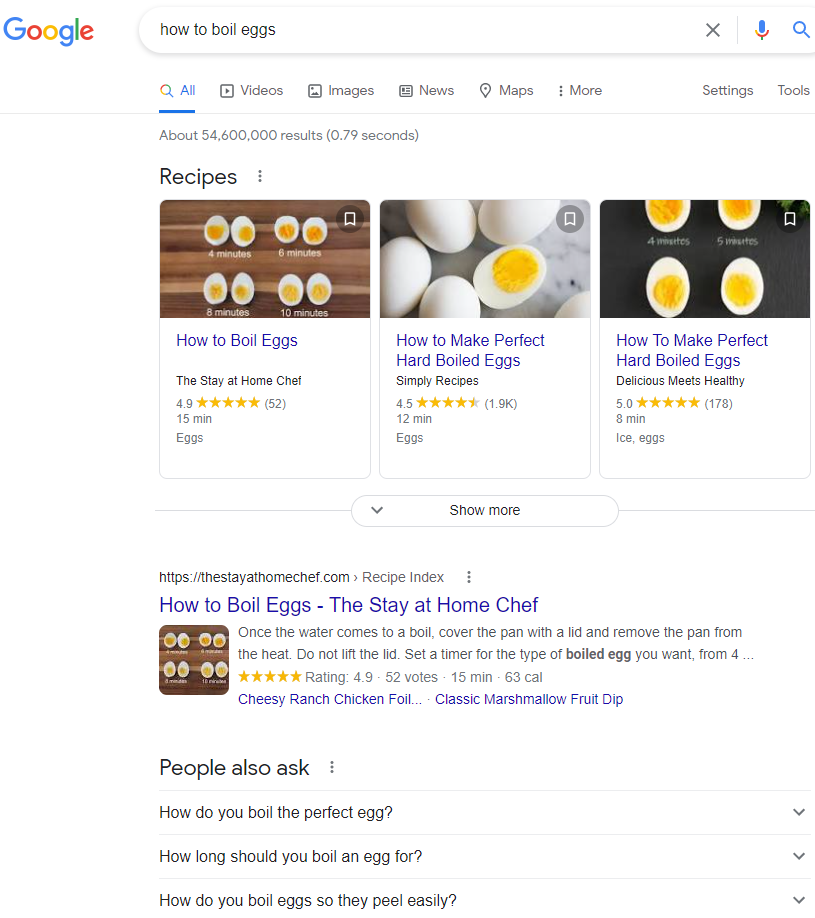
If the answer is yes, ask yourself: Can we create content that is better than what already exists? Is this topic something we want to compete with? Depending on these answers, you will need to either tweak the topic to be more applicable to your audience, or begin creating some awesome content.
Add SEO-rich Elements to Your Content
You may already be aware of how to boost your content’s SEO value by adding optimized metadata, page title tags, header tags and alt-tags, but don’t be intimidated if you don’t know how to enhance SEO for better ranking in the SERPs. Here’s an easy breakdown of how to enrich your content with some SEO-wizardry:
- Metadata and page title tags: These elements help search engines determine what your web pages are about so they can categorize them properly. Even though they’re used to identify web pages, adding metadata and title tags to your blog makes them even more searchable.
- Header tag basics: H1, H2s and H3s – Just like your metadata and page title tags, “H-tags” are another element of SEO optimization. As you might guess, the numbers indicate a progression with H1 indicating the primary headline and H2, H3 are subheads. Use H1 tags only once in any piece of content; H2+ tags can be used multiple times. Your H1 and H2’s should include a targeted keyword phrase whenever possible – but don’t force it!
- Fitting keywords into your content: Keyword usage has totally changed over the last few years. It’s important to never compromise the quality of your content in order to squeeze in more keywords. If a keyword is used once or twice in a great piece of content, generally that’s all you need. People search keywords because they want information related to the keywords; they have no tolerance for a page that optimizes a keyword but delivers unrelated content. This will get you nothing but a huge bounce rate and lowered rankings.
- Image optimization: Images are perhaps the most commonly used vertical search type. Because they get searched so frequently, the images on your website need to be optimized. Images can appear in the main search results if search engines determine that image results are relevant to a particular search.
Best Practices for Titles and Meta Descriptions
One of the most significant ways you can penalize yourself against search engines is to create a Header/Title/H2 that is:
- Missing relevant keywords: It's better to be straightforward than clever when it comes to headlines, since search rewards relevancy over click-bait or clever titles.
- All about self-promotion: Content marketing is about helping, not selling. People want solutions to their challenges, not read about products and services.
- Setting unclear expectations: A mysterious title and description don’t get people to click – instead, searchers will never see it because it won't show up in relevant results.
When measuring the success of a content marketing campaign, keep in mind organic search results aren't just the luck of the draw. They're only successful with careful strategic planning, high-quality useful content and appropriate amplification on the channels your target customers are on.
So, What Did We Learn?
- Ask yourself, “What questions do I hear every day?”
- Use content ideation tools to help create meaningful topics.
- Create optimized titles, meta descriptions, tags and content for search engines.
Whether you're starting a new content marketing campaign or need to revamp your current strategy, remember that although content is king in making meaningful customer connections, search results get your content seen.
Download our Editorial Content Calendar Template
Download our Editorial Content Calendar Template that will help you create or re-ignite your content marketing strategy. Sit down with your team to use this in a brainstorming session!