

Top 5 CRO Tactics for Lead & Revenue Growth
Conversion Rate Optimization (CRO) is defined as: An iterative site testing process allowing for discovery and elimination of website user friction points that may inhibit optimum conversion rate and volume.
Kind of technical, right? Now, let’s try this: CRO is the testing of website layouts to determine what your audience finds most engaging and easy to use.
There, that’s not so scary. If you’re not currently doing this sort of user engagement testing on a continuous basis, we highly recommend it. CRO testing, especially on paid media landing pages, yields on average a 40% improvement in conversion rates over control pages. Depending on the amount of traffic you have to a test page, the potential results could make the difference between growing your paid media budget and losing it due to poor return. To put this another way, if you were spending $5,000 a month on paid search traffic and that effort yielded you 2,500 clicks per month which then converted at a rate of 2% and an average order value of $100, that means your campaign may only be breaking even.
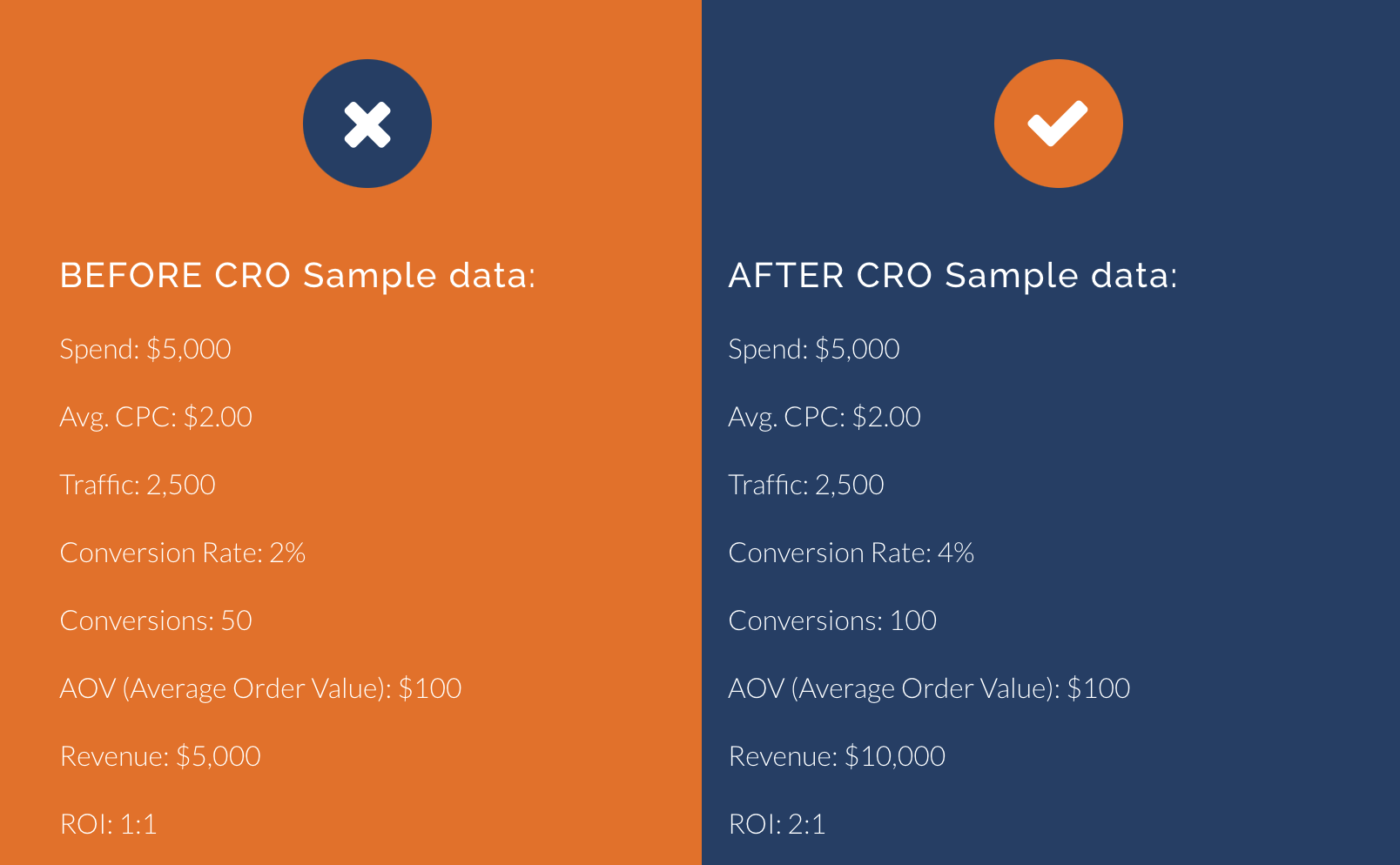
If a CRO test leads to an improved user experience and your conversion rate doubles to 4%, this could yield $10,000 in revenue instead of $5,000. These results could bring your 1:1 ROI to 2:1 and could get you the approval needed to continue testing and promoting content.
5 Ways to Increase Leads and Revenue with CRO
Investis Digital’s track record of results proves the CRO service line is one of the most effective and profitable tactics we offer. Whether you’re interested in employing an agency to help with testing or doing this in-house, these are the top 5 testing tactics you need to stimulate audience and revenue growth.
1. Create a CRO testing schedule!
We recommend regular CRO testing until a 90% statistical significance has been achieved and at least a single test to run AT ALL TIMES every 28 days. Anything longer than 28 days and you may risk diluting your results by sending too much volume through a test page or expose your test page to potential seasonal performance changes that could affect your result analysis. When a test is complete, measure the results, implement the variant that performed best, and move on to your next test hypothesis. We recommend achieving AT LEAST a 90% significance rating before the conclusion of any test.
2. Target low hanging fruit!
Are you trying to decide where to start? Look at your site’s analytics and look at the most popular entry pages into your website, you’ll probably see your homepage and other landing pages on the list. Of those, which of them feature one or more of the following site-wide features:
- Top 3 Bounce Rate %
- Top 3 Exit Pages
- Top 3 Lowest Session Duration
Depending on what sort of audiences are being delivered to these pages, these pages could provide the best ROI following efficient CRO testing.
3. Use data to inform your testing parameters!
Guessing at a new site layout element is a good way to waste your time, be sure to utilize site user behavior and engagement to your advantage when deciding what element to change and test.

Image: Screenshot of a heatmap using Crazyegg
A great way to gather the necessary info is through the implementation of “heat-mapping” software, such as Crazyegg or LuckyOrange which can reveal where your audience is scrolling, hovering, and clicking. This can lead to actionable test layouts where the audience showcases certain behaviors, for example:
- Clicking where there is no link
- Confused by multiple CTA’s
- Not finding the CTA commit button
- Ignoring content on the page
4. Ask your audience for feedback!
If you’re paying for an audience to come to your landing page but they aren’t converting, one of the best ways to find out why not is to ask them what was missing from the experience versus what they may have expected. For example, sending a quick pop-up survey when a user shows exit-intent without converting will often net you golden feedback on any potential miscommunication between audience expectations and what you may be delivering in terms of an experience.
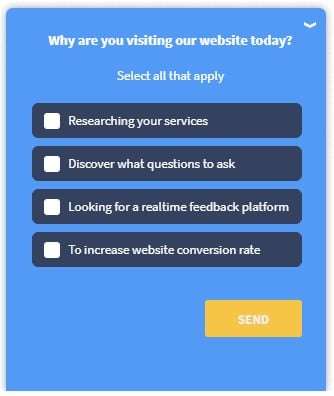
Image: Exit-intent form example
Check out Qualaroo for an example of a solid survey partner that can assist in establishing this sort of survey methodology.
5. Check your page load speeds!
Before you go down the rabbit hole of CRO testing variants, check your pages for latency on each device. Optimizing overall site load speed by reducing clutter, page length, optimizing image sizes and site device responsiveness are all ways to increase load speeds and give you a better baseline performance metric to start with. Nothing is worse than finding a great landing page layout but not being able to see the impact because the page is being delivered too slowly and spoiling your results. Fix the page load speed – then test!
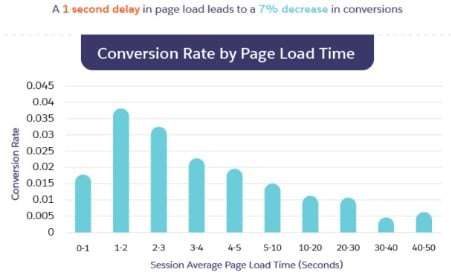
Source: Convert.com
Summary
Organizing and sticking to a testing plan, identifying quick wins, backing up test hypotheses with engagement data, obtaining real-time customer feedback, and optimizing site load speeds are our Top 5 best practices for winning at the CRO game of life! Follow these tactics and your brand will be well on its way to optimizing every high-value page on your site to its fullest engagement potential.