

How to Increase Your Conversion Rates: Case Study
How to increase your conversion rates & exceed sales goals
Increasing website conversion by 195% amidst a business-model transformation
*Business name has been changed in this story for the privacy of our client
There are businesses who lean into change and there are businesses who make excuses—when the COVID-19 pandemic began to change the world in March 2020, the marketers at Seriously Beautiful proved they were ready to evolve.
Seriously Beautiful (SB) is a well-established, prestigious brand of skin care products aimed toward the aging woman. Prior to 2020, their sales were rooted in display placements at brick-and-mortar med spas and dermatology offices. These placements had built them a strong following. Women were loyal to their local serum, moisturizer, eye cream, and cleanser displays.
But when storefronts and non-essential medical facilities closed nationwide for lockdowns, Seriously Beautiful had to reconsider its in-person sales strategy fast. Instead of waiting for life to go back to “normal,” they reached out to IDXl in June 2020 after attending our half-day digital marketing masterclass at a conference a year prior. Seriously Beautiful’s head of marketing agreed with our audience-driven approach and wanted the same strategies applied as they transformed a B2B business into a B2C ecommerce marketplace overnight.
Cue the dramatic music.
Defining an audience-driven strategy
A website can be an impactful sales tool if structured right. Since the goal was to switch the marketing focus to the end product user, naturally the first priority for IDX was Seriously Beautiful’s site. Historically, it looked like a product brochure with no ecommerce functions or calls to action. Additionally, the minimal content that was shared on-site was not segmented by the audience’s needs, making it hard to navigate if you were a first-time user discovering the skincare brand. IDX began to lead the charge with well-researched Audience Personas, a Competitive SWOT Analysis, custom Content, Paid Media, and Measurement Strategies.
Our team’s experience and research helped Seriously Beautiful understand where they needed to meet their new B2C audience, how to build authority in the industry online, and in what order to get it all done. The initial findings allowed our IDX and SB teams to collaborate and launch an effective new website foundation for the brand to grow with. But our conversations did not stop there, because UX is an ever-evolving beast.
Capitalizing on live website traffic
After Seriously Beautiful’s new site was launched, IDX implemented organic content and paid media ads that were driving valuable new audiences to the site. We wanted to help them further capitalize on these potential customers as much as possible. The main competitors in the industry are top beauty resellers that have much larger marketing and advertising budgets than the solo named brands. If Seriously Beautiful was to compete, we had to make the most of all the traffic we helped them acquire. It was time for a comprehensive UX Analysis.

For Seriously Beautiful, this meant we compiled and reflected on some of the following data:
- Acquisitions by channel
- Traffic by device
- Audience demographics
- Top landing pages
- User flow
- Cart abandonment
- Checkout abandonment
- Homepage and product page elements (image size, image & video placement, buttons, product filters, colors)
- Pop-ups
- Mobile layout
- Navigation
- Page margins and spacing
- CTAs
(*This is not an exhaustive list of factors you may address for your own site.)
These factors and trends then fueled what hypotheses we developed to test first.
There are several forms of UX testing that could be used in conjunction with such a UX Analysis. You’ve probably heard of or may have even carried out Customer Surveys, User-Panel Testing or Focus Groups. Additionally, you may have invested in Design services or Market Research. None of these methods are wrong, however they don’t take advantage of your real-time audience that’s live on-site. Therefore, we recommended Conversion Rate Optimization for Seriously Beautiful.
Conversion Rate Optimization is the continuous process of improving a site’s user experience in order to derive the most value (conversions) from all traffic. Since IDX values data-driven solutions, our team recommends ongoing website changes based on data gained from continuous A/B testing to the live audience.
The hypotheses we defined were then acted upon by IDX’s Conversion Rate Optimization team.
Testing Must Be Iterative
When deciding what to test first, we prioritized what we believed were Seriously Beautiful’s biggest hindrances on their top conversion pages.
For example, the product cart:
Hypothesis Example #1:
If we redesign the cart page on mobile devices, testing multiple versions of the design, then we will find a variant that increases revenue.
Proposal:
2 variants are proposed alongside the control (unchanged version).
- Variant 1: Adding the product image back to each item.
- Variant 2: Adding the product image back and restyling the product card.
Goals:
- Increase revenue
- Increase checkout visits
- Increase ecommerce conversion rate
- Increase avg. order value
- Decrease bounce rate
We proposed these variants because it is typically best practice to keep an image of the product users are ordering visible throughout the entire purchase process. The product images were hidden at the time on the mobile version of Seriously Beautiful’s cart page.
While this factor is a best practice, we still recommend testing, as users can prefer non-traditional options sometimes. Additionally, this allowed us to test multiple designs.
Results:
Variant 2 showed a 50% increase in users advancing from the Cart to Checkout and was implemented permanently.
Key Takeaway:
Even if one test is successful, there are always more iterations that can be and should be tested upon.
In the next month we began to incorporate new tests that aligned with the user-journey as a whole. What elements affected how consumers got to the checkout cart?
Hypothesis Example #2:
If we change the navigation item “Skincare” to read “Shop”, then we will see an increase in site transactions.
Proposal:
2 variants are proposed alongside the control (unchanged version).
- Variant 1: changing “Skincare” navigation option to “Shop.”
- Variant 2: moving “Skin Concerns” and “Collections” under the “Shop” navigation item.
Goals:
- Increase ecommerce conversion rate (Sessions with Transactions)
- Increase clicks on “Shop” navigation item
- Decrease bounce rate
IDX realized some users were clicking the cart icon in an attempt to reach a “shop” page. It was not clear that the “All Skincare” page was bringing them back to a general list of everything on the site. To better the user experience, we proposed several levels of testing to make sure consumers were directed all the way to their point of highest conversion.
Results:
Variant 1 showed a 44% increase in eCommerce Conversion Rate and the navigation was permanently changed to read “Shop”. Variant 2 showed an increase in people clicking on the “Shop” navigation item but actually saw a decrease in conversion rate.
Key Takeaway:
Tests can build upon one another as user actions progress and navigations deepen. Testing multiple variants at a time can speed up iteration.
After seeing a seemingly small change to the navigation make such a big impact, we decided to test a larger change to the navigation to see if we could further refine it.
Hypothesis Example #3:
If we condense the navigation into one bar and move the promotion banner below the navigation, then we will see an increase in conversion rate and a decrease in bounce rate.
Proposal:
1 variant is proposed alongside the control (unchanged version).
- Variant 1: move Search, Cart, and My Account links into the main navigation and condense “resource” links into one dropdown
Goals:
- Increase eCommerce Conversion Rate
- Reduce Bounce Rate
- Increase clicks on shopping related navigation items
Results:
The variant saw a 34% increase in eCommerce conversion rate and a 13% increase in clicks on shopping related navigation items
Key Takeaway:
Brands that treat their websites as sales tools, both B2C and B2B, continuously test changes that enhance their online conversions. We invite you to check out a few named examples yourself:
- Head to https://archive.org/web/
- Look at the homepages of these example sites MoM and Quarter to Quarter:
- Take note of changes in navigation, button colors, CTA’s, layout and images. These are just a few elements you may see changing – a product of continuous UX testing.
Show Me The Money
Our CRO efforts helped Seriously Beautiful reach their revenue target for the year one month ahead of schedule.
The IDX team had direct communication with Seriously Beautiful’s web developers, which allowed our continuous UX changes to be swift and easy. With timely implementation came business-changing results. Over the course of a year, we’ve cumulatively helped the brand grow their mobile conversions 195% and desktop conversions 56.54%. With an average order value of $192, this increase in conversion rate amounted to an incremental $335,808 in revenue. If you relate these conversion gains to your own average order value, what kind of growth could you see?
Do You Have What It Takes?
Before we dug into Seriously Beautiful’s UX testing, we mentioned the content and paid ads that we helped their marketing team establish first. This is because you need to have enough traffic coming to your website for your CRO testing to be accurate. Typically, we recommend around 10,000 users per month to your website as a benchmark for if it’s appropriate to start CRO. Otherwise, your audience sample could be too small and the time it will take your tests to reach a point of statistical significance will be too long.
Keep in mind IDX’s team had select UX specialists solely focused on Seriously Beautiful’s CRO. Their experience spans data analysis, design, development and UX, allowing them to react to website trends more quickly than regular graphic designers and web developers. This portfolio of experience and dedicated time is necessary to run advanced CRO campaigns.
Additionally, for your CRO testing to be accurate and the most effective, you must:
- Run one A/B test on a section of the site at a time. Too many test variants at once and you will muddle the data of which change made a positive or negative impact.
- Reach a point of statistical significance with your tests for them to be deemed complete. Using statistical significance proves that an A/B test was successful or unsuccessful. Ideally, all A/B tests reach 95% statistical significance or 90% at the very least. If you don’t have a system currently in place, you can use our free Statistical Significance Calculator.

An ideal test length is 2 to 8 weeks. If a test still isn’t reaching statistical significance after 8 weeks, we recommend concluding the test and considering making a more drastic change or moving the test to an area of your site with higher traffic or a higher conversion rate.
Do you have someone on your team who can help, or do you need to hire?
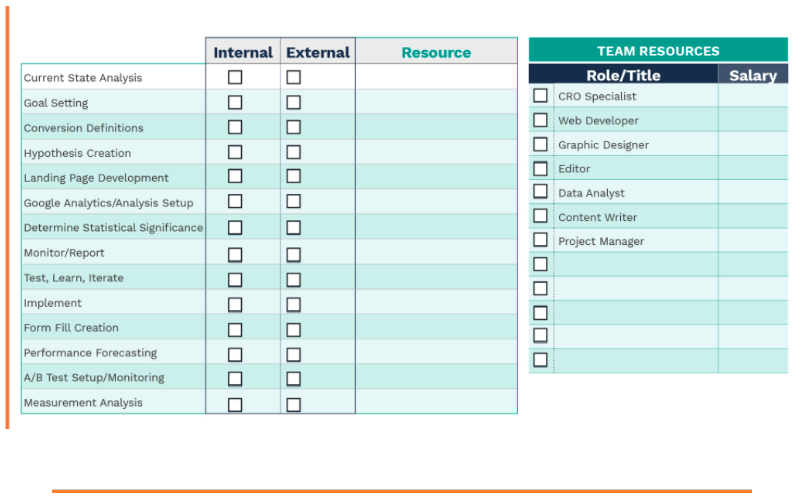
The beauty of Conversion Rate Optimization and UX is that you get near-instant results. This allows you to adjust quickly to maximize return and hit your sales figures. Once you do, don’t stop the effort. The internet and buyer habits change daily. Make sure you are constantly testing so you can capture hundreds of thousands in extra revenue like Seriously Beautiful. Or maybe even more!
Contact Us
At IDX, we tackle CRO challenges for all types of clients, whether B2B or B2C. Book a consultation with us to speak with one of our amazing CRO experts.