

How to Be a Purpose-Driven Brand
What does it take to be a truly purpose-driven brand? Commitment. Commitment to action. And commitment to story. Purpose-driven brands balance profits with a broader motive to make the world better. They measure their success by financial metrics but also by how well they improve society. Purpose-driven brands are constantly under the microscope. Many of them tout their commitment to environmental, social, and governance (ESG) issues and corporate social responsibility (CSR). If they fail to back their words with evidence, they risk damaging consumer trust at a time when trust in institutions is wavering. But if they don’t tell their own story, then how will other brands learn from their examples? Patagonia is often cited as a business that balances action with story. Patagonia is not the only one, though. Case in point: Swedish electric bike company Cake offers a lesson on how to balance story and action.
How Cake Takes Action
Cake’s core purpose is about manufacturing high-quality electric bikes that consumers will love – while making the world better. The company’s mission is to develop the highest performance electric two-wheelers and to contribute to accelerating towards the zero-emission society. Right off the bat, Cake’s focus on manufacturing electric bikes links Cake to a sustainable mission by hastening the transition from combustion-based to electric vehicles. The company manufactures its bikes with a focus on making them light, quiet, and clean to minimize their wear and tear on the earth and to combat noise pollution.
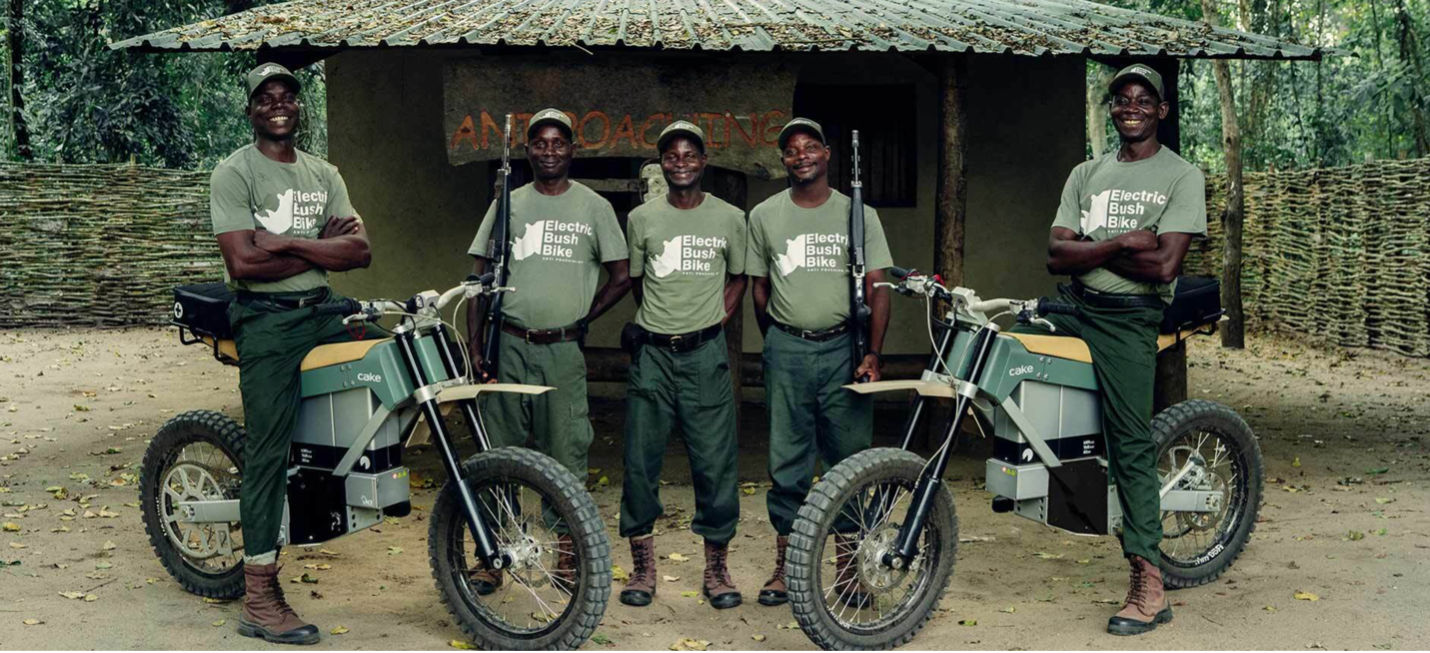
Cake is also committed to another important issue: protecting wildlife by fighting illegal poaching. Cake’s Kalk AP model is a solar-powered bush bike, specifically designed to protect endangered species from poaching. In Africa, antipoaching patrollers need quiet motorbikes to find and stop illegal hunters of elephants, rhinos, and other endangered species. Stealth is essential to catch poachers. A quieter bike helps patrollers operate without being detected.
As discussed in Fast Company, Cake has collaborated with the Southern African Wildlife College (SAWC) to supply rangers with the Kalk AP model. The SAWC is a conservation-training institution. The organization has trained 10,000 field rangers in 127 parks in 56 countries in the world to protect land and wildlife. Rangers need fast bikes to catch poachers, but the bikes pollute the earth, and because the vehicles are noisy, illegal hunters can hear them approaching from a distance. So, the SAWC has been working closely with Cake to design quieter bikes that will withstand the harsh climate in the bush.
Cake is finding benefactors to make the bikes available at no cost to the SAWC. This has been a test-and-learn process. The bikes have suffered from clogging of batteries due dust and mud, but Cake is learning from those experiences to improve. Meanwhile, SAWC says the bikes are already helping to stop poaching attempts.
How Cake Tells Its Story
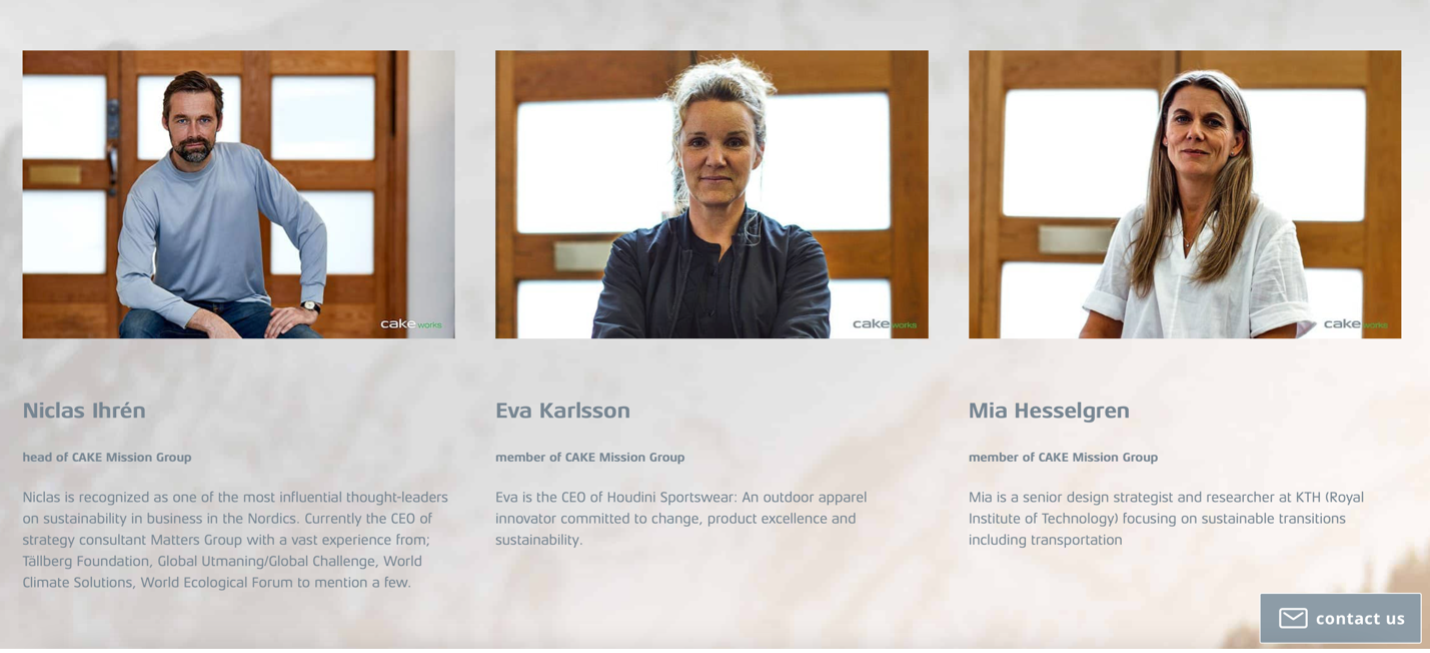
Protecting the environment and wildlife is a compelling purpose. And Cake wants the world to know about its purpose, starting with its website. For example, its site articulates the company’s mission to be a responsible corporation. A page devoted to sustainability discusses the purpose of the Cake Mission Group and identifies its core members, which humanizes its mission.
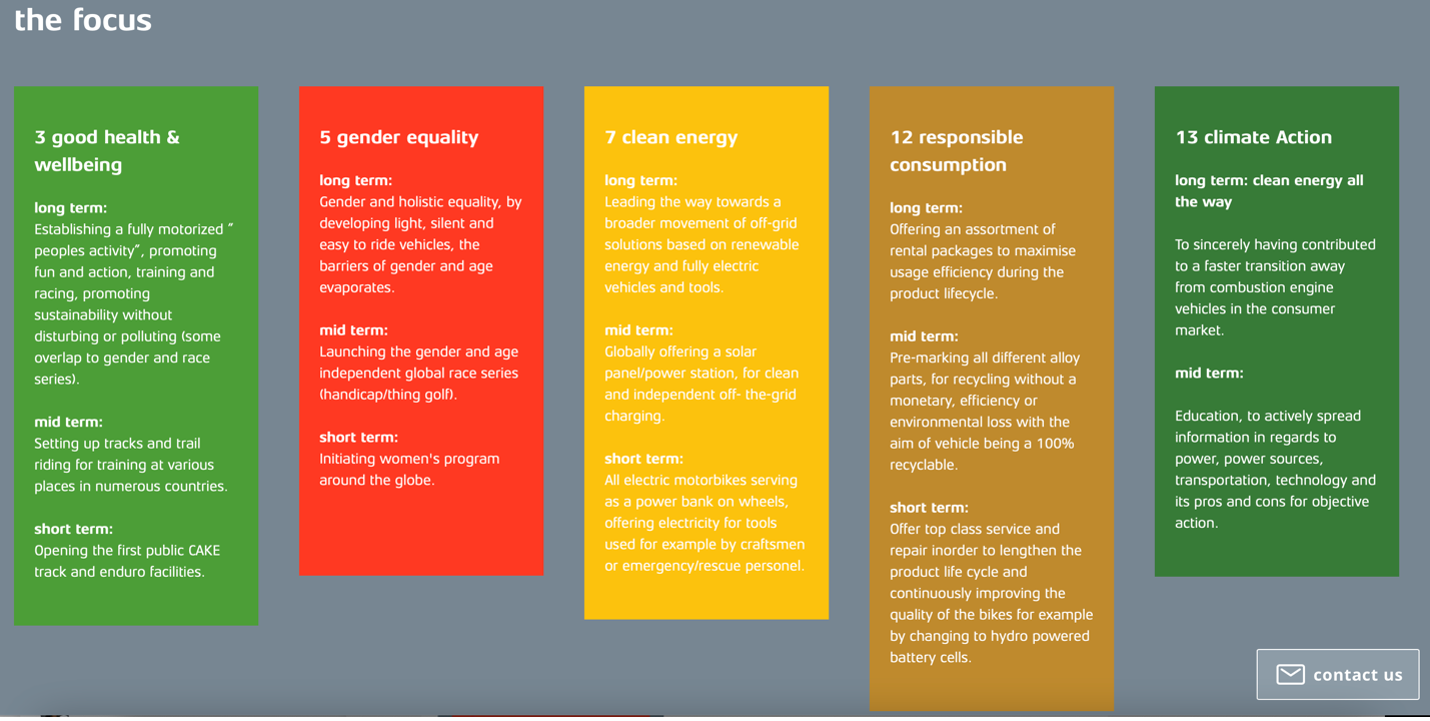
Cake also aligns its mission with the 17 United Nations Sustainable Development Goals (SDGs). This is important because the SDGs are acknowledged as a compelling north star for purpose-driven businesses. Those goals range from ending poverty to fighting climate change. A recent analysis of websites by Investis Digital showed that 66 percent of companies do not align their purpose with SDG goals – so Cake is on the vanguard here. Cake has chosen to focus on meeting five of the 17 goals:
The company also tells the story of its anti-poaching efforts on its site using words and images.
Its press room keeps the world up to date on its efforts, and coverage from high-profile publications such as Fast Company is important to amplify Cake’s story. We’d love to see Cake tie it all together in a formal report, too, which is a common practice among purpose-driven brands.
Cake also relies on social sites such as Facebook, Instagram, LinkedIn, Vimeo, but the company’s visual content tends to focus on showcasing bike features. We encourage Cake show its purpose more on its socials, especially on sites that rely on the power of images.
Cake inspires us by balancing actions with story. Our recently published report Building Trust through the 4Rs: Responsibility, Reputation, Recruitment, and Reach discusses purpose-driven branding in context of four pillars of building trust with all your audiences.
Contact Investis Digital
Contact us to learn how we can help you bring to life your actions with compelling content. Through an approach known as Connected Content, we help brands build trust with all their stakeholders, including customers, employees, investors, influencers, business partners, and more.