

Google Doubles Down on Online Recruitment for Employers
Google recently made it easier for job seekers to apply for positions on company websites. The company announced a new editorial content policy and structured data property intended to help employers provide job seekers with “authentic, fresh, and trustworthy content” when they use Google. Let’s take a closer look.
New Editorial Content Policy
Google is raising the stakes for organizations that post job listings. The revised editorial content policy includes some important quality control standards such as:
- No promotional content disguised as a job posting.
- No expired job postings.
- Job postings must include a way to apply from the posting itself. For instance, job postings that require a login to view the job description violate Google’s editorial content policy.
- No posts with bad grammar. “Follow basic grammar rules, use proper capitalization, avoid writing text in all caps, and only use acronyms or abbreviations that are widely understood,” says Google.
Read more about it here. Organizations that violate the policy risk having Google remove the listings and generally running afoul of Google, which is not a place any business wants to find itself.
Structured Data Property
A new structured data markup property highlights job listings that offer a simple online application process. Structured data is a standardized format for providing information about a page and classifying the page content. When a business adds the JobPosting structured data, its eligible job postings posting appear in a special user experience in Google Search results, as Google shows with this example:
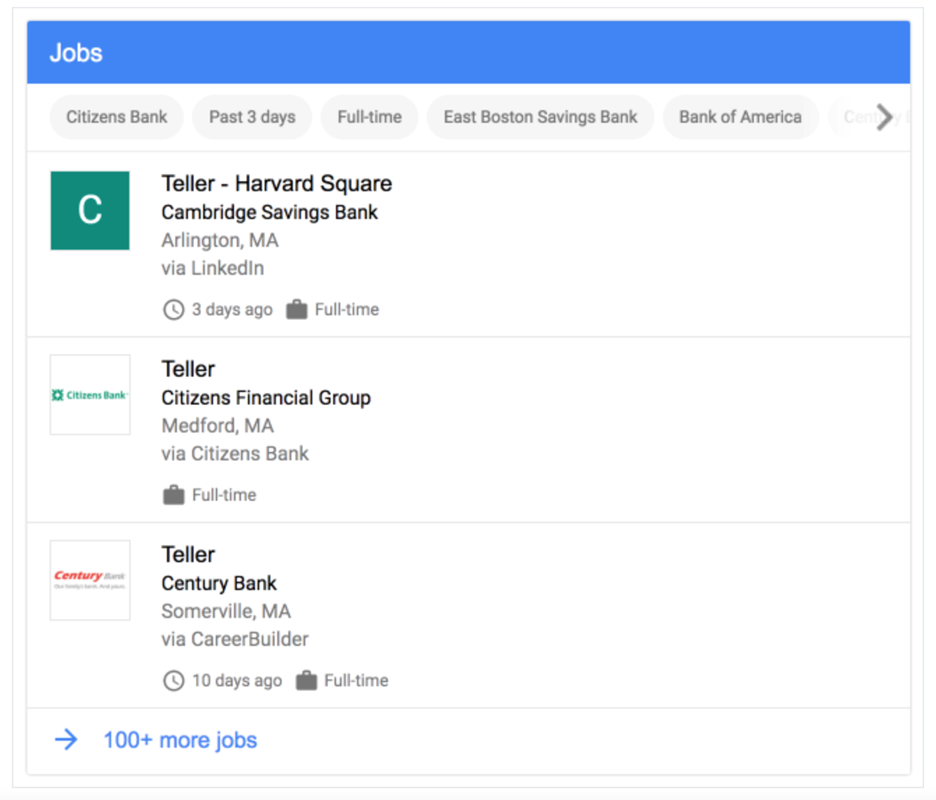
Google elaborates on what constitutes a simple online application process: “user is offered a short and simple application process on your page without unnecessary intermediate steps. If the user has to click apply, complete an application form, sign in or log in more than once in the application journey, it means that you aren't offering a direct apply experience.”
According to Google, using the structured data markup yields results such as:
- More interactive results: A company’s postings can be eligible to be displayed in the job search experience on Google, featuring its logo, reviews, ratings, and job details.
- More, motivated applicants: job seekers can filter by various criteria like location or job title. The potential employer is more likely to attract applicants who are looking exactly for that job.
- Increased chances of discovery and conversion: Job seekers will have a new avenue to interact with postings and click through to the company site.
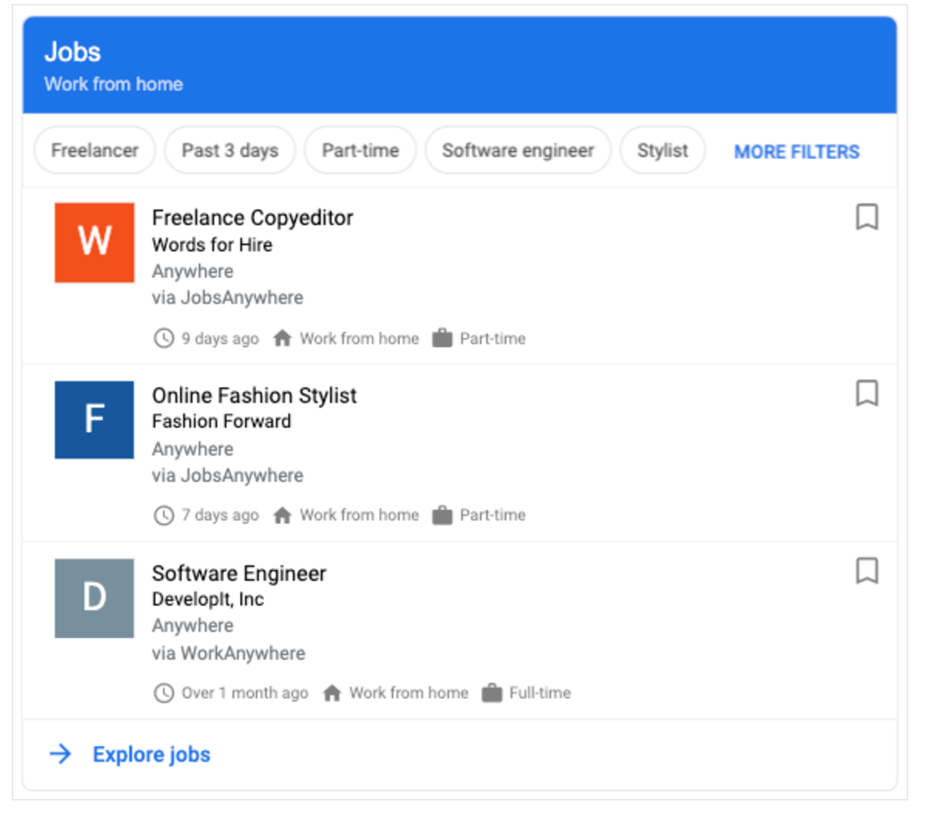
Google also encourages businesses to add structured data to work-from-home jobs – an obvious accommodation to the dramatic way many businesses have transitioned to a remote working. As Google notes, “Given the recent COVID-19 impact on businesses and employment, Google has seen more job seeker interest in work-from-home and remote job opportunities. To make it easier for job seekers to discover these relevant employment options, we encourage you to add structured data to your work from home jobs.”
Work-from-home jobs appear in Google Search as follows:
Google provides more insight into how to add structured data here.
Why the News Matters
Google recognizes a couple of important truths:
- The war for talent has intensified. As we discussed on our blog, in the United States, more workers are quitting their jobs today than they have in the last two decades.
- The war for talent has gone digital. The most popular talent branding tools are a corporate website, online professional networks, and social media.
Google understands that its search engine is a powerful starting point for people to search for a new career. About 70 percent of job searches begin on Google.
What Business Should Do
It’s essential that businesses treat recruitment as an online journey. That means creating performance marketing campaigns that attract job seekers and drive them to your website. This mindset means adopting the same digital tactics that successful businesses have traditionally deployed with consumers, from targeting to email drip campaigns. Creating a successful recruitment journey starts with the fundamentals of market research, building personas, and creating a map of the recruit’s journey with digital marketing touchpoints embedded throughout the journey.
As the Google news underscores, optimize your site for the job seeking experience. Your website needs to be a content powerhouse, expressing your company’s values, commitment to diversity and inclusion, job openings, career advancement, and other essential details – organized as a user-friendly experience that converts job seekers to employees. We’ll talk more about that on our blog soon. Meanwhile, I encourage you to learn more about our approach to recruitment in our new report, How to Build Trust with the 4Rs: Responsibility, Reputation, Recruitment, and Reach. And here’s an example of our work in this area.
Contact IDX
To improve the way your business attracts and keeps people, contact IDX. Our HR & Talent Acquisition solution helps businesses succeed with creative outreach that transforms brand perceptions with job seekers and employees.