

Mental Health Crisis: Why Cases are Increasing in American Universities
There is an idyllic cultural standard expected from colleges and the “college experience.” This includes becoming a place where students are offered not only educational advancement but also a place to live, build relationships, explore new experiences, open doors for new opportunities, and offer emotional, physical, academic, and monetary support. Even with all these offerings, more than a third of U.S. college students thinking of withdrawing from college.
Below, we will explore what makes this period of time more taxing on students enrolled in colleges today than for previous generations. Most importantly, we will cover some solutions universities can do to help support students’ wellbeing today.
Why The Mental Health Crisis Is Increasing Thoughts of Withdrawal
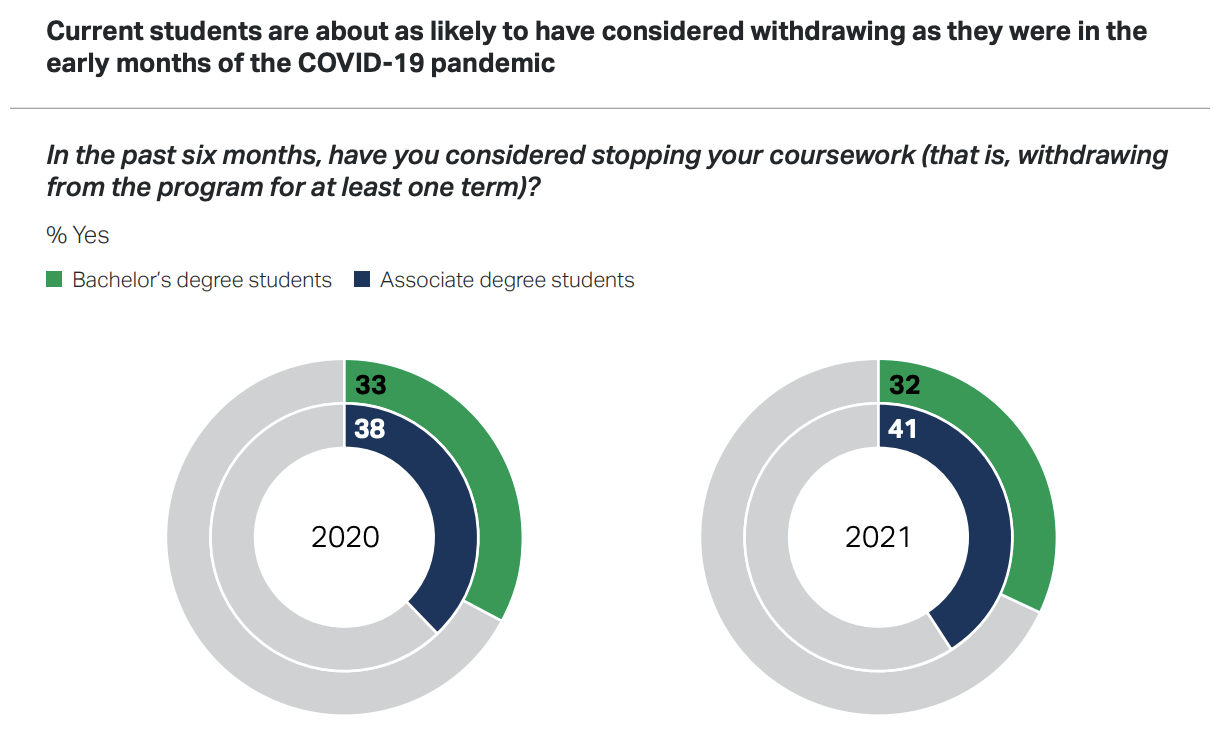
The Lumina Foundation and Gallup recently surveyed U.S. college students pursuing a bachelor’s degree. The survey revealed that:
- About a third (32%) of currently enrolled students pursuing a bachelor’s degree have considered withdrawing from their program for a semester or more in the past six months.
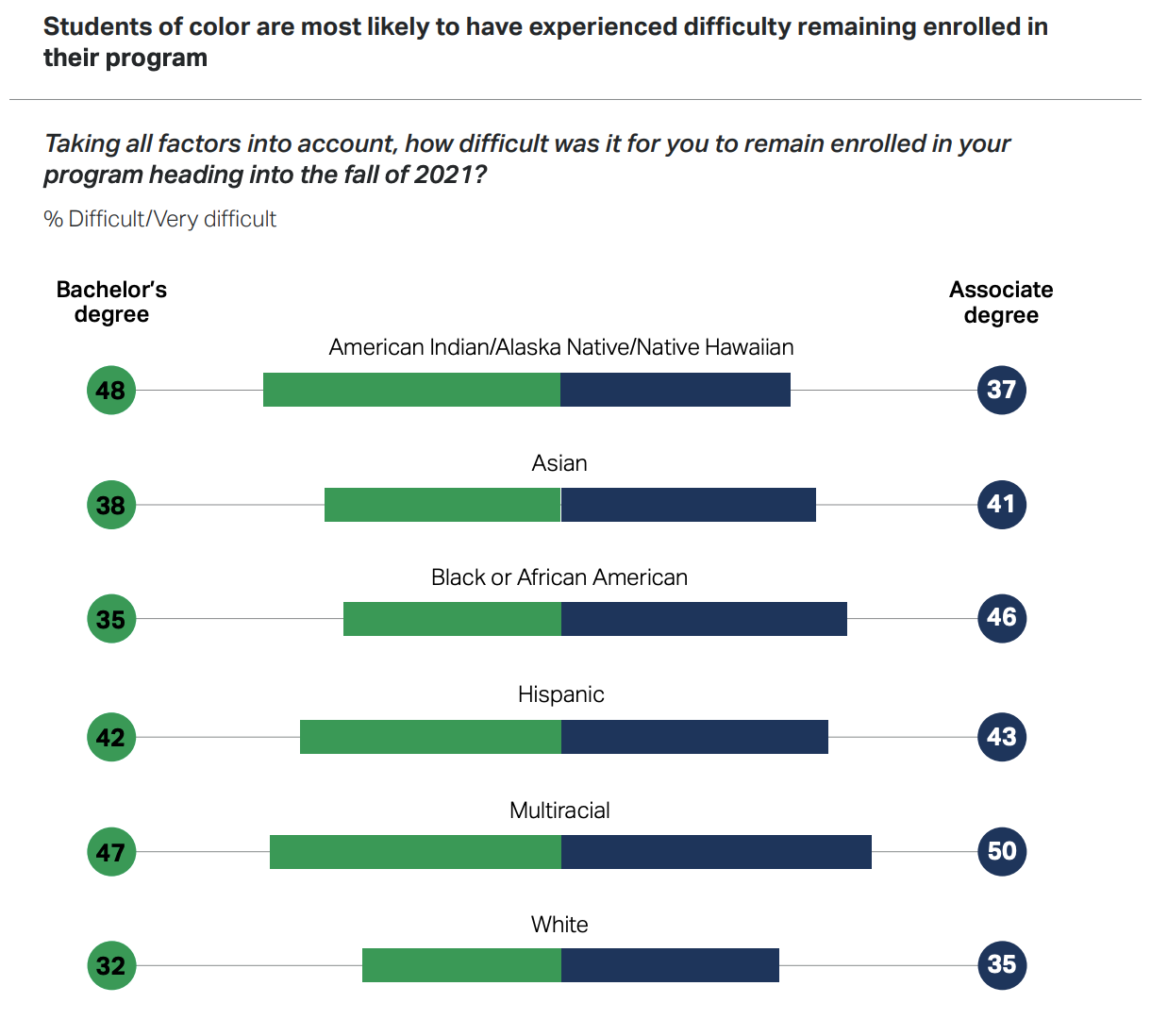
- Multiracial students are the most likely to report they have considered stopping out. About half of those pursuing a bachelor’s degree who identify as multiracial report they have considered stopping out in the past six months.
Why are so many students thinking of putting higher education on pause or even dropping out? The reasons cited are:
- Emotional stress. Seventy-six percent of those pursuing a bachelor’s degree who have considered stopping out report they did so because of emotional stress they were experiencing.
- COVID-19, cost of attendance, and coursework difficulty were the three next-most-often reported reasons students considered stopping out.
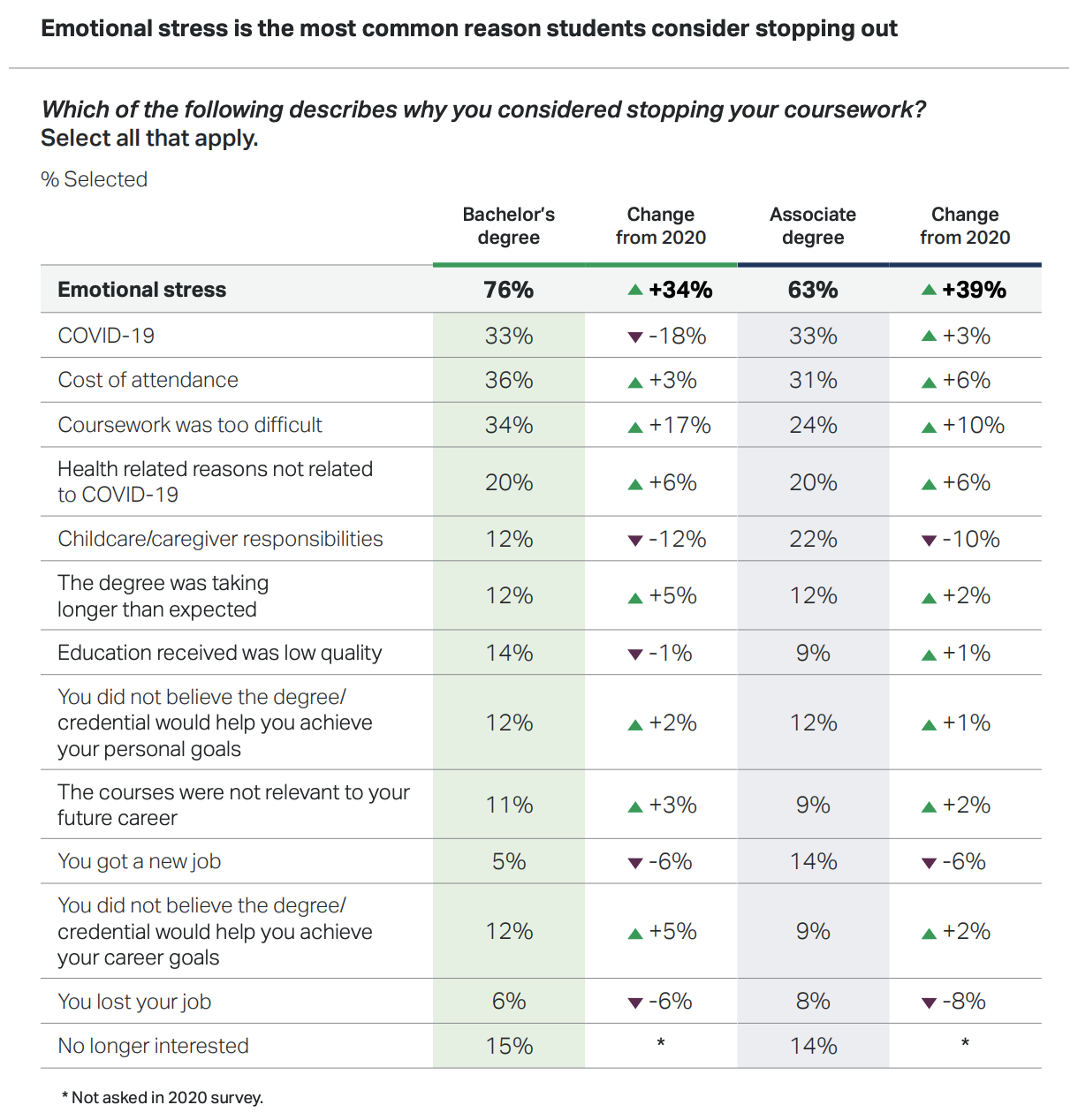
Overall, the percentage of undergraduates who have thought about leaving college is the same as it was when this survey was conducted in 2020 at the height of the COVID-19 pandemic surge that shut down in-person learning.
Although COVID-19 is not as strong a factor anymore, emotional stress is becoming more evident: the number of students citing emotional stress as a reason for considering withdrawing from their college jumped 34 percent year over year.
How Colleges Can Support Students During the Mental Health Crisis
The latest survey findings underscore the need for higher education to not only offer mental health assistance but also market these services, so that students know they are available. Universities that are looking to reduce the overall cases of mental health crises and that are looking to improve long-term student success need to feature these supporting services front and center to students.
These best practices include:
- Surveying students to understand how they are feeling right now. Truly invest your time and care into getting student feedback. No matter how big or small the response, every experience matters. Remember that your mileage as an institution may vary depending on your resources. How many of your students are considering dropping out? Are there common answers that come up? What stresses intersect with your institution and how does it operate? Is it something that your university can change or offer to lessen this stress? As you explore these options, pay close attention to multiracial and international students. According to a survey done by the National Institute on Minority Health and Health Disparities, data showed that people who identified as Hispanic/Latino and Asian were more likely to not receive treatment for mental disorders lasting nearly a year than people who identified as Black and white. It was also discovered that people who identified as Hispanic/Latino and Asian were also more likely to believe they did not need treatment despite showing signs of having experienced mental health crises. The respondents cited not seeking treatment for several reasons, including wanting to handle the problems themselves, not thinking their problems were severe/downplaying it, believing treatment would not help, and inability to afford or access treatment, especially in neighborhoods where health providers were already sparse. Offering the proper services on campus is especially important because for some students, it is the only introduction or education they’ve ever received on mental health assistance and services without any existing stigma. Getting to the root of the stresses that cause students' emotional toll and drawing similarities and differences between all ethnicities will help universities drastically target these issues head-on and create support systems that can accommodate the entire student population.
- Examining the impact of remote learning on stress and coursework. A sudden and unexpected transition to remote learning played a role for students of all ages unaccustomed to taking online courses. Those students include people with learning disabilities, those who perform and thrive on physical interaction, and students who may have unique or complicated housing situations where the classroom is the only place available to concentrate or study. And yet, remote learning can be an excellent and positive experience, as many colleges have demonstrated over the years. How might online learning become a better experience? A college that is unaccustomed to offering remote learning might want to examine best practices from those that have been managing remote programs for years successfully.
- Offering more flexible assistance and securing in-person and virtual options for students. Amid the ever-present threat of COVID-19 variants flaring up on campuses, this also proves valuable for students who are dedicated exclusively to your university’s online programs or are balancing, for example, mid-career schedules that do not allow time for attending these support sessions offered in-person. It is important to consider equal opportunities for attendance for all students who seek it and having the option be easily accessible.
- Making mental health a stronger focus of their recruitment and retention efforts. If a college wants to attract students to live on campus and see the institution as a real support system, do not bury crucial student services behind multiple tabs and sub-directories. Make it clear that students’ concerns are of utmost importance and make it a point to market services so they can be used. The more they are used, the more funding, time, attention, and strategies can be invested into making these services better catered for them. It is crucial to have solid user experience and an easily accessible site for students to learn about the umbrella of assistance your university can offer. Creating a separate, user-friendly website dedicated to student and staff support. Whether it be technology support, financial aid, health services, or counseling, there needs to be a one-stop-shop-students can turn to in a time of crisis and to seek help to avoid and deal with major crises before they happen if possible.
Contact Investis Digital
Investis Digital helps higher education institutions tailor content, create better UX friendly support sites and offers customized recruitment and retention strategies for the needs of today’s students. We discuss some of our lessons learned in a newly published white paper, Higher Education Marketing: Six Trends in Online Higher Ed.
The white paper is based on services we provide to help colleges and universities market themselves, including paid media, search engine optimization, content and creative, web design and development, social media, and more.
Download the white paper to start increasing enrollments for the upcoming academic year. To start your enrollment journey or talk about how to support the new student journey, talk with one of our higher education experts here or learn more about our Connected Content Approach, here.