
Measuring the Impact of Link Building on Organic Search
At the start of 2018, Investis Digital launched five new lead generation websites within five verticals in the higher education industry. This was a unique project because these websites were created from scratch -- so we were able to test and measure each of the changes we made throughout the development of each site.
Below are the steps that we took to turn each of these sites into conversion machines, to read in more depth about each one, make sure to download our new guide, How to Build Quality Backlinks that Impact Organic Visibility.
Step 1: Create Linkable Assets
One of the most crucial initial stages for creating a website that ranks well organically is content creation. Our team focused on this effort for the first year of this project. Doing so played a vital role in earning the quality and quantity of links we needed to be successful.
What is a Linkable Asset?
Companies such as Facebook, Google and even Activision (see this recent example with Warzone) have discovered that when you provide users with valuable, free content, there is typically a way to monetize it. The same holds true for linkable content. This “monetization” often comes via non-branded keyword visibility, assisted conversions, trust established from creating authoritative content and/or by receiving contact information for lead nurturing down the road.
We typically define linkable content as:
- Non-promotional
- In-depth
- Useful
- (Usually) top-of-funnel
- High search volume
- Evergreen
- Timely
Here are two of our favorite linkable assets (Note: we have no affiliation with this content or organization):
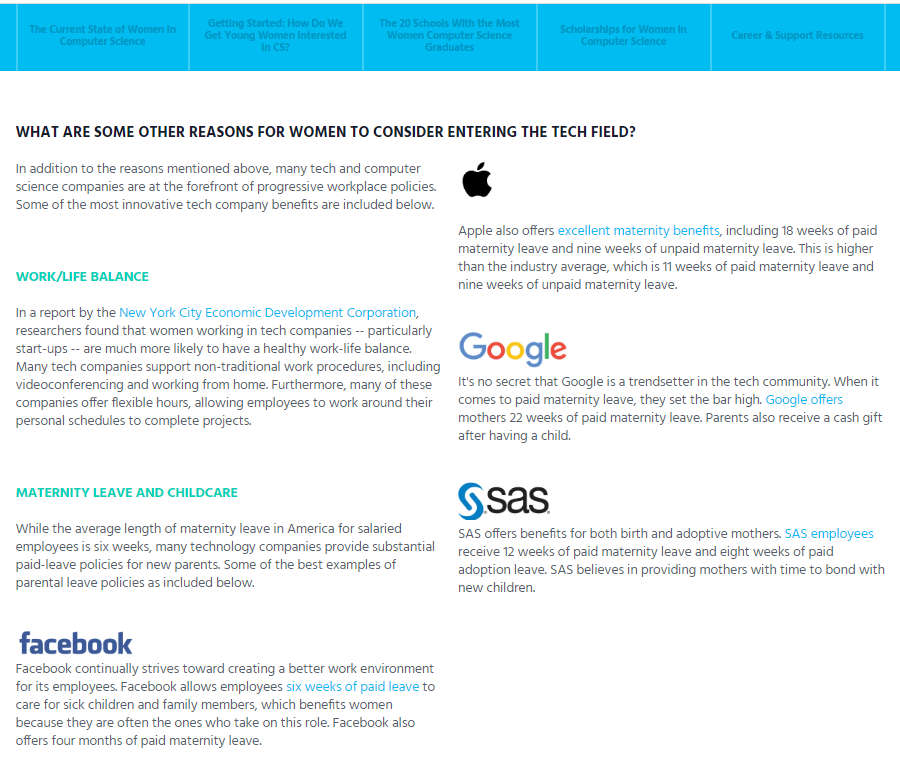
1. Women in Computer Science: Getting Involved in STEM (369 Referring Domains)
This piece provides valuable information to any woman looking to enter the field of computer science. It provides statistics, career resources, links to free educational programs, and much more.
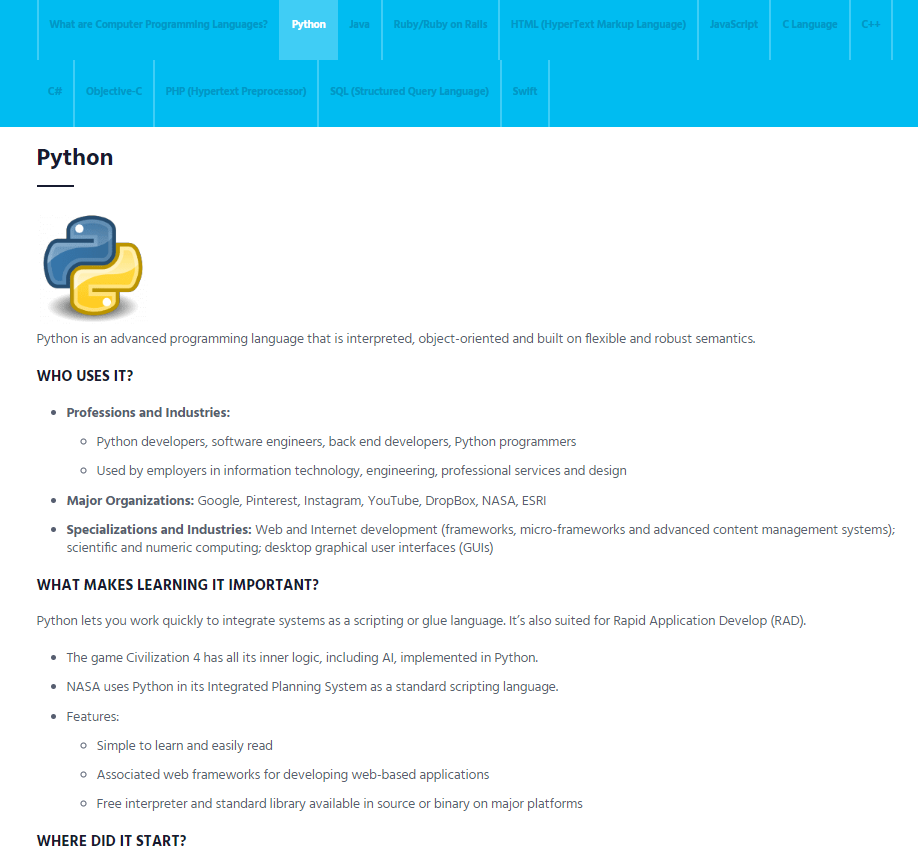
2. Computer Programming Languages (206 Referring Domains)
This piece provides valuable information to anyone looking to enter the field of computer programming. For each programming language, there is information about who uses it, why it is important, and where it started, along with websites to get a jump start on learning the language of your choice. These pieces include valuable external links, which creates a more authentic experience for users.
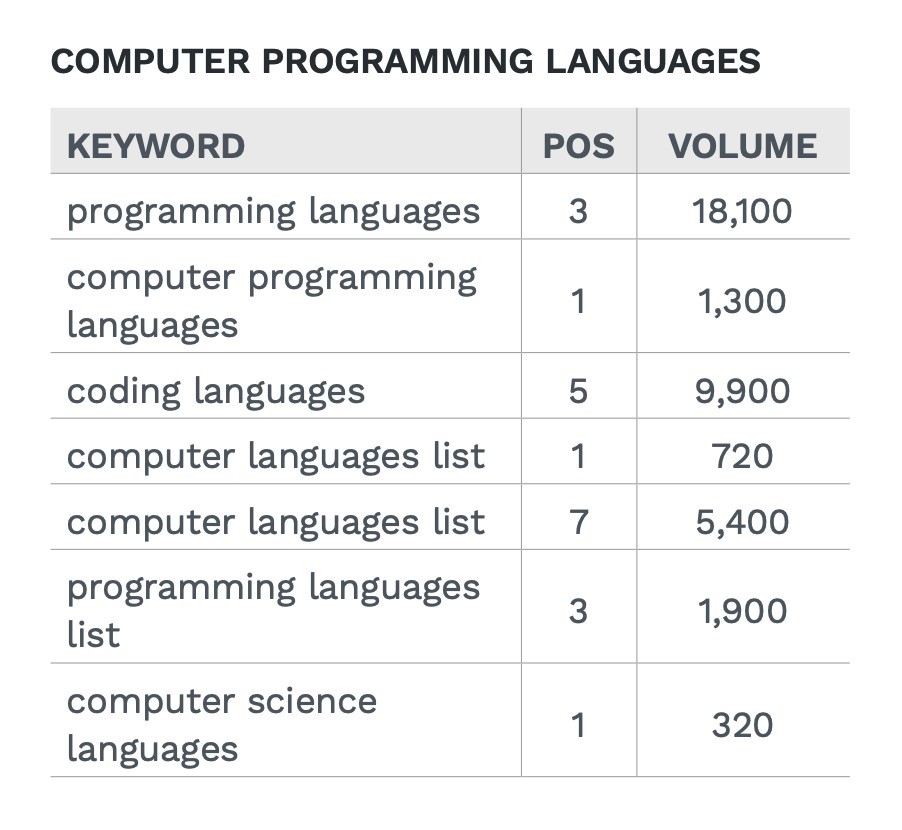
While the main purpose of these pieces is to earn qualified leads, computerscience.org does it in a natural way. The visitor doesn’t feel like they are being forced through a sales funnel. They provide interesting, useful content. In turn, they are rewarded with some awesome non-branded keyword visibility:
Step 2: Build Quality Backlinks
Once we created the necessary linkable content, our team jumped right in with our link development process. The challenge we faced here was the lack of brand recognition we typically have when sending outreach on behalf of our clients. Linking opportunities that we lost out on include unlinked mentions of the brand, local links, and partnership links. However, since the content was so thoughtfully created, it made the value proposition from our emails much stronger.
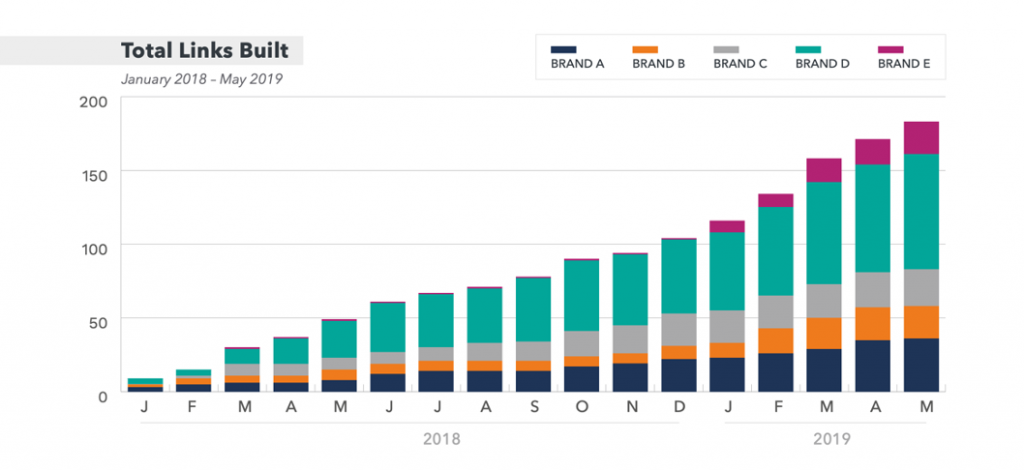
Question from the audience: Were most of these links built to product pages?
Answer: NO! In fact, 10 percent of the links we built were pointed toward our product pages. This is because we were only reaching out with these pages when our team identified a relevant opportunity to do so. Of the 1,262 Page 1 rankings we were able to secure across all five sites, more than 30 percent of those rankings were for our product pages, showing the importance of logical site architecture and useful internal linking to improve the visibility of pages that are harder to earn links to.
Step 3: Measure Domain Authority Growth
In our data study from 2019, we suspected that the new Domain Authority 2.0 was created to fix the artificially high growth that Link Explorer was showing from May 2018-March 2019. Domain authority has been relatively flat for most of our clients since the roll-out of 2.0 at the start of 2019. In fact, when we look at all of our link development work combined, the average domain authority growth since the launch of domain authority 2.0 has been +0.53 – quite the contrast from what we saw from May 2018 through March 2019, when, across the board, our clients saw an average growth of +6 DA points.
Despite this, domain authority is still a great metric for observing the potential of newer websites before organic traffic starts to take off – and that is exactly what we saw with our data:
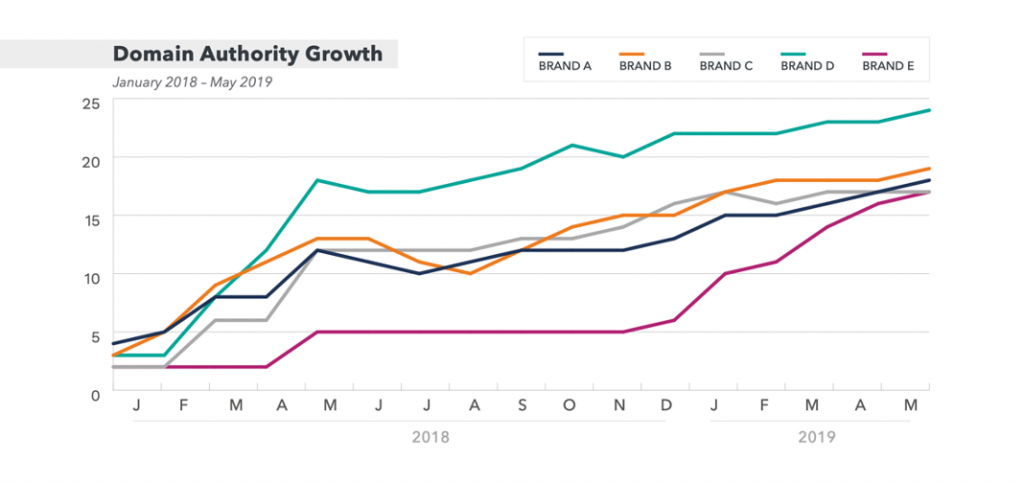
We recommend using domain authority for looking at the growth for new websites and competitor analysis, as well as for prospecting linking opportunities. However, if you manage a site that has been around for some time, we recommend using organic traffic as a key indicator of site performance.
Step 4: Measure Organic Traffic Growth
It took a full nine months of content creation and link building until we started to see an uptick of organic traffic. There were some situations (as with site E) where we reduced our focus because we were seeing a low return with DA growth, and subsequently, traffic. However, by early 2019 we were seeing consistent growth. All sites were ranking for a wide variety of non-branded, high-volume, competitive terms.
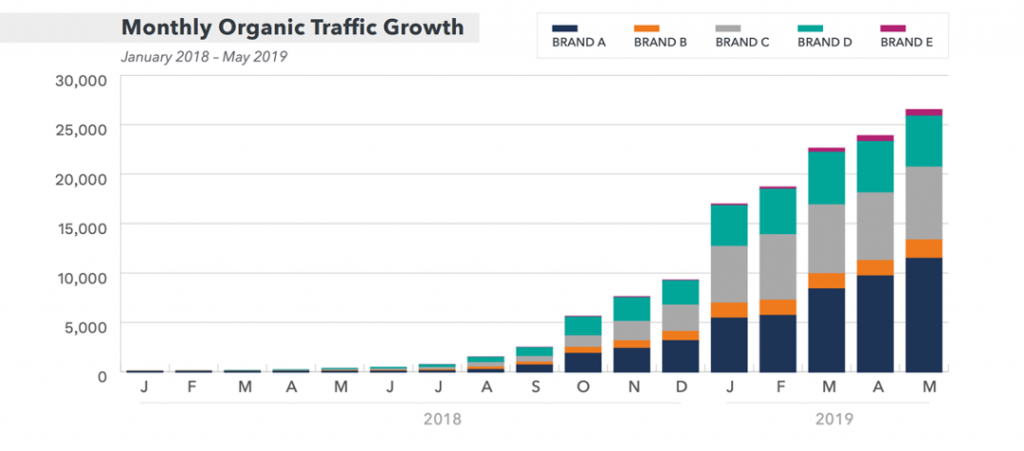
Step 5: Measure Lead Growth
Finally, in Q4 2018, we start to see lead volume increase substantially across all the sites. We observed this trend well into 2019, which speaks to the solid foundation that we put in place through hundreds of hours of testing and improving.
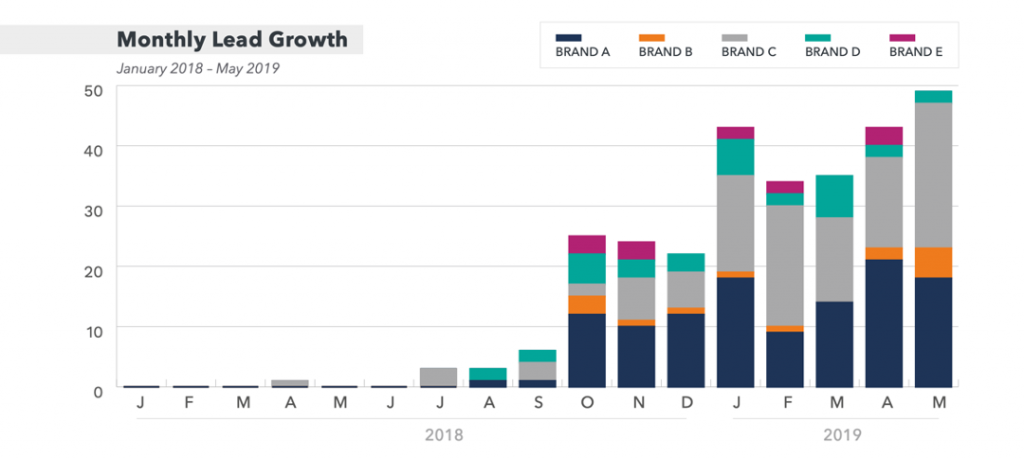
Why is the last reporting date May 2019?
It’s not! At the end of May 2019, our team made the decision to halt work on all five websites. We put a tremendous amount of resources into them, and they were performing to the point where they had become lead generation machines -- which was our goal.
However, once we made the decision to stop building links, we continued to measure each site's activity. What we found over the course of the remainder of 2019 was astounding:
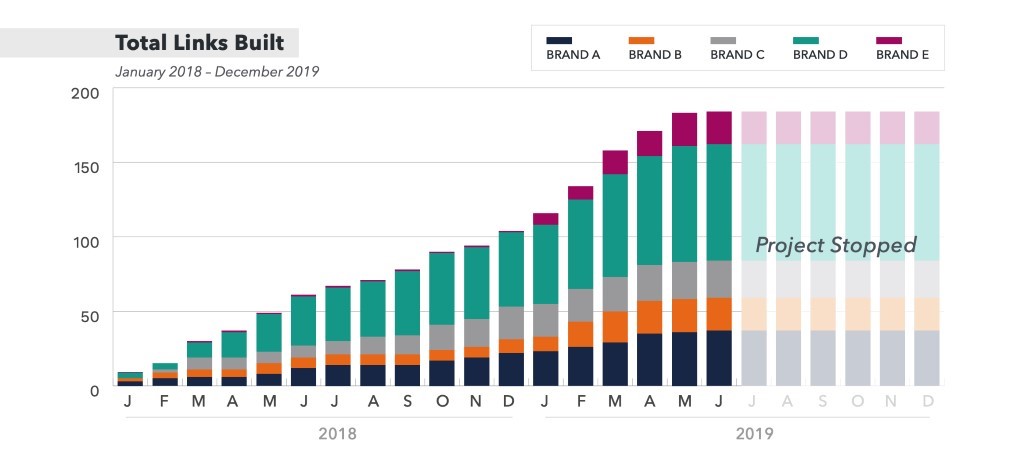
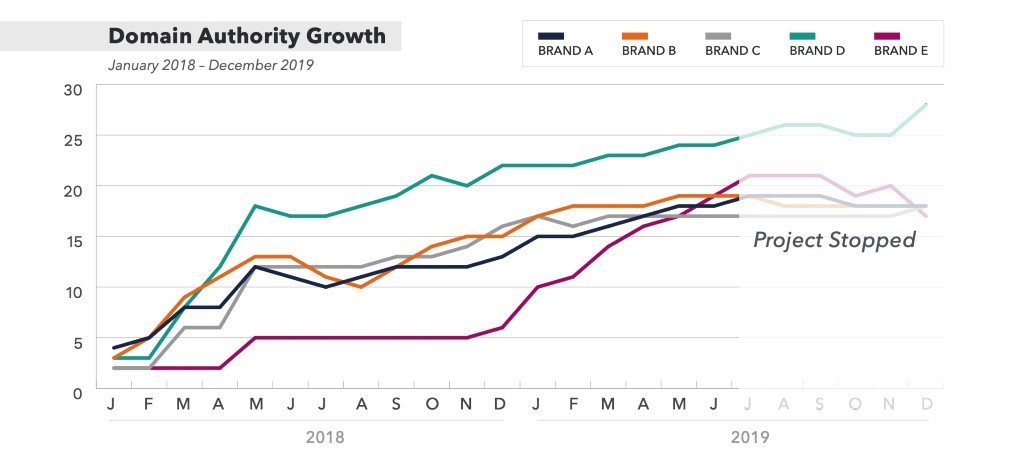
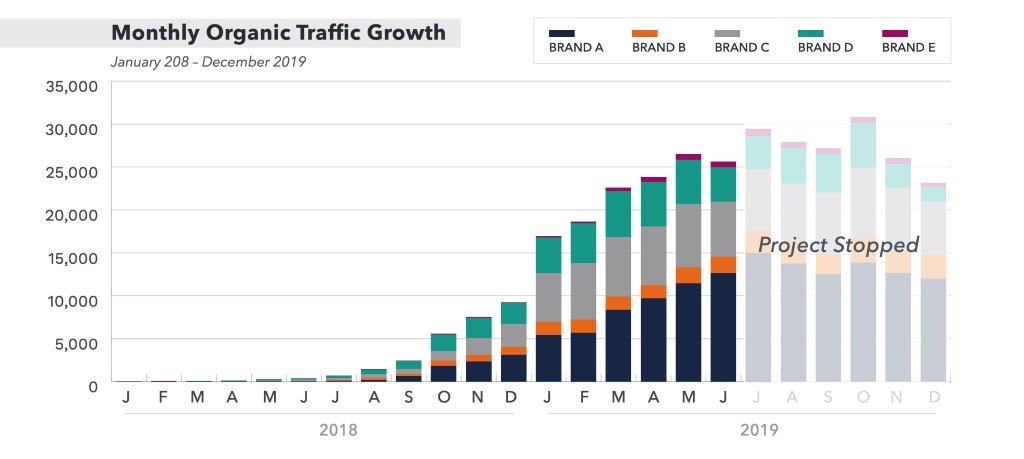
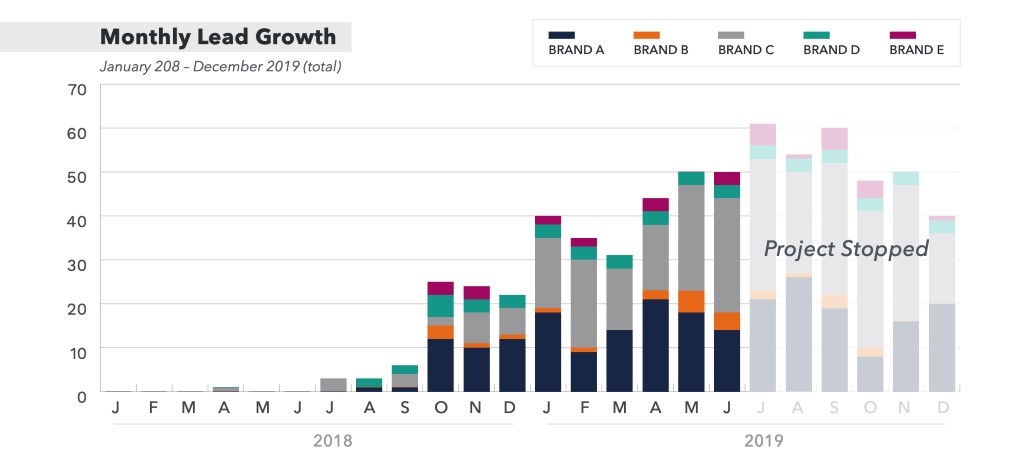
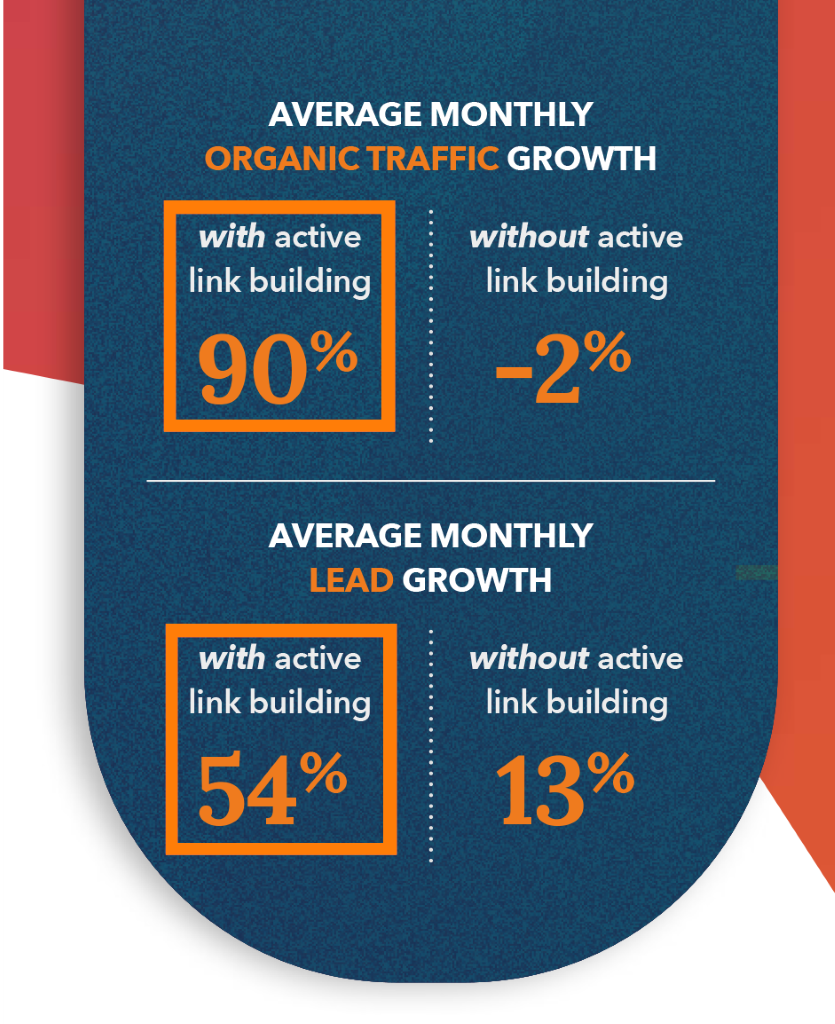
As you can see from these graphs, link building and content creation have a major impact on organic growth (and subsequently lead growth) for a website. When we stopped ongoing work across each of these sites, both the organic traffic and lead volume leveled out.
In a time where businesses are looking to reduce their digital marketing budget, we believe this information is critical for digital marketing managers to see. Do organic traffic and leads matter for the success of your business? That is a rhetorical question: we know they do. It is crucial to continue organic efforts to continue to drive both and stay ahead of the competition.
Download Our New Guide
To learn more about the value of link building and SEO, please download our newly published guide, How to Build Quality Backlinks that Impact Organic Visibility. Read this guide to understand why links are crucial for ranking #1 on Google. To learn more about Investis Digital’s SEO expertise and experience, feel free to contact us at any time.