

Google’s New Page Title Update: What You Should Know
On Aug. 25, 2021, Google announced a new system of generating title tags for web pages. The update caused a commotion when SEOs began pointing out unusual title tag rewrites appearing in the SERPs.
Google is no stranger to altering title tags. The search giant has been overriding HTML title tags in certain instances since 2012. However, the method in which they generate title tags has been overhauled, and SEOs were among the first to notice those changes.
Keep reading to learn more about the details of Google’s new page title update and how the changes may be affecting you:
What Changes Did Google Make?
In the past, Google has used meta tags and public information to display title tags that are more relevant to a searcher’s query. The new system is designed to deliver titles that work well for any query, reducing the chance of a webpage displaying different titles depending on search intent. Google is now also using text found on a page to create relevant title tags.
From a recent blog post published by the Google Search Central Blog:
“In particular, we are making use of text that humans can visually see when they arrive at a web page,” Sullivan said. “We consider the main visual title or headline shown on a page, content that site owners often place within <H1> tags, within other header tags, or which is made large and prominent through the use of style treatments.”
In addition to using headers and text on a webpage, Google revealed there are instances where they may also use anchor text within links that point to the pages.
How Google’s Title Rewrites Impact Organic Traffic
Changes to title tags can impact rankings but only in the instance they are changed directly on the site. While Google’s re-written title tags do not factor into SERP rankings, they can cause fluctuations in CTR. If Google chooses to replace the title tag with copy that does not match the context of the page, it can cause searchers to scroll past the result, leading to a drop in CTR. Google recently made this mistake when their system replaced an HTML tag with a truncated version of an <H1> tag for an NPR article about Beyonce becoming the first black woman to wear the iconic Tiffany diamond.
Re-written Title:

H1:

Original Title:

In this example, Google chose to use the <H1> tag over the html tag. The length of the header caused the title tag to be truncated, cutting off a vital piece of text.
A similar problem was discovered when searching for “joe biden” on Desktop. Google’s new system had picked up “Vice President” in the text on the official whitehouse.gov page for President Biden and replaced the html tag with the outdated title.
Re-written Title:

Original Title:

While Google has made some interesting decisions when choosing title tags to display, there are instances of positive replacements. Some of these beneficial changes include the addition of dashes in place of pipes in the title tag as well as the incorporation of the subcategory. Here’s an example:
Rewritten title with subcategory:
https://www.azcentralcu.org/loans/mortgages/jumbo-loans
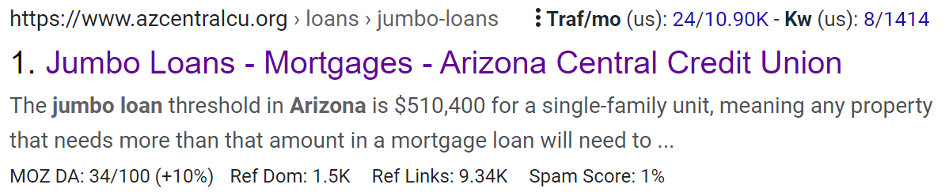
Original Title:

This example is just one of many identified since the new system’s roll out, although Google has stated they will continue to use HTML title tags for page titles more than 80% of the time.
Tips to Prevent Title Tag Rewrites
While Google’s title tag generator is unavoidable, there are ways to help prevent Google from altering title tags. Here are the best options:
- Keep Title Tags Short. Long HTML title tags are a surefire way to get Google to rewrite your titles. Try to keep titles less than 65 characters to avoid unwanted alterations.
- Avoid Keyword Stuffing. Only add keywords to title tags when appropriate. If you add too many keywords to a title tag in an attempt to improve rankings, Google won’t use your HTML title tag.
- Avoid Repetitive Language. Don’t keep generic title tags, such as “Home” for the homepage. Any boilerplate language is subject to modification by Google’s system.
- Always Include a Title Tag. Make sure every page has a title tag or Google will likely generate one.
What’s Next?
Google’s new title tag generator has some initial kinks, but they are listening to feedback and have plans to continue tweaking the system to provide optimal results. As previously mentioned, they will continue to use HTML title tags more than 80% of the time and expect the new system to deliver better titles that can be displayed for any query relating to a specific web page.
Since it’s in its early stages, Google is likely to make ongoing changes to the system and Sullivan does not recommend making any major changes to HTML title tags on any given site. However, we encourage SEOs to follow the tips provided to prevent potential rewrites and ensure HTML title tags are being used as much as possible.
To learn more about how the latest Google algorithm update may be affecting your site, read our blog post, Google's Page Experience Update: What you Need to Know. Or, contact Investis Digital.