

4 Project Management KPIs and Metrics that Prove Business Success
Like any business metric, creating and monitoring project management KPIs allows you to naturally have more insight into areas of improvement, resulting in continued success. At Investis Digital, we've seen firsthand how tracking these metrics has improved our business. Here are the 4 project management metrics that we recommend for your business:
1. First Pass Yield
First pass yield (FPY) is a common metric used in manufacturing, but it can also act as a project management performance metric for your own business as well. First pass yield can be defined as the number of good units produced divided by the total number of units going through the process. Or in Investis Digital simple terms, it's the number of deliverables that make it through our process without revisions divided by all deliverables.
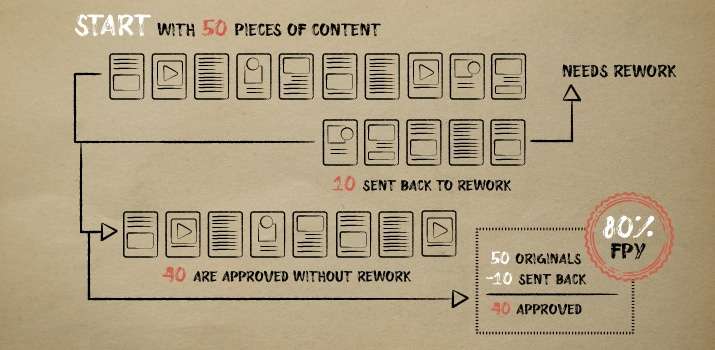
Why is first pass yield important to your business?
First pass yield is important for your business because we scope work assuming that our subject matter experts will get it right the first time around. If there are revisions that take place because of our quality review process, then we're spending more time on a project than what was initially accounted for, and that impacts our project profit margin.
Another benefit of first pass yield is the ability to measure the effectiveness of an established process or task. A low first pass yield could mean a process needs to be changed, or maybe there's even a performance issue for a department or single team member. Without this metric, it would be hard to pinpoint where you can improve your business processes and could be wasting valuable time and resources.
2. On-Time Delivery
I don’t care what industry you’re in, this is a must-have metric for any project management team. On-time delivery can be defined as the number of products or services that are sent to your customer on-time divided by the total number of products or services for that time period.
At Investis Digital, we started putting greater emphasis on this KPI about two years ago. As a result, our performance has greatly improved. We emphasized that if our team believed a deadline could not be reached, they should immediately inform the project manager. From there, we're able to work with the client to adjust schedules and at the same time reset client expectations. Once the new timeline and expectations are set, we can consider that work to be on time as well.
Why is on-time delivery important to your business?
Customers have been placing more and more emphasis on delivery dates. Think about how Amazon Prime's free 2-day delivery has impacted quick delivery expectations. In any industry, delivering work on-time is just as important because you're promising timelines to your customers and they're expecting you to deliver as you've promised.
3. Project Profit Margin
Good financial management of a project is critical! For companies like ours that rely on projects and ongoing retainers, maintaining stability within our business is dependent on completing projects as planned in the scope of work (SOW) and pricing. Profit margin can be defined as your net income (actual revenue minus your actual cost) divided by your actual revenue.
Why is project profit margin important to your business?
This one is a no-brainer. You're in business to make money, and your actual costs shouldn't be more than the revenue you're bringing in the door. But how can you improve project profit margin? You can start by analyzing the data.
Is there a service, product, or customer that seems to fall under your acceptable profit margin? This data can help you deep dive into the number. You can also look at the actual time spent on a project versus the time that was scoped. If you find that you're spending more hours than planned, it may make sense to reevaluate the pricing and scope for similar types of projects in the future.
4. Customer Satisfaction
The last, and arguably one of the most important metrics, is customer satisfaction. This can be defined as how your product, service or overall experience with a company either meets or falls short of expectations. There are several ways to track customer satisfaction. At Investis Digital, we rely on the Net Promotor Score, which we send to our clients twice a year.
Why is customer satisfaction important to your business?
As a company, it's obvious that you want happy customers. If customer satisfaction is low, it's likely you won't retain your customers. If you aren't retaining your customers, then your revenue will shrink. If you're a company that makes it a point to measure and improve customer satisfaction, it's likely you'll grow and increase revenue.
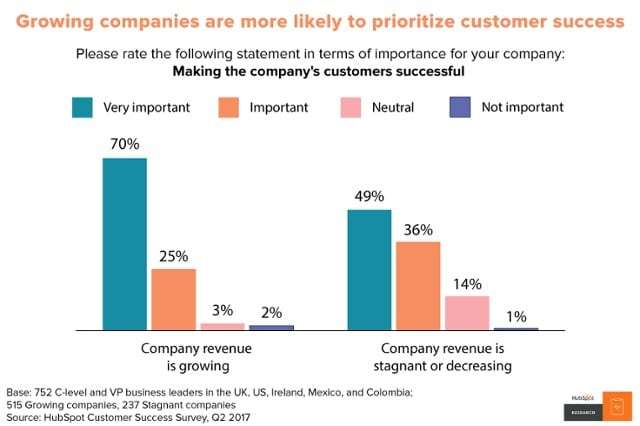
You also want your customers to talk about you, in a positive way of course. They may share their experience with your company with other business connections. Or they may write reviews about you online. At Investis Digital, we’ve even had clients that left their company not once, but twice, and brought us back to help with their new company each time. These positive relationships can only be created when your clients are satisfied with the results you deliver – and those results can only happen if these KPIs are closely monitored and processes are improved.
Business Performance Metrics Drive Success
Metrics provide value to your business by showing you the performance from a high-level (overall business) through a more granular level, i.e. departments or teams.
"If you can't measure it, you can't improve it." -Peter Drucker
Consistent monitoring of your KPIs or metrics and sharing of them will provide focus for your business, drive strategy in your organization, and will help you make better business decisions when the time comes.