

How to respond to Google’s September 2019 core algorithm update
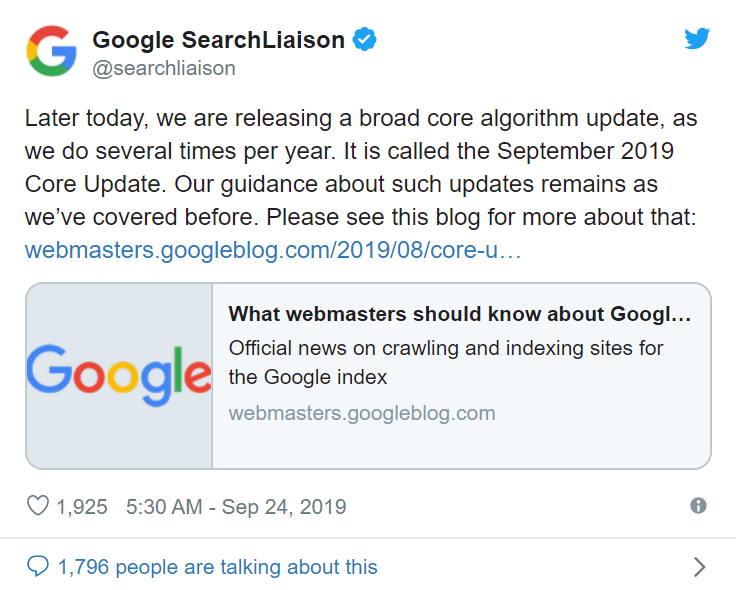
On Sept. 24, Google announced they were rolling out their second core algorithm update in four months.
As with the June 2019 core algorithm update, Investis Digital has been monitoring the situation closely for the past several weeks, and this is what we know so far.
Investis Digital clients in medical industry see organic increases
Clients in the medical industry have seen the largest immediate impact (this was also the case immediately after the June update). In fact, in the days following the September update, two of our clients in the medical industry were at all-time highs for organic traffic:
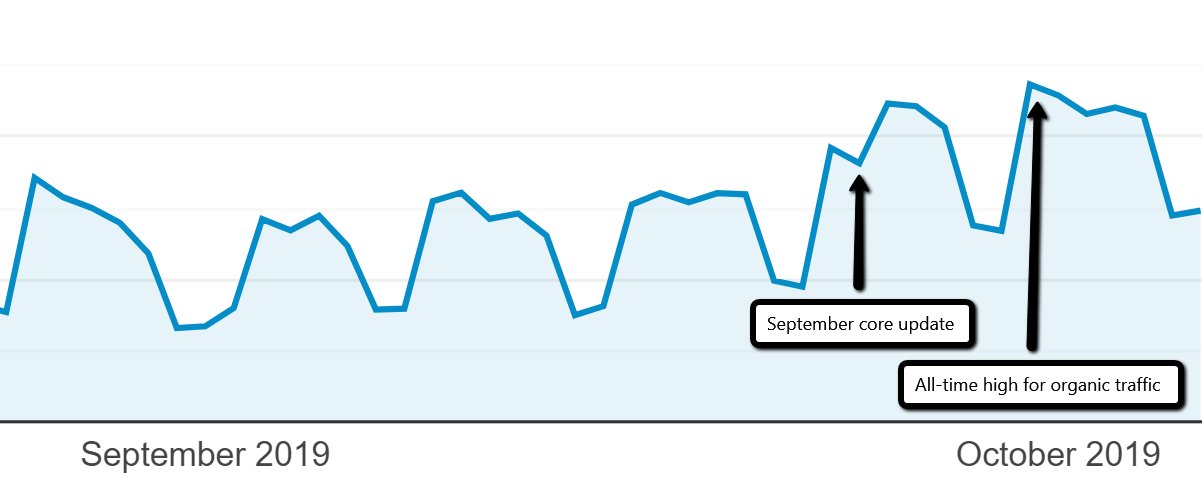
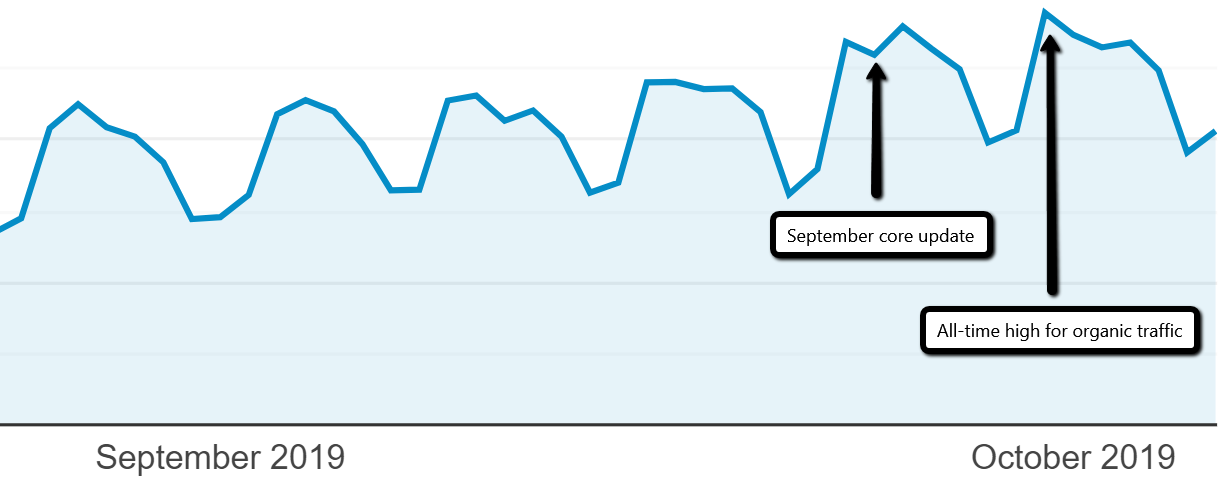
While it is difficult to pinpoint the exact cause, pages that are seeing positive increases are the ones that provide useful, non-promotional content to users. In fact, when we compare the two weeks before the algorithm update to the two weeks after, the traffic to blog content on both of these sites is up 24.7% and 75.6% respectively.
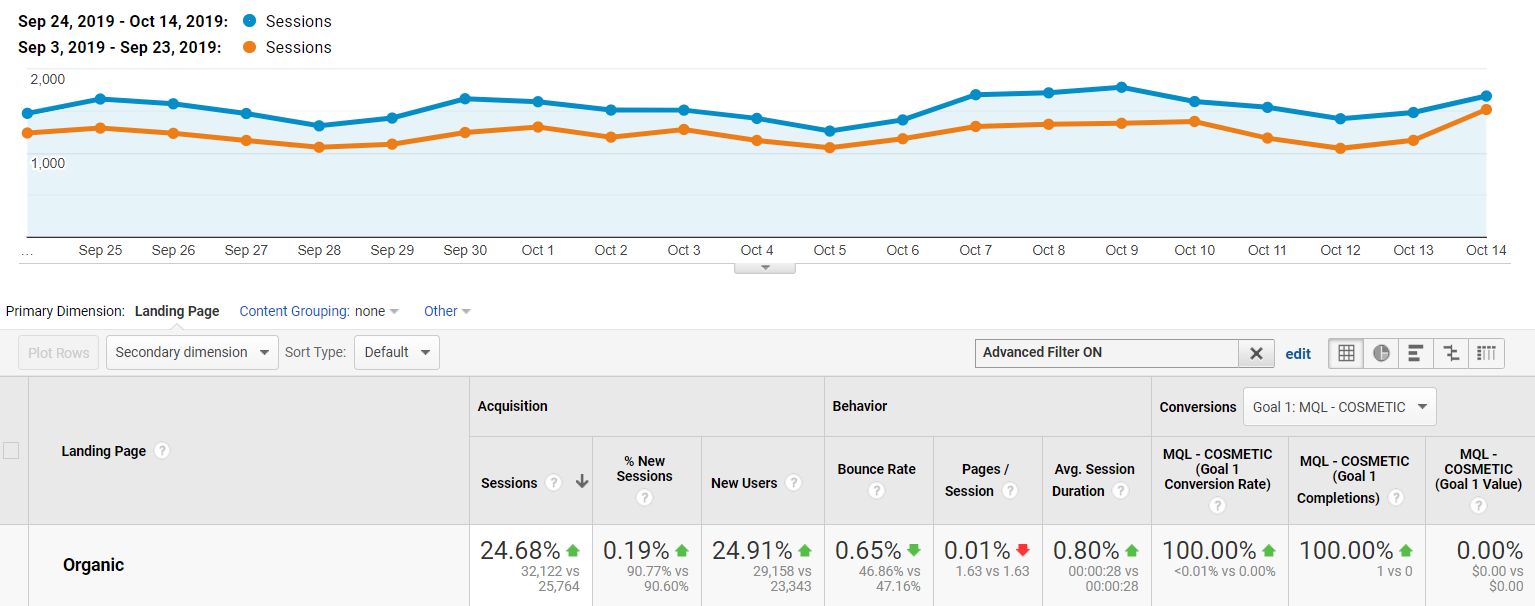
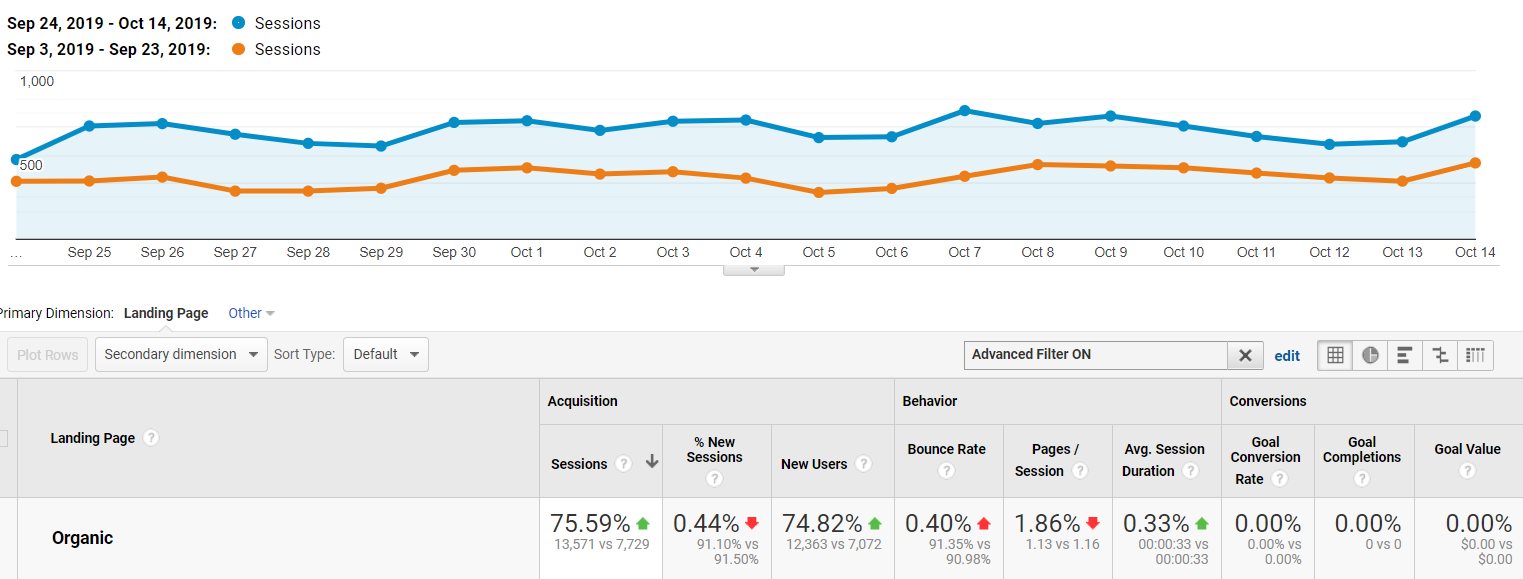
The commonalities for the majority of these pages that saw increases in organic traffic are:
- Content meets a searcher's intent
- Content is in-depth
- Optimized metadata
- Useful internal links
- Quality, relevant backlinks from authoritative websites
Investis Digital follows digital marketing best practices for all the work we do for our clients. Following these best practices enables us to avoid large traffic drops across all industries, especially in updates where E-A-T and YMYL factors play a larger role (E-A-T refers to markers that indicate a piece of content’s expertise, authority and trust; YMYL stands for “your money or your life,” and it’s a term that Google uses to indicate pages that could potentially affect “the future happiness, health, financial stability, or safety of users.”).
Industry experts agree: September core update weaker than June core update
In a Sept. 27 article, Barry Schwartz of Search Engine Land interviewed SEO tool providers SEMRush, Sistrix and RankRanger to see what their early data was indicating. Here is what those companies are seeing regarding the update:
 |
SEMRush: “Volatility in some categories is higher, e.g. News and Sports, but these categories are likely to have higher changes throughout the day.” The company said it did not see a strong pattern for winners and losers with this update.” |
 |
Sistrix: “In the USA there are some clear winners. As for losers, there are no significant examples to share at this time.” Looking at the data, the September core update shows less of an impact compared to the June core update.” |
 |
RankRanger: “The volatility of increases seen at positions 1 – 3 during the June update were substantially higher than what I saw with this [September] update.” |
While overall volatility was lower with this core update, one sector that Rank Ranger analyzed for higher volatility was finance. In an article recently published on the Rank Ranger blog, they reported that the traffic drop many sites experienced wasn’t because their content lacked depth, but because the quality and purpose of the content didn’t provide users with value.
Overall, the early data shows:
Content that comes off as biased or sales-driven will experience a drop in traffic, whereas content that is informationally driven will perform better.
Industry volatility tools show September was a relatively normal month
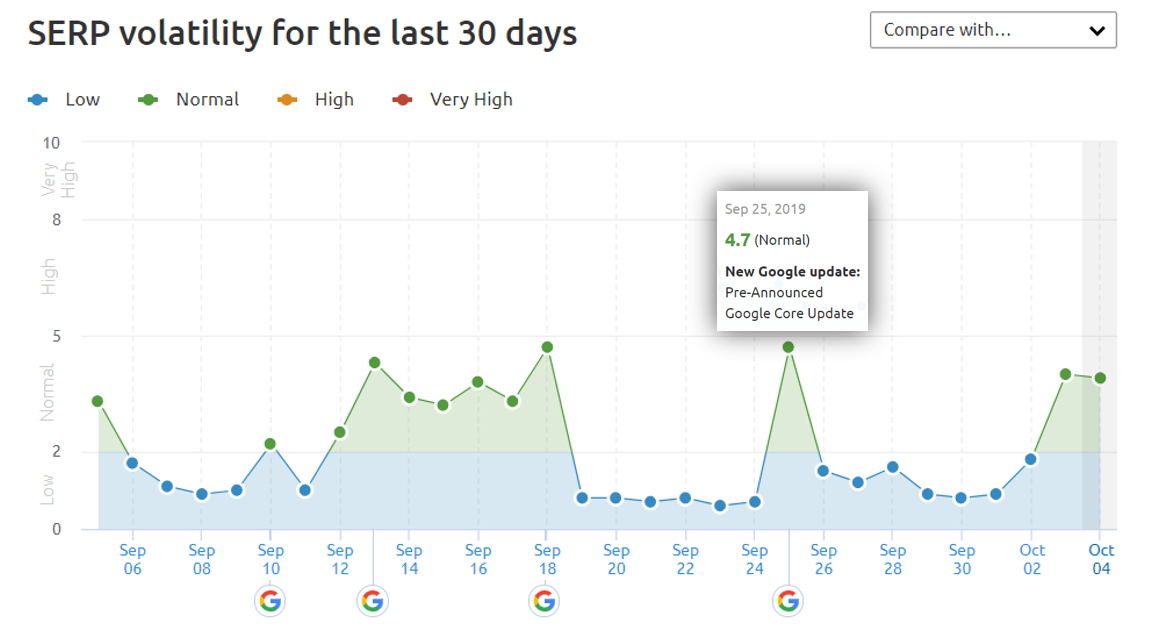
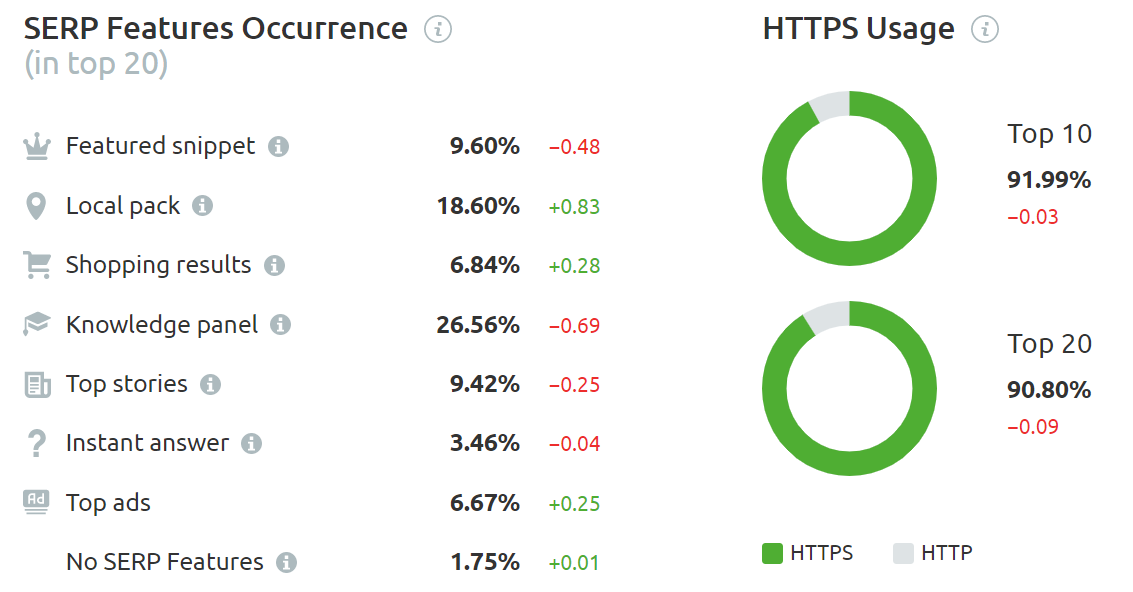
SEMRush Sensor and Mozcast showed SERP volatility was within a relatively normal range for all of September. SERP features also saw minimal fluctuations throughout the month, indicating that Google was most likely adjusting specific parts of the algorithm.:
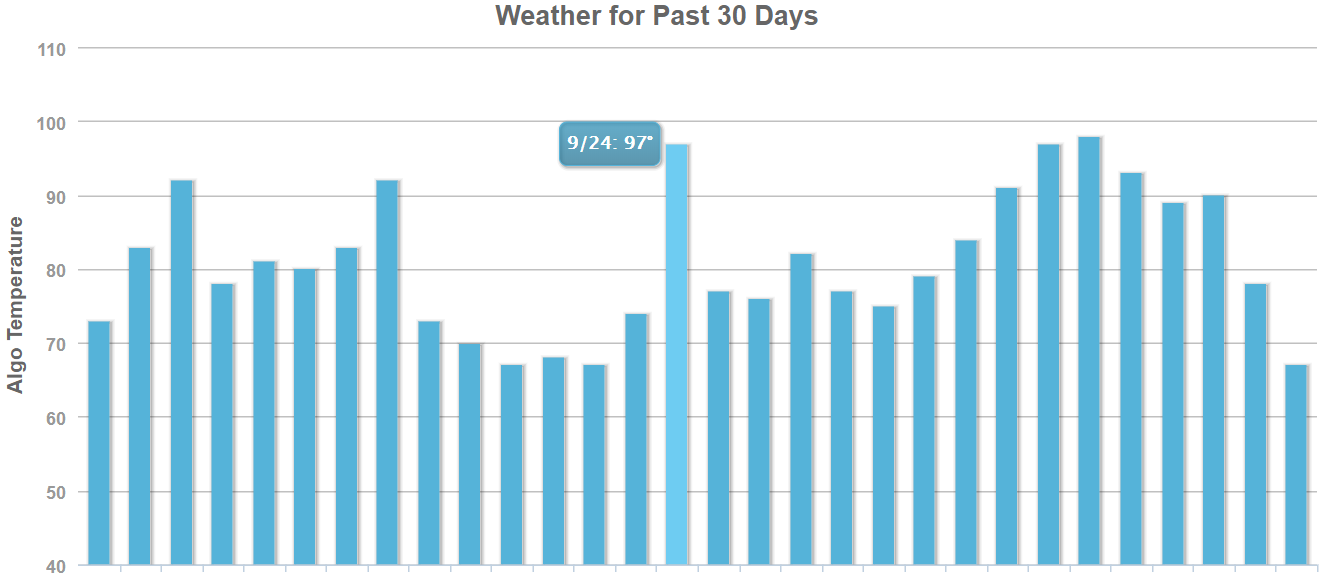
Mobile
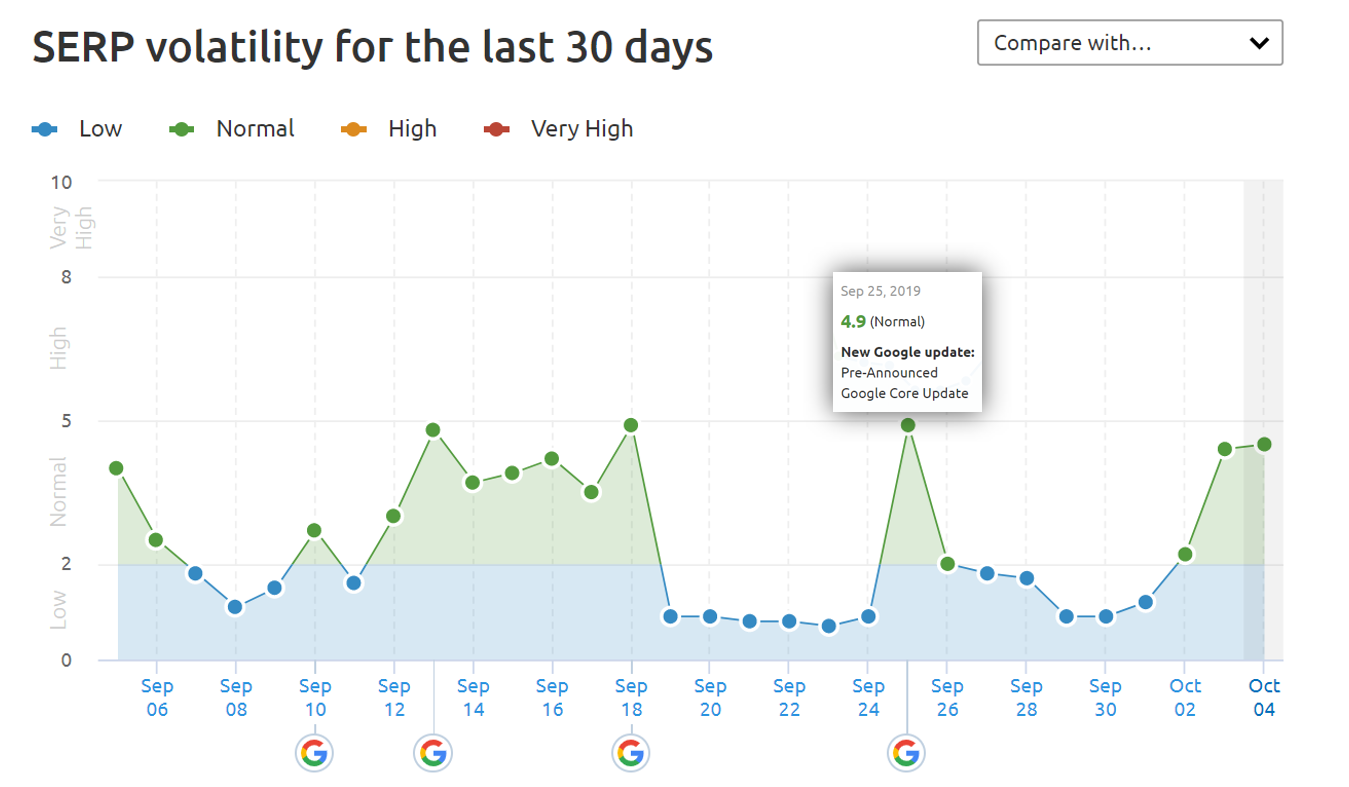
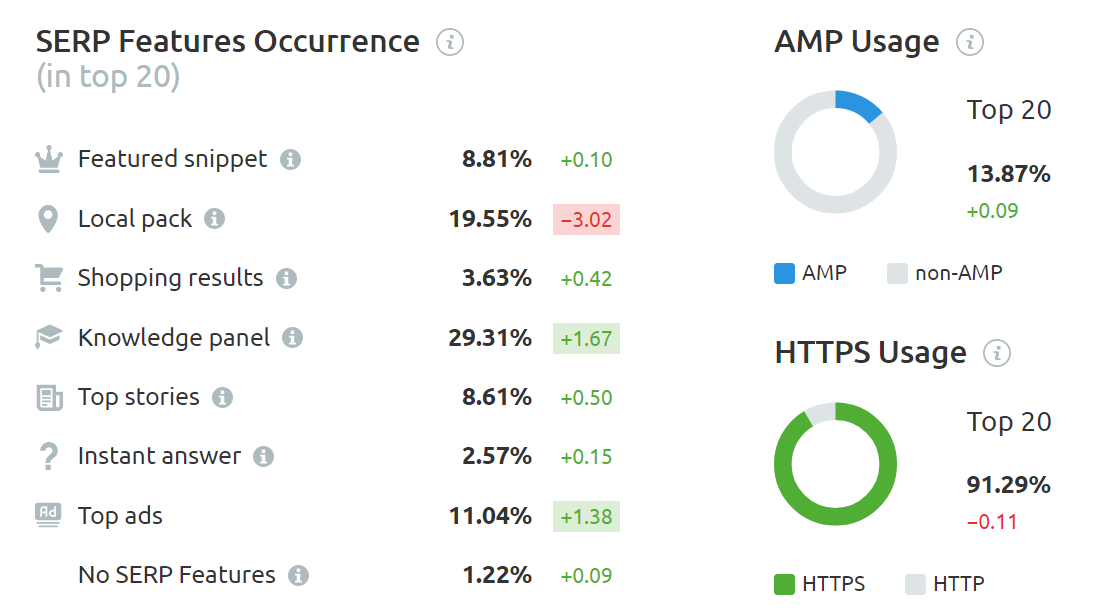
Desktop
Google changes its Search Quality Guidelines
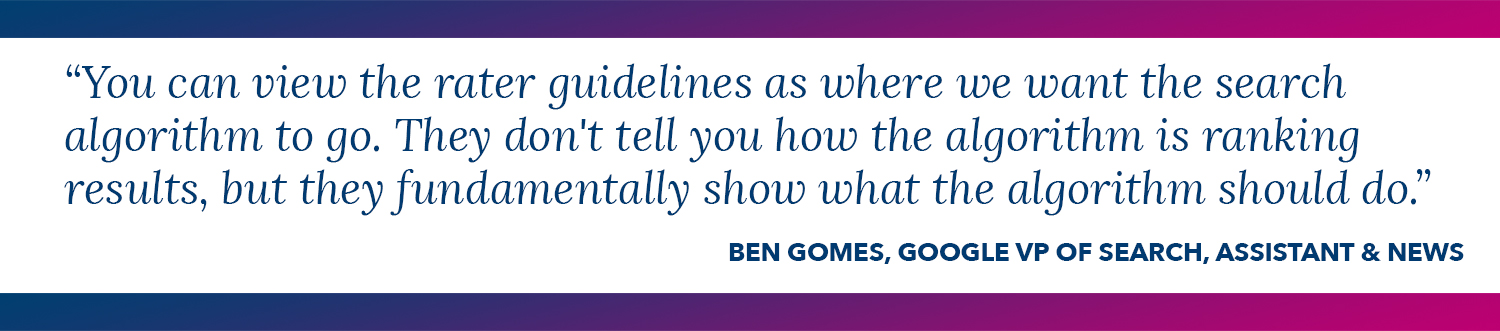
Earlier in September (before the core update was announced), Google made changes to their Search Quality Evaluator Guidelines. While these are not necessarily ranking signals, they show areas of the algorithm that Google may be focusing on, especially as it relates to YMYL and E-A-T. The changes are as follows:
Section 2.3
- Change from “pages” to “pages or topics”
- YMYL on a page can be enough to be considered YMYL, even if it is not the overall purpose of the page
- What do these changes mean?
- This suggests that Google is pushing raters to think about the topic they are reviewing instead of the exact keyword. Lily Ray of Path Interactive called out that this change might hint that some YMYL content on a page is enough for the entire page to be considered YMYL, even if it is not the overall purpose of the page. This is something to consider when auditing or creating content moving forward.
- Change to ordering of YMYL
- “News and current events” moved to the top of the list (previously 5th)
- “Civics, government and laws” receives own category (previously grouped with news)
- “Shopping” & “finance” separated into their own groups (previously grouped together)
- “Medical information” changed to “health and safety”
What do these changes mean?
The biggest takeaway for us here is that, after moving “news and current events” to the top of the list from the bottom, Google now most likely sees this as one of the most important areas of focus for YMYL. This makes sense, given some of the more recent happenings in the political environment in the United States.
Section 5.1
- Addition of new paragraphs regarding what it means to have, “Very High Quality Main Content”
- For news: “Very high quality MC (main content) is original reporting that provides information that would not otherwise have been known had the article not revealed it. Original, in-depth, and investigative reporting requires a high degree of skill, time, and effort. Often very high quality news content will include a description of primary sources and other original reporting referenced during the content creation process. Very high quality news content must be accurate and should meet professional journalistic standards.”
- For artistic content (videos, images, photography, writing, etc.): “Very high quality MC (main content) is unique and original content created by highly skilled and talented artists or content creators. Such artistic content requires a high degree of skill/talent, time, and effort. If the artistic content is related to a YMYL topic (e.g., artistic content with the purpose of informing or swaying opinion about YMYL topics), YMYL standards should apply.”
- For informational content: “Very high quality MC (main content) is original, accurate, comprehensive, clearly communicated, professionally presented, and should reflect expert consensus as appropriate. Expectations for different types of information may vary. For example, scientific papers have a different set of standards than information about a hobby such as stamp collecting. However, all types of very high quality informational content share common attributes of accuracy, comprehensiveness, and clear communication, in addition to meeting standards appropriate to the topic or field.”
What do these changes mean?
Each of these sections does a great job showing the level of granularity that Google is looking at for content creation across the board. Content creators and designers should look at these guidelines as the gold standard moving forward.
Section 5.2
- Addition of recommendations for measuring reputation for YMYL content
- “For YMYL topics especially careful checks for reputation are required. YMYL reputation should be based on evidence from experts, professional societies, awards, etc. For shopping pages, experts could include people who have used the store’s website to make purchases; whereas for medical advice pages, experts should be people or organizations with appropriate medical expertise or accreditation.”
What do these changes mean?
The addition to section 5.2 goes hand-in-hand with the quality-related additions of section 5.1. We see this as an area that will eventually have a significant impact on backlinks and how Google values guest posting. We anticipate that eventually:
- Any guest posting without authorship will provide minimal value as an off-site SEO tactic
- The shift is toward professionals with experience (and a following) talking about the brand or topic in their field.
How do we prepare? Our advice remains the same:
Create high quality content that provides valuable and actionable information to people, while following best practices for the industry.
The following section explains precisely this. This is how to apply the quality content guidelines to your own site. Don’t miss the free download at the end of the post.
Follow Google’s guidelines for high quality content
No one need guess how to create to create high quality content that Google will find, index and rank. Google tells us how.
Actually, they tell us how to numerous times in numerous places. Two prominent instances are:
- They publish detailed webmaster guidelines
- This post on the Google Webmaster blog
1. Follow the webmaster guidelines for quality content
“Make pages primarily for users, not for search engines.” - Google’s webmaster guidelines
Google “strongly encourages” you to pay close attention to its quality guidelines. Their advice includes:
- Create a useful site that helps users find information. Your pages should clearly and accurately describe your content.
- Think about the words users would type to find your pages, and make sure that your site actually includes those words within it.
- Ensure that your <title> elements and alt attributes are descriptive, specific, and accurate.
- Design your site to have a clear conceptual page hierarchy.
- Don't deceive your users. Avoid tricks intended to improve search engine rankings. Ask, "Does this help my users? Would I do this if search engines didn't exist?"
- Don’t create pages with little or no original content — and no keyword stuffing.
2. Offer ‘the best content you can’
“We suggest focusing on ensuring you’re offering the best content you can. That’s what our algorithms seek to reward.” - Google’s advice on how to handle core updates
After the June core update, John Mueller, a webmaster trends analyst at Google, mentioned that Google would update this 2011 blog post that walks through the questions site owners should ask themselves to determine if their content is high quality. In August, Google made good on its promise by publishing a post on the Webmaster Central Blog titled, “What webmasters should know about Google’s core updates.”
If you want to produce high quality content that performs well in search, ask yourself the following questions:

Download our free best practices guide
Finally, download this free guide for detailed and actionable tips on how to create content that Google will love.
Investis Digital helps hundreds of clients create exceptional content that positions them as thought leaders, drives traffic and builds trust. Contact us to learn how we can help you connect with your audience in more meaningful ways.