

A Holiday Retailer's Guide to Amazon and Google
We’re already deep into the 2021 holiday shopping season. By October, 40 percent of US shoppers had already started their holiday shopping, according to research from Google and Ipsos. Major retailers such as Target and Walmart have been ramping up their holiday campaigns and reassuring customers that the global supply chain crisis won’t stop them from offering everything customers will want to buy. And there’s a lot of buying going on. According to JLL, holiday shoppers are going to spend 25.4 percent more than they did in 2020. But will your retailer be findable when people research products online before they buy online or in your store? The answer increasingly depends on how well you make your presence known on Amazon and Google.
E-commerce company ChannelAdvisor and research firm Dynata recently surveyed 5,000 global consumers to learn how they are shopping this holiday season. The research included 1,000 U.S. consumers. Shoppers shared some interesting insights into their habits:
Shoppers Are Going to Buy More Stuff Online
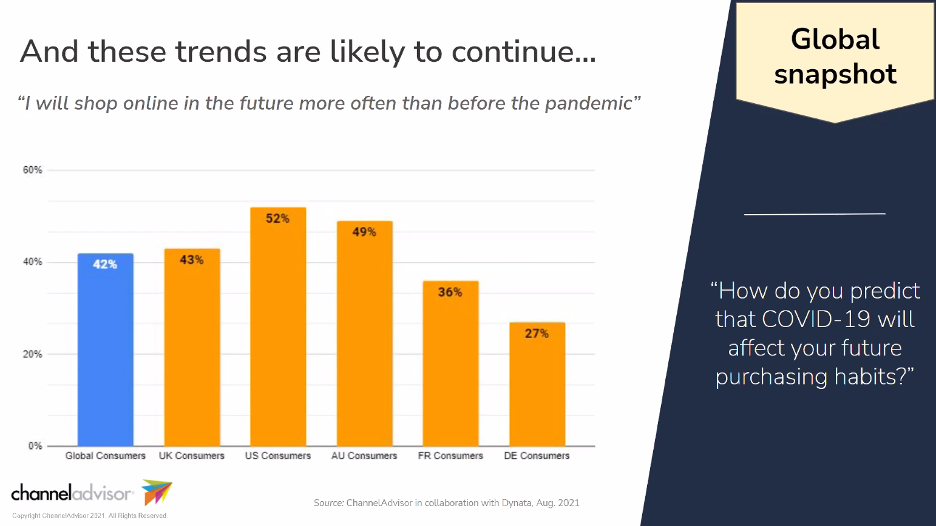
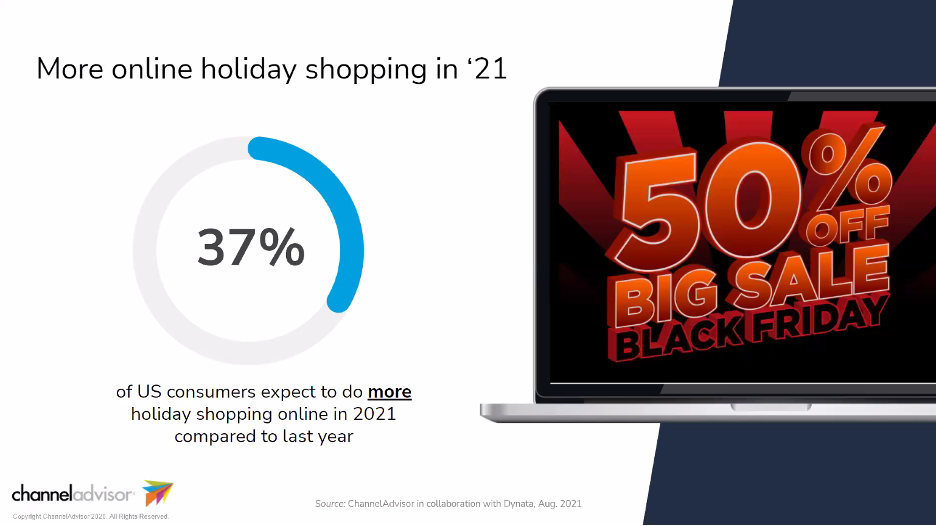
52 percent of US consumers will shop online more than before the pandemic (that number is a big jump from 2020 when 38 percent of US consumers said they’d shop more online). And 37 percent of US consumers will do more holiday shopping online compared to 2020.
Shoppers Are Doing a Lot of Product Research on Amazon and Google
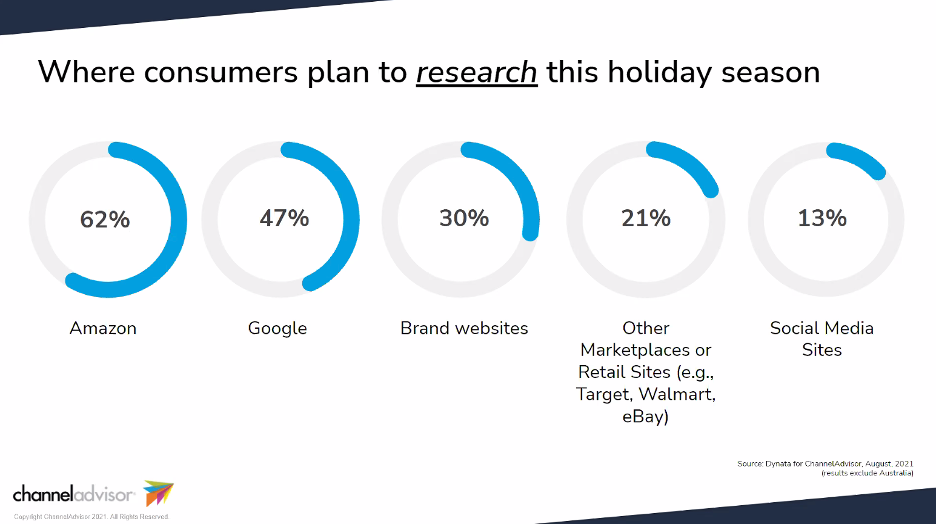
Amazon trumps everyone as the top destination for shoppers to research products, but Google is right up there at second place. This finding is not surprising. Amazon already surpassed Google as the top destination for researching products overall. The data underscores how important it is for retailers to build a strong presence in the Amazon and Google ecosystem.
Retailers Need to Thrive in Amazon’s World
It’s high time retailers get schooled on Amazon Advertising. Amazon Advertising offers many products to retailers even if they don’t sell inventory on Amazon. They include display ads, video ads, and custom ads. For example, Sponsored Display Ads help retailers engage audiences on and off Amazon who are in the mindset of browsing, discovering, or purchasing products. Video Ads connect brands with shoppers through streaming and online video formats on and off Amazon. (Here’s an Amazon case study on how one business did that.) Amazon also offers custom ad products for businesses whether they sell on Amazon or elsewhere.
Retailers who sell on Amazon have many more ad units available. For instance, Sponsored Brands feature a company’s brand logo, a custom headline, and multiple products in carousel fashion alongside search results. When Amazon shoppers click on a company’s brand logo, they’re taken to a Store or custom landing page. Sponsored Products are ads that promote individual product listings on Amazon. They appear in Amazon search results and on product pages similar to how paid search results work on Google.
According to Amazon:
- Advertisers who use Sponsored Display audiences on average see up to 82 percent of their sales driven by new-to-brand customers.
- Advertisers saw an average weekly +40 percent lift in units ordered within the first year after launching a Sponsored Products campaign
- On average, campaigns using Amazon’s product targeting recommendations see 2x higher impressions and 1.5x the number of clicks.
- Our new product targeting solution helps drive better consideration with +75 percent better click-through rate.
Amazon delivers those results by mining all that first-party data the company collects from people who visit Amazon. The company uses artificial intelligence to understand buying behavior so well that it can offer advertisers highly targeted solutions – which is a boon at a time when Google and Apple are making it harder for businesses to rely on third-party data to serve up targeted ads.
Put Google to Work!
Google recently bolstered its e-commerce presence by making a number of changes to how shoppers can discover retailers’ products. The company will change how some items such as apparel appear in search results. Instead of sharing a series of links and text descriptions, Google will return results with a product page that looks like a digital storefront. In doing so, Google will make online searching and shopping more visually appealing by emulating the product display features you see on Amazon.
It's important to put Google ad products to work. Consider options such as local inventory ads to promote items available for purchase in-store or free and fast shipping annotations to get an edge on competitors by showcasing your products that you can ship quickly and with reliable fulfillment experiences for customers.
In addition, as Google notes, tools such as free listings and Business Profiles can help businesses promote their products and stand out to local shoppers. Doing so ensures that people see up-to-date information, like accurate business hours, in-store services, and safety measures across Google. (It’s best to create a Google My Business GMB listing for each Business Profile, which gives you more control over managing it.) Having a Business Profile makes it possible to share timely content through features such as Posts. With Posts, you can create and share announcements, offers, new or popular items in stock, or event details directly with your customers. For instance, a retailer might want to use Posts to promote in-store holiday events and special Black Friday sales. These features are especially important at a time when most searches on Google stay on Google and don’t result in clicks through to your website.
Contact Investis Digital
At Investis Digital, we combine tactics such as paid media and organic search as part of our Connected Content approach for helping businesses build trusted relationships with people. We help retailers generate more revenue by making them findable and creating content that convinces people to buy from them. We can help you. Contact us to find out how.
Related Investis Digital Posts
“Why Google Wants to Amplify Visual Content”
“How Retailers Can Win the 2021 Holiday Shopping Season”
“How to Optimize for Zero Click”
“Search versus Display Advertising”
“What Are Google Gallery Ads? Your Questions Answered!”
“Google Discovery Ads: What Advertisers Need to Know”
“Google Strikes Back at Amazon with New Ad Formats”
“Amazon Extends Video Advertising on Its Mobile App”