

The Difference Between a Webcast, Webinar, and Virtual Event
At IDX, the Connect.ID Live team produces hundreds of webinars, webcasts, and virtual events every year. In 2021 alone, we produced over 450 such live events. Clients often come to us with an idea for a live show, but many are uncertain of what the differences between the technologies are.
Webinars
1. Technology
In terms of technology, a webinar is very different from both a webcast and a virtual event. Webinars allow real-time two-way video communication. The price for this, however, is reduced quality. Have you ever been on a Zoom webinar where the presenter’s video suddenly freezes, or you cannot hear them momentarily? The video technology behind these platforms only copes with a limited amount of data per second as well as a very limited number of attendees. Usually, the upper limit is somewhere between 100 and 500 participants depending on the provider. Costs can rise steeply for audiences of more than 100 participants.
With the recent rise in virtual meeting and webinar demand, some webinar providers claim a higher limit. However, this can only be achieved by removing interaction between the presenters and the participants. What you end up with is a low-quality webcast.
2. Why use a webinar?
A webinar is a great way to engage with your audience virtually. Presenters may choose to go through their presentation and open for questions thereafter. Each participant is given the opportunity to register a question and is then brought into the main presentation ‘room’ where they can interact with the presenters.
3. How IDX can help you achieve a good quality webinar.
Despite the disadvantages of lower overall quality on webinars, our team of producers works with you and your IT team to allow for the best quality to be sent, whether the production is completely remote, or we set up cameras and microphones. We also provide a moderator to guide your presenters and your audience through the process. Further, we regularly provide briefing and training sessions for your audience; we check their setup and connectivity to enable the best quality a webinar can provide.
What’s more, we can also use webinars to form part of hybrid events so you can engage with the audience in the room and online in equal measure.
Webcasts
1. Technology
Webcasts use a very different streaming backbone than webinars. The emphasis is on continuous high audio and video quality. To achieve this, a delay is inbuilt, and it can be anywhere up to around 30sec.
Of course, with such delays, real-time interaction is not possible on webcasts. They are essentially like watching live TV. Just like with your favorite sports or entertainment show, you cannot directly interact with your TV or your webcast, but producers can integrate other technologies to help.
2. Why use a webcast?
A professionally produced webcast will usually sit in its own microsite, branded to fit your corporate design guidelines and with a registration process that follows internet security regulations. Whether you are looking for live audio, live video, slides, downloads, written questions or polls, all these features and many more can be integrated into your branded microsite.
Because the quality of the stream is much better, producers can integrate graphics, name tags (also called lower 3rd), video playout, and many other features to make for a rich viewing experience.
3. How IDX can help you achieve a good quality webcast
As already mentioned, direct interaction is not possible on a webcast. However, with our platform On-air by IDX we can integrate written questions. Do you prefer real-time interaction? We can add international conference calls, webinars, audio bridges, and video bridges (yes, there are even more types of connections but don’t worry, we will help you through the myriad of technologies).
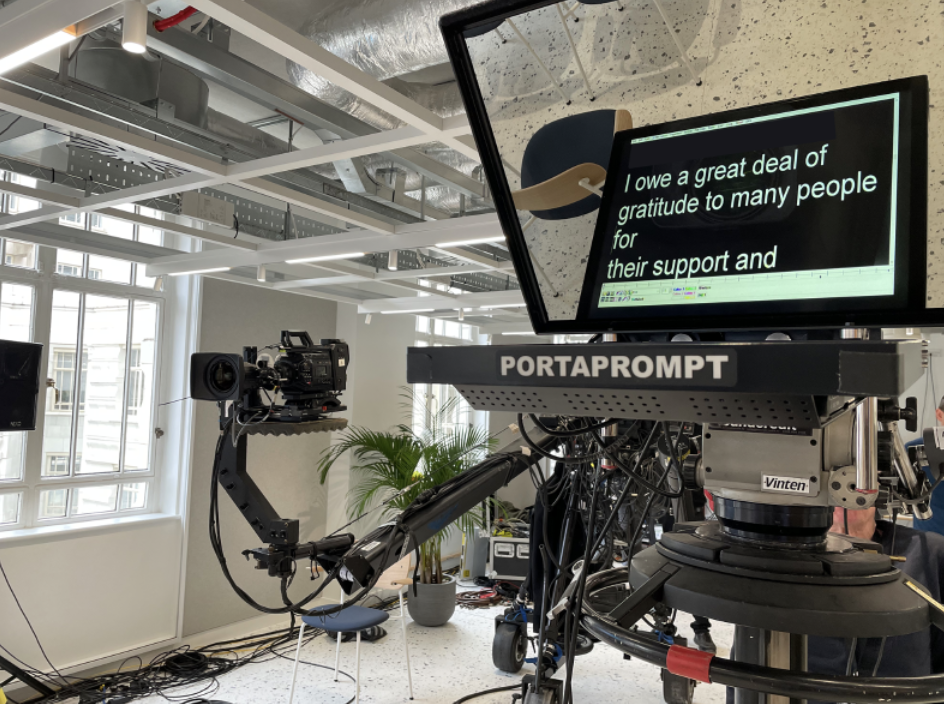
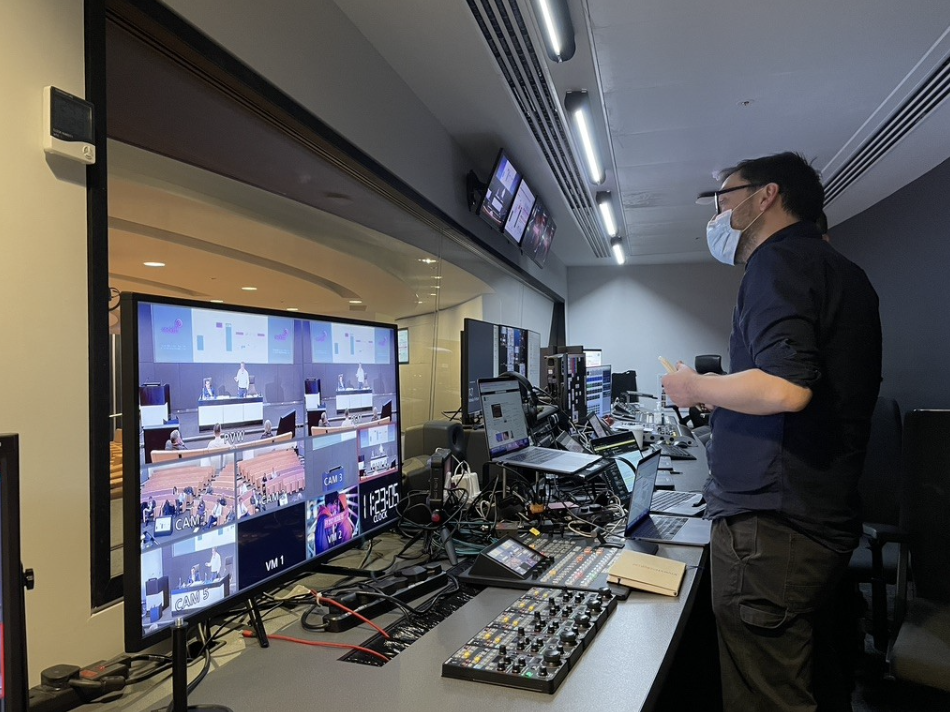
Whether you are looking for a small setup as an addition to your presentation, to using our studio, to a production at an exhibition hall. We guide you through the whole process and supply cameras, microphones, lighting rigs, jibs, staging, and furniture, as well as teleprompters and live interpretation.
Virtual events
1. Technology
Virtual events use the same type of video streaming technology as webcasts. The technology is well established, robust, and has a very good global infrastructure.
Where a virtual event differs is in the microsite. A virtual event has many more features and pages than a webcast. Whether you would like to add on-demand videos, 3D maps, graphics, or past events, a virtual event can integrate all of these things.
2. Why use a virtual event?
Virtual events are the pinnacle in the current live streaming offering. They are suited for ongoing communication strategies, special announcements, and positioning companies at the technology forefront. They are used either in addition to an in-person event (also called a hybrid event) or as a stand-alone piece.
3. How IDX can help you achieve a good quality virtual event
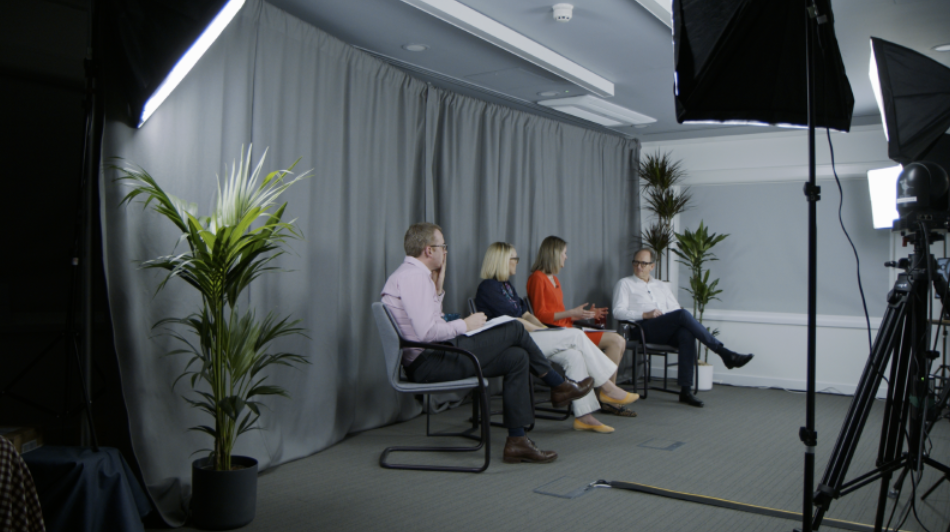
In addition to our webcasting platform, we take advantage of our expertise in building websites since 2000, to bring together the best of both worlds on our Virtual Events Platform. Our Virtual Event Managers help you explore the features, project manage, and streamline the delivery of the event for you. And of course, our producers combine all the tools at their disposal to produce engaging content, whether your aim is an intimate fireside chat of a large company announcement, AGM, CMD or presentation.
We bring together media strategy, content creation, and analytics to help you make the most of your virtual event.
Are you wondering which technology is the right choice for you? Stay tuned for the next blog post, where I will share my top tips for virtual event organizers.
Ready to learn more?
Download our IDX Live Guide: Webinars, Webcasting, and Virtual Events to learn how you can:
- Define your strategy and map out your ‘who,’ ‘why,’ and ‘how.’
- Plan your content and the questions you need to ask yourself when strategizing your event.
- Promote your event to build awareness
And much more! Do not hesitate to contact us to learn how we can help you get the most out of your virtual events, webcasts, and webinars.