

iOS 14 Privacy Features and the Effect on Digital Advertising
In recent years, privacy has been brought to the forefront of the digital discussion and how data is being collected, analyzed, and extrapolated from our lives and online behavior. The fight over what data can be collected, who can collect it, and who owns the data has resulted in legislation, such as GDPR, CCPA, and most recently CRPA.
The latest development for digital privacy is Apple’s iOS 14 update which gives iPhone users more control over their data by allowing them to decide how advertisers can track them. Data that has historically been used to target users and improve algorithms may now be limited, which could have an effect on the performance of your digital advertising.
In the following article, we will cover the wide-ranging effects of this update, what it means for your business, and how Investis Digital is working with our partners and clients to adapt to these new changes.
What is iOS 14?
iOS 14 is the latest iPhone software update provided by Apple. Aside from the normal UX enhancements expected by Apple, it contained a few key updates related to user privacy.
These privacy updates will allow iPhone users to select whether an app like Facebook or Google is allowed to track them across other websites and mobile apps, collect that data and use it in their advertising.
While the bulk of iOS 14 went live in September 2020, the privacy updates were delayed until sometime in early 2021 due to developer pushback on Apple. However, no date has been defined yet for when these privacy features will go live.
Before we dive into what the iOS 14 update means for digital advertisers, let’s talk about how digital advertising works to better understand the effects of this change.
How Digital Advertising Works with Cookies
Have you ever wondered how Amazon seemingly knows what you want before you do? Or how Facebook shows you the perfect ad at the right time? Or as you navigate across websites, you’re seeing ads for things you looked up last week?
It’s not magic. It’s cookies.

Digital advertising on platforms like Google and Facebook are so effective because they have spent years perfecting the art of data collection and analysis. That data collection and analysis is possible because of cookies, which are data points stored on your device that can identify you and your behavior, such as where you’ve been and what you’ve done.
That information is then passed back to the ad platforms and used to serve advertisements that the ad platforms think might be relevant to you.
If you’re wondering how Amazon, Facebook, or Google know where you’ve been online and what you’ve been looking at, it’s because of cookies tracking you across all of the websites you visit.
Those cookies are now in jeopardy due to the iOS 14 update.
The Effects of Blocking Cross-Website and App Tracking
What seems like a small change by allowing iOS users to decide whether advertisers can track them on other websites and apps will actually have wide-ranging effects. Digital ad platforms have been so successful because they’ve been able to track a user’s online behavior seemingly without limits.
If an advertiser can’t track your behavior, how do they know your interests? Your hobbies? Your purchases? Your problems? What websites you’ve visited? Your beliefs? Your persona?
If they don’t know any of that, how do they know what ads to show you?
If they don’t know what ads to show, will conversion rates decrease? Will marketing spend stay the same for fewer conversions? Will cost per lead go up?
While hypothetical questions can often lead to unwarranted concern, it’s worth understanding how this could impact your digital advertising.
Where You Should Expect A Change in Performance
Since the iOS 14 update only applies to iPhones and iPads, you would expect to see a drop in performance for users on those devices; however, that’s only part of the far-reaching effect.

These days users are no longer tied to one device. We have our phones, tablets, home computers, work computers, and more. So while these ad platforms can still track you across a few of your devices, there is a large black hole of your online behavior when you’re browsing on your phone.
The two areas that will be most significantly impacted are ad platforms that utilize off-site behavior and assisted metrics.
Ad Platforms that Utilize Off-Site Behavior for Targeting
Ad platforms like Facebook or Display networks that need to understand what a user is doing off-site will likely see a significant impact on performance. Facebook only knows what ads to show you on Facebook because they know what you’re doing off of Facebook.
The metrics most affected for Facebook and Display networks will be ones that indicate the performance of that channel, including conversions, conversion rate, cost per lead, and assisted metrics which will be discussed below.
By limiting the available data of what a user is doing offsite, targeting, optimization, and tracking for iOS users will likely worsen. While we currently cannot quantify the expected impact, this may lead to a decrease in control over targeting and personalization, resulting in cost inefficiencies as campaigns have less audience data to target and optimize delivery towards.
Assisted Metrics
The second area that will be impacted are the Assisted Metrics, such as Assisted Revenue and Assisted Conversions. These metrics are priceless in showing the value of impressions and clicks from top of funnel strategies, which are strategies that are meant to drive awareness, but not conversions.
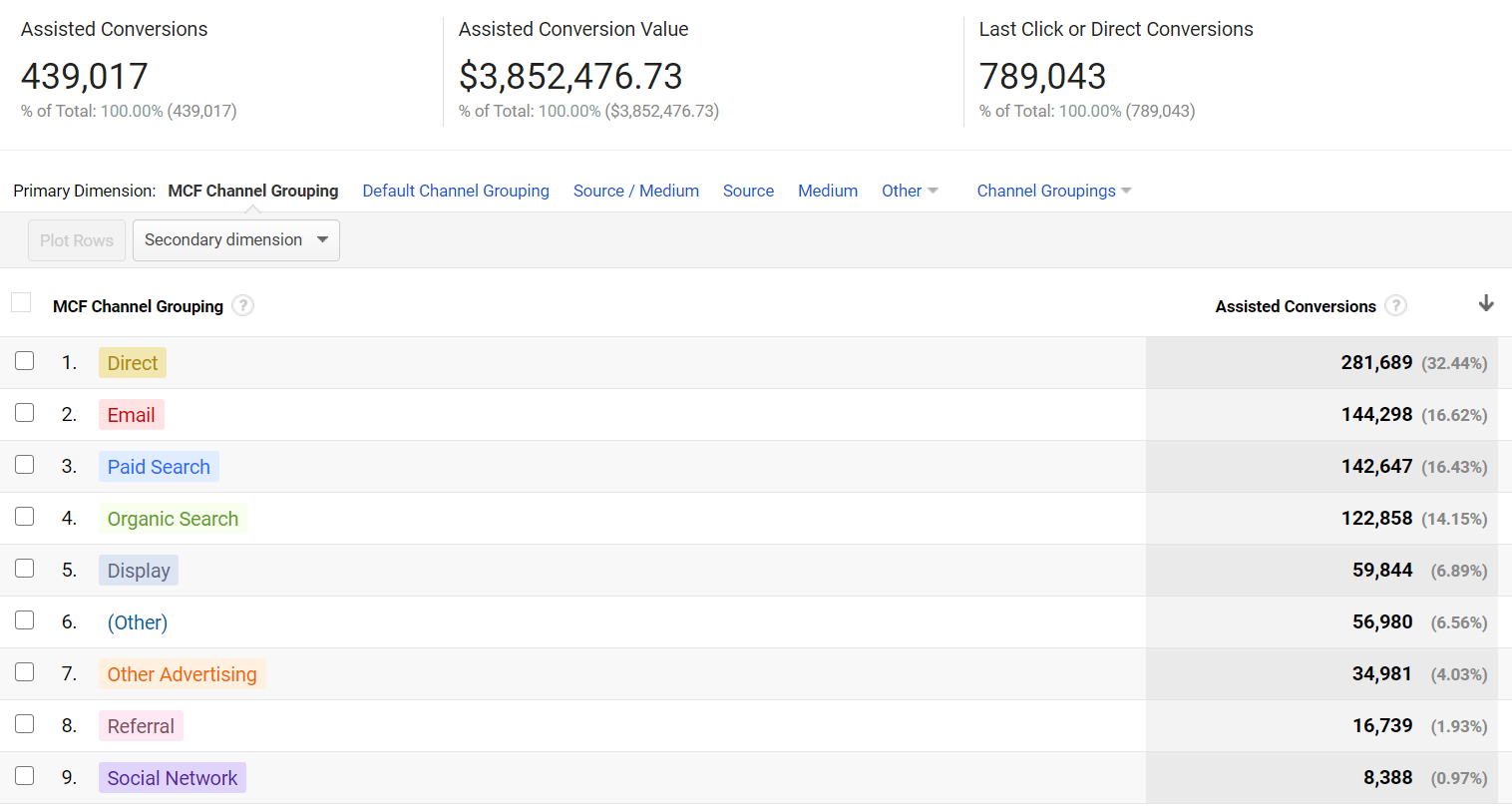
For example, if you’re running awareness ads on a Display network, you wouldn’t expect users to make a purchase or even click those ads; but seeing those ads over and over gets your brand top of mind and can cause the user to come back to your site from another channel and convert from there.
Awareness or Prospecting campaigns that rely on Assisted metrics to show their value will need to brace for what could be a drastic change in how performance will be measured. If assisted metrics are no longer accurate or experience a significant decrease, then other success metrics will need to be used, such as CPC or CPM in addition to on-site engagement metrics.
How Ad Platforms Are Responding
While digital advertising generally works the same way by understanding user behavior and then serving relevant ads, there are differences in how the ad platforms reach that end goal.
In the following section, we’ll provide a breakdown of how Google, Facebook, and programmatic vendors are responding to iOS 14.
Google Ads
Google has been relatively quiet in response to the iOS 14 news; however, they have indicated that they are going to comply with Apple’s new privacy implementation, which includes a pop-up asking for your permission to “track you across apps and websites owned by other companies.”
It’s important to note that a majority of Google’s ad revenue comes from search results pages, where a user types in a query and is presented with organic search results and relevant ads. Since these ads are keyword-driven, it is unlikely that we will see a drop in performance from Google Search Ads.
Ads on Google’s Display Network, such as those you see in Gmail or on other 3rd-party websites, will likely see more of an effect because Google will have limited visibility into what a user is viewing on other sites.
However, Google still collects information on a user’s behavior based on Google searches, Gmail, Google Analytics, and data from other Google properties that they can continue to use for targeting.
Facebook Ads
Facebook relies heavily on understanding what a user does off of Facebook to then present that user with relevant ads on Facebook. As a result, this change is likely to have a far more significant effect on Facebook than Google.
Facebook has been vocal about their disappointment with Apple’s decision. Initially, they had decided not to move forward with Apple’s privacy implementation and instead find a workaround; however, Apple made it clear that Facebook must implement the privacy pop-up and adhere to the new standards.
As a result, Facebook has implemented significant changes to its ad platform for all users, not just iOS, including limits on the number of conversions that can be tracked, domain verification, limits on Ad Manager accounts, and more. A full list of changes and recommendations can be found here.
The performance effect on Facebook Ads will be more significant than Google Ads but will be mitigated using something Facebook refers to as “Aggregated Event Measurement” for iOS devices. Facebook hasn’t provided a lot of detail here, only that, “It is designed to help you measure campaign performance in a way that is consistent with consumers’ decisions about their data.”
Programmatic Advertising

While we don’t have the response of every single programmatic vendor, Simpli.fi has indicated that they do not expect a major interruption to performance on their platform. They have invested in cross-device tracking and are using multiple identifiers outside of IDFA, which is the unique device ID assigned to each iPhone, to link users and devices together.
It will be important to review performance before the privacy feature is released to get a better understanding of what percentage of ad delivery is mobile, desktop, or in-app, and how you may be impacted.
What Investis Digital Recommends
Investis Digital stays up to date with digital privacy regulations and works to protect users’ data while maintaining strong performance in digital advertising. Digital privacy is a constantly evolving discussion and as such, there is no catch-all solution for all businesses.
First and foremost, we recommend complying with all privacy regulations, including those set by governments and companies alike.
Second, we recommend having discussions with the team members who manage your digital advertising as well as account representatives for the ad platforms for specific advice on implementation changes.
In addition to discussions with team members and account representatives, performance should be reviewed on a regular basis to understand the effect of these changes, especially for segments involving iOS users.
Conclusion
Investis Digital understands the value that digital advertising has on your business and is dedicated to supporting you in these constantly changing times.
The iOS 14 update represents a significant shift in the direction of digital privacy as more control is given to the users and their data by companies and not governments, a trend that will undoubtedly continue in the future.
If you would like to find out more about how these changes affect your business or what you need to do to maintain performance, contact us.