

Why Lead Nurture is Important for Content Marketing
“There is only one way to get anybody to do anything. And that is by making the other person want to do it.” The Internet and email didn’t exist when Dale Carnegie said that in 1936 in his book How to Make Friends and Influence People, but human behavior has not changed, only the medium by which we communicate and interact with the world. To be effective marketers, we have to change the question from “how can I make my users do this” to “how can I make my users want to do this.” In the content marketing world, we do this by providing value and building relationships through lead nurture.
The Concept of Lead Nurture in Content Marketing
I have always found email marketing and the concept of lead nurture fascinating because a potential customer has opened their door and said “I’m interested, but not sold yet.” That may be a fantastic starting place for you, but it also does not mean you should start bombarding them with blog posts, videos, promotional material, and every other possible content type under the sun. That’s the marketing mindset of “how do I convert this customer” when what you want to be thinking about is “how do I make this customer want my product.” Before you start thinking about what color is most effective at drawing attention or what type of content has the highest CTR, think about why that person signed up to receive messages from you or your company. Here are two ways to get that information:
1. Ask in the form someone fills out
Just ask when they sign up! The sooner you find out why someone signed up, the sooner you can personalize their experience with your content. One example comes from Bills.com with their debt relief service. By asking how much you owe, they can then personalize that very first email you receive with information that is valuable and applicable to your specific situation. Someone who has $100k in debt will need different information than someone who only owes $5k.
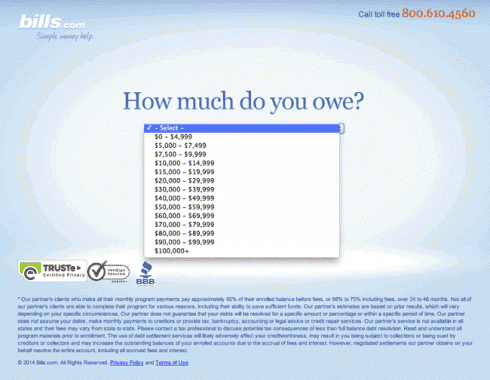
Asking for more information works in this situation, but beware, it’s been proven that adding more fields can lower the conversion rate. Find a nice middle ground and stick to it!
2. Let someone tell you in your confirmation email
Another way is to ask in the welcome email after the user signs up. The craft store Michaels does an excellent job of this by welcoming you to their newsletter and then immediately asking what you want to receive by setting your preferences. This shows that they care about each user in their list and want to keep you updated on only the topics you care about. It also doesn’t hurt that Michael's give you a 20% coupon right off the bat.
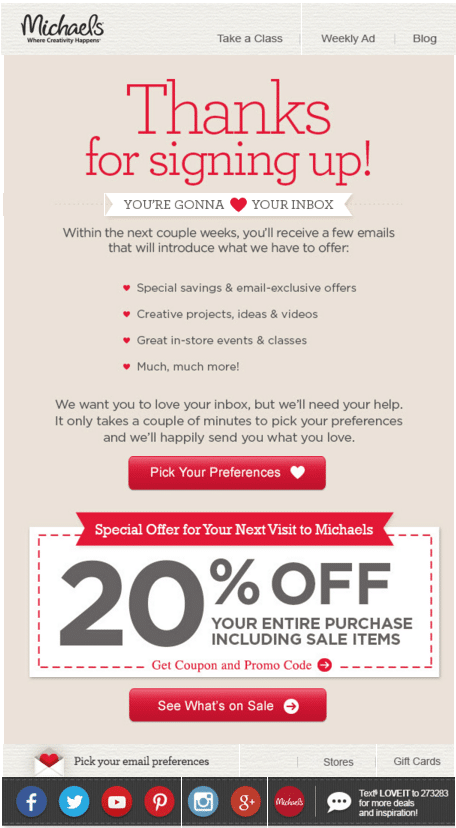
Asking a user why they signed up is a proactive approach that makes the user feel that their opinion is valued. However, it’s important to note that sometimes a user’s purpose for signing up can change. That is where reactive profiling can be an effective tool.
Setting Up Campaign-Based Email Lead Nurturing
Reactive campaigns initiate when a user takes a certain action, such as downloading a free guide or visiting a certain page on your website. Using our recent Facebook Ads guide as an example, if ‘User A’ downloads it to get the spreadsheet of all targeting criteria, you know they are interested in advertising on Facebook, which means you can provide them with relevant, useful content. A lead nurturing email campaign in this case may look like this:
- A few days after they download the Facebook Ads guide, send them an email that provides next steps and best practices when creating their first ad.
- 5 days after, send another email that discusses how to best measure the effectiveness of their ad.
- If you’ve done your homework and this potential customer is worth more of your time, send them another email 10 days after the last message and offer to jump on a 30-minute phone call and answer any questions they have about Facebook Ads and PPC.
Lead the user on a path with your content that best complements their goals. Once you know why a person signed up or what they are interested in, you can provide them with exactly what they are looking for, which will prevent unsubscribes and spam reports, while nurturing them into a customer and promoter of your brand. This discovery phase is the most important part of the lead nurturing process because knowing why someone agreed to receive your emails or the reason they took an action on your website will aid you in understanding what type of content you should nurture them with.
How to Create a Relationship by Providing Value
Once you figure out why someone has given you permission to contact them, you’ve won half the battle. You now have the opportunity to intelligently and intentionally nurture your leads to customers and those customers to brand advocates. People are smart and can smell shameless promotion a mile away, so for the sake of the user and that dreaded ‘Report Spam’ button, do not attempt to be deceitful or sneaky. If someone wants to purchase your product or service, they will do so because they want to and a single email or free guide may not be enough to change their mind. So then, how do you make someone want to purchase your product or hire you? You build trust by continually providing value and giving the user what they want: relevant, useful information that can help them make a purchasing decision. You might be saying, “giving things away for free isn’t our business model” and that’s too bad because unless you are a monopoly, you must provide openly accessible value; that’s just how the world works these days. Take a look at the @HiltonSuggests Twitter account to really get a feel for providing value within their content marketing. The sole purpose of this account is to suggest restaurants or other venues to people visiting an unfamiliar city. If you look through the conversations, you won’t find any mentions of promotion or advertising for the hotel chain. All you will find is helpful advice provided at no cost to the user. Take these recent conversations as examples:



*Note in the above examples that the user didn’t tag or tweet at the Hilton Twitter handle. HiltonSuggest went out of their way to monitor relevant hashtags and content to provide helpful information without directly promoting their services. Hilton is using this Twitter account to position itself as the go-to source of information in any city. In the hospitality industry, that’s no easy feat. Overall, there have been 37k personalized, useful tweets that have provided value to potential customers at no cost to them. That’s a lot of trust and name recognition being built by the hotel chain!
Creating Content for your Lead Nurturing via Email
Value can come in any form, but in the realm of content marketing and email-based lead nurture, some common examples are as follows:
- How-to-articles or videos
- Templates
- A free consultation
- A review of your product or service
- Coupons or discounts
- Newsletters
Focusing on the benefit of every email is important because most people recognize true value when the party offering value doesn’t also benefit in some way. This is where we can use some basic psychology and the principle of reciprocity to dive deeper. According to psychology expert, Kendra Cherry, the principle of reciprocity states that “We tend to feel obligated to return favors after people do favors for us.” It’s human nature to avoid being in someone’s debt and when someone does you a favor or provides value in some form, that’s exactly where you end up. This is why the principle of reciprocity is so effective, especially when applied to content marketing. But wait, there’s more! Most companies have figured out that offering value for free works, so that doesn’t separate you from your competitors anymore. What does make you stand out is when you continue to provide value and build a relationship with your potential customer after the initial exchange. That is really where the term lead nurture comes into play. According to Forrester Research, companies that excel at lead nurturing generate 50% more sales ready leads at a 33% lower cost. It just works.
Nurturing your Relationship with a Potential Customer
Thanks to the Internet, information is readily available on nearly any topic. So ask yourself: why is your product, service, or content special? Your potential customer can certainly find alternatives. What it comes down to is this: what makes someone want to purchase your product or service is your relationship with them.
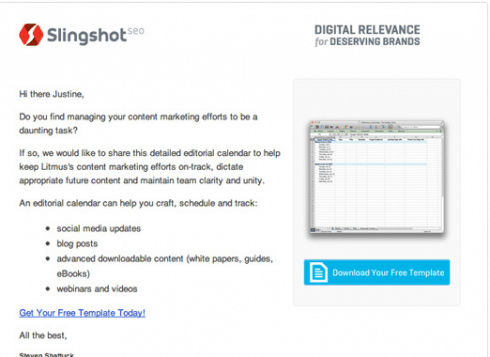
Throwing resources at your prospects over and over isn’t an effective strategy anymore. Humans are social creatures that need relationships and interaction, even if that’s with a company. No one wants to receive a templated email from Employee #712. They want to receive a personalized email from Michael who asks how their week has been and if they have any questions about their plumbing. As long as the customer feels that you truly value them as a friend and not just a wallet waiting to hand over cash, they will reciprocate that feeling by becoming a loyal customer and promoter of your brand.
Take a look at the following example that reads more like an email between friends than one sent from a sales person:
But, don’t stop there.
The next step is to continue the value add proposition even after they become a customer. For example, when you start dating someone and earn the coveted title of boyfriend or girlfriend, does the relationship stop there? No, of course not. The relationship continues just as it did before, getting even stronger while building more trust. But one slip-up, lie, or deceitful act and the relationship can and often does end abruptly. There is always an alternative for the customer, and as a marketer, you should never forget that. Taking the above aspects of lead nurture, we can create a simple formula that we should adhere to when creating a lead nurture campaign:
Value + Trust = Lead Nurture Success
The most difficult part of this formula is when we, as marketers, try to find out what our audience finds truly valuable. Sometimes we know and we’re already providing it, but generally, we don’t have a clue. Even when we’re not trying to shamelessly promote our product or service, we may just be totally off base with what the customer is looking to gain from our emails. Finding that Goldilocks zone of true value is difficult because let’s face it, if it was easy, everyone would be doing it right the first time. Whenever you are creating a lead nurturing email campaign, follow these 3 simple steps:
- Find out what your user wants.
- Create content that delivers that value to them via email.
- Start nurturing a relationship with them based on value and trust.
Finally, after all that hard work of just giving away content, advice, and your time for free, you will have become one of, if not the main authority in your niche to that person. When they think of marketing platforms, they immediately think of Hubspot, and when they think of home repair they immediately think of Home Depot. You want your company to become synonymous with your industry or products in the minds of your audience. That’s when you have truly earned a new customer and promoter of your brand.
What It Comes Down To
You should stop asking yourself “Will my list like this?” and instead ask “Why does my list want or need this?” You can’t make someone do something they don’t want to do, Dale Carnegie knew that in 1936 and people have not changed. What you can do is find out what the user wants and then give that to them. Do that enough times and you start to build trust. Trust builds relationships and relationships are the building blocks of long-lasting business relationships. Use this as the intention behind all your lead nurturing for your content marketing efforts.