
How to Create Linkable Assets
The right piece of content makes all the difference when it comes to earning backlinks for your site. A 2019 SparkToro survey of more than 1,500 SEO professionals found that the two most influential Google ranking factors were “relevance of overall page content” and “quality of linking sites and pages.” The takeaway is clear—to grow your business’s online presence, there are two main things you need to do: creating content and earning links back to your site.
Why is content important for link building?
While there are many link development techniques you can use to grow your backlink profile, our team has found that content-based link building is the best tactic for long-term success. With content-based link building, you leverage content that is already published on your site by reaching out to webmasters of relevant pages and asking if they would be interested in including a link back to your piece.
Here at Investis Digital, we work with clients in a wide range of industries. When our link development department first engages with a client, we typically start with a link strategy that helps inform us about the client, their competitors and the industry. All too often, our team finds that the client does not have the necessary content assets available to attract high-quality backlinks at a satisfactory rate.
If you are not publishing in-depth content, you will need to rely on other link building tactics, such as going after unlinked brand mentions in the news or submitting your website to local directories. The problem is that in most situations, relevant linking opportunities for product pages, location pages and homepages are limited. When these initial opportunities run out, it will be very difficult to continue to grow your site’s backlink profile.
Publishing high-quality content on a regular basis gives you an opportunity to earn links on websites where it may not make sense for your brand’s homepage or product page to be referenced. Webmasters are always looking for ways to improve user experience for their visitors, and linking out to external content is a great way to do that.
When you incorporate content as a part of your link building strategy, it’s a win-win for your business. The content you create can help attract high-quality backlinks, and in turn, these links help promote the content and can ultimately boost the article’s rankings in the SERPs, driving more visitors to your website.
Characteristics of a linkable asset
The process of building links for content may sound straightforward, but it can be difficult to pull off. First and foremost, for this strategy to work, you need to create content that is worth linking to.
“Linkable asset” is a term used to refer to any piece of content with a high probability of acquiring backlinks. To start earning links to content, you need to ensure that your content is providing real value to readers. Here are the characteristics of a good linkable asset:
- Non-promotional: Linkable assets should be audience-focused, not brand-focused. Webmasters are hesitant to link to content that feels like an advertisement for your company, so stay away from unnecessary brand mentions within your piece.
- In-depth: Long-form assets that are well-researched and in-depth are great for earning links. A study by Moz and BuzzSumo found that content receives more shares and links if the content is 1000+ words. There is no “magic” word count number, but the data shows that long-form content is better for links, shares and rankings.
- Useful: If visitors can take something away from your website and put it to use, then they are far more likely to share and link to that content. Focus on creating content that answers common questions your audience might have or provides actionable tips.
- Top-of-funnel: Our team finds that content that’s designed with a broad audience in mind does much better for earning links than content that only addresses a small group of readers. Even if you create a piece that is extremely well-researched and in-depth, relevant linking opportunities will be few and far between if the topic is too niche.
- Evergreen: Content that speaks to current events can certainly be used to attract links, but in general, evergreen content will be more useful for earning links long-term. We recommend creating a mix of timely content and evergreen content to ensure that you are never leveraging outdated pieces in your link building campaigns.
Most effective types of linkable assets
Linkable assets can take many different forms, the most common being in-depth blog posts that speak to something within your industry. If your company does not currently have a blog, start one—it a convenient place to house your content.
Use a tool like SEMRush to generate topic ideas by researching what keywords and phrases are most commonly searched for in your industry. Then, start writing and publishing blog content that answers these common questions, providing as much detail and valuable information as you can.
While blog posts are a great way to start earning links to content, there are numerous other types of linkable assets you can create. Some are more effective than others, depending on the industry you are in. Now let’s look at the most popular content formats along with their pros and cons.
Resource center
Resource centers are a great way to attract links if they are well-maintained and provide users with useful information relevant to your industry. If you are already publishing content for your site, then you can include internal links to your own pieces as well as links to other industry experts.
Resource centers take a bit of time to curate and put together, but once they are created, you can periodically add additional resources to keep the page up to date.
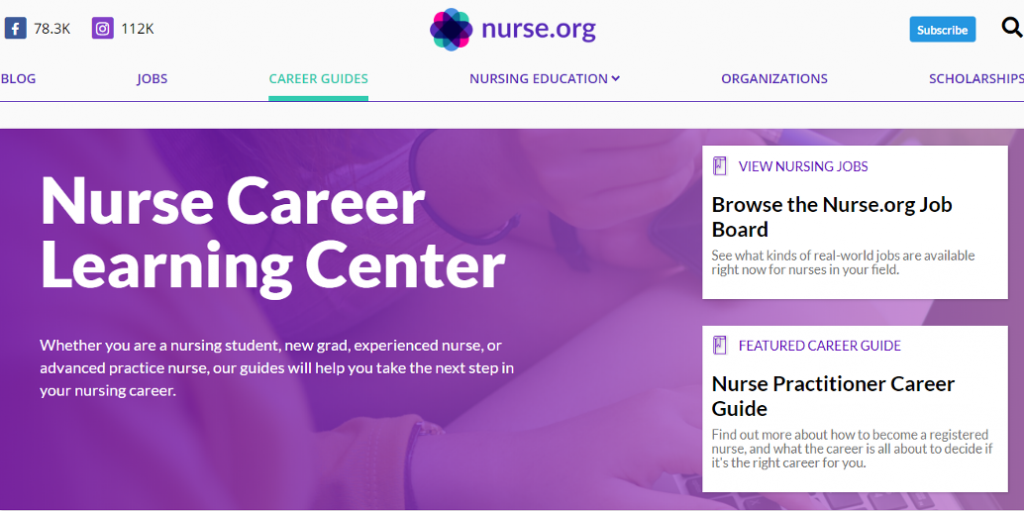
The example below comes from Nurse.org and is currently earning links from 74 referring domains. The page serves a hub for the site’s various guides on different types of nursing careers. Since this page features a collection of resources that all fall under the same umbrella, they can earn links on a wider range of sites than if they were promoting each guide individually.
- Time Investment: Medium
- Cost: Low
Case studies
If your business is diligent about collecting and analyzing data, a case study might be the right type of linkable asset to create. Case studies are an effective way to establish your brand as a subject matter expert within your industry.
If you include enough original data in your report, you could potentially pitch your case study to industry news websites. You may even earn some natural links from industry writers searching for citations to add to their own pieces.
- Time Investment: Medium to high
- Cost: Low
Infographics
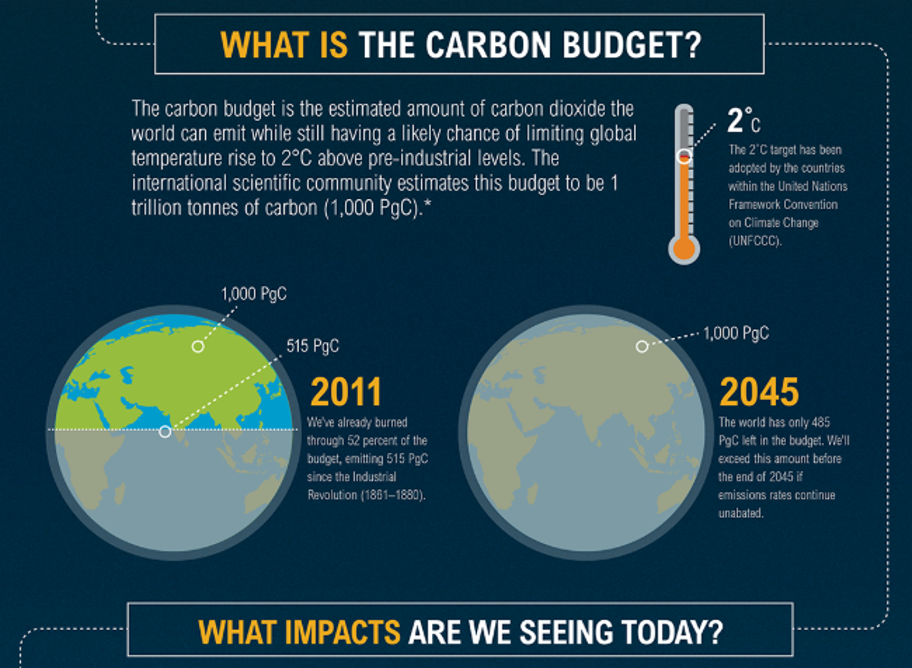
Infographics are a great way to share information in a visual, easy-to-digest manner. Webmasters are typically receptive to the idea of including infographics on their page, as long as they are well-done and provide valuable information for their audience. While the initial investment tends to be higher with infographics, their long-term payoff typically justifies their cost.
Infographics are especially useful for sharing information that includes a lot of numbers and statistics, such as this “Global Carbon Budget” infographic created by World Resources Institute (currently earning links from 70 referring domains).
- Time Investment: Low (if you aren’t designing the graphic)
- Cost: Medium to high
Interactive content
Interactive content can be a great asset for capturing the attention of webmasters and picking up natural links over time. If the interactive content is done well, it can be an excellent way to drive qualified traffic to your site, often converting to leads. However, between ideation, creation and promotion, it can be a time-consuming and costly piece of content to launch.
Interactive content can range from relatively simple to incredibly complex. If you are limited on resources, start off by creating something like a simple quiz or calculator that relates to your industry.
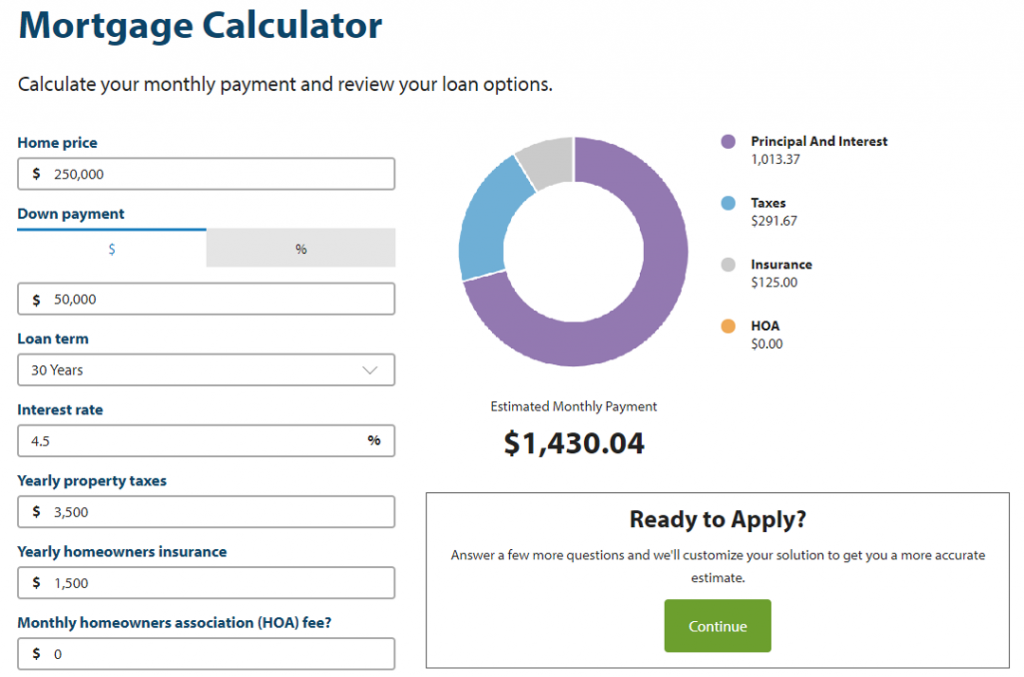
The mortgage calculator below from Quicken Loans is pretty straight-forward, but it is earning links from 90 referring domains and provides useful information to the company’s target audience.
- Time Investment: Medium
- Cost: Medium to high
Scholarship pages
Scholarship pages are one of the most effective ways to acquire high-quality links for one reason—educational websites love to post scholarship-related content. Creating a scholarship is a great way to attract links from .edu websites, which almost always have high Domain Authority scores, that otherwise would not have a logical reason to link to your site.
While conducting a link development strategy for one of our clients in the aviation industry, we identified an organization that offers scholarships and grants to women training to become pilots. The page is fairly simple, yet it has attracted backlinks from 109 domains, including several high-profile universities.
One downside to this type of content, aside from the cost investment, is that link retention is often lower than with other linkable assets, since scholarship resource pages are continually being updated. There is a good chance that your link will be removed after your scholarship’s deadline passes. However, if you renew the scholarship for the following year, you may be able to regain any links that have dropped off.
- Time Investment: Low to medium
- Cost: Medium to high

Other assets
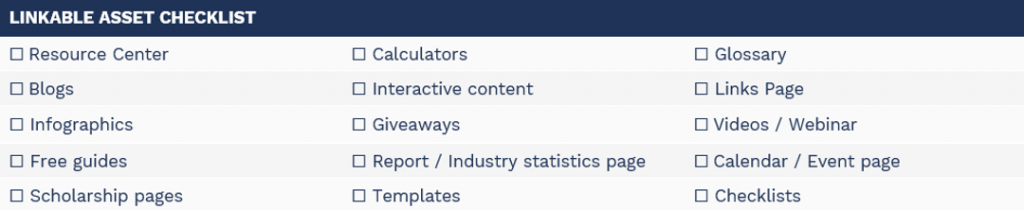
While the assets covered above are great places to start, there are numerous other forms that linkable content can take. The checklist below provides some additional ideas for content that could be useful for link building campaigns.
How much does it cost to create a linkable asset?
Because of all the factors involved, we cannot place an exact figure on how much it costs to create a linkable asset. It depends on who is taking charge of the ideation and creation, the type of asset you are creating, and the industry. If you have a subject matter expert on your team who has experience uisng WordPress, the cost could be next to nothing. However, if you’re in a competitive industry where your competition is creating link assets that are in-depth and exceptional, it could take a consideratable investment to create something to help your website stand out.
Also consider the amount of time you have to dedicate to promoting and leveraging the asset once it is published. While some linkable assets may attract links on their own, in most situations you will need to promote the content through targeted outreach to relevant web pages and industry leaders.
Of course, you can always contact a digital marketing agency to assist with creating, publishing and promoting content. Before you engage with an agency, however, make sure they have experiencee with link building and data to back up their claims of success.
How long are link assets useful?
In-depth content that provides evergreen information can remain a powerful link asset for a long time. However, the longer you prioritize the piece as part of your link building campaign, the harder it will be to find quality, relevant linking opportunities. For that reason, we recommend continually creating new, fresh assets on a variety of topics, so you have multiple options for earning links.
Earlier this year, our team took a closer look at the typical linkable asset lifecycle by analyzing the links we built to our 10 most successful linkable assets throughout 2019. As you can see in the chart below, it is typically easier to build links to assets in the first few months after their publication, when there are plenty of linking opportunities with websites that have not been previously contacted by your team.
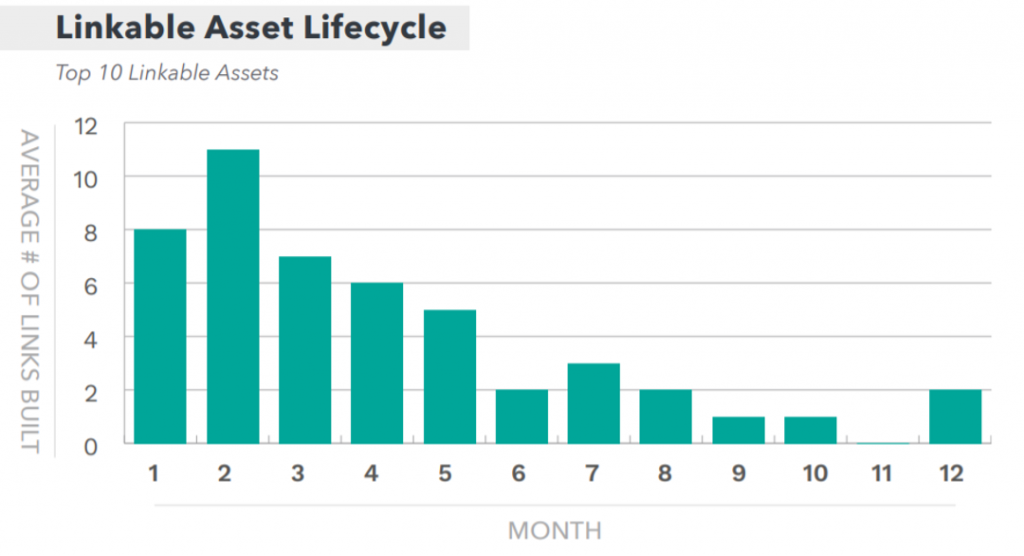
Based on our findings, we recommend creating new, linkable content for your website every 4-6 months at minimum.
This is part of the reason why it is so important to have a solid content calendar in place, as well as a link development strategy that identifies which types of content have the best chance for success. At the end of every month, for each of our clients, our link building team ideates new linkable asset ideas and makes recommendations for how to improve existing assets. The process is crucial to our success and ensures that our team doesn’t lose momentum.
Not all content is going to start earning links right away, but if you follow our best practices for creating linkable assets and refresh your content as needed, your efforts will pay off in the long run.
Download our free guide: ‘How to Build Quality Backlinks That Impact Organic Visibility’
To learn more about the value of link building and SEO, please download our newly published guide, How to Build Quality Backlinks That Impact Organic Visibility. Read this guide to understand why links are crucial for ranking #1 on Google. To learn more about Investis Digital’s SEO expertise and experience, feel free to contact us at any time.